

Category

foreign films

‘Rickshaw Girl’ Tells an Interesting Coming-of-Age Story of a Bangladeshi Youth

By Ulises Duenas

Naima’s family struggles to make ends meet and when her father becomes too sick to pull his rickshaw, Naima decides that the only way she can help bring in money is to find work in the big city of Dhaka. One of the film’s most interesting aspects is the authentic portrayal of life in Bangladesh -- from the bustling outdoor markets in the village to the frantic, crowded streets of the city.

‘Missing’ Is a Brilliant, Dark Story About Mystery and Death

By Ulises Duenas

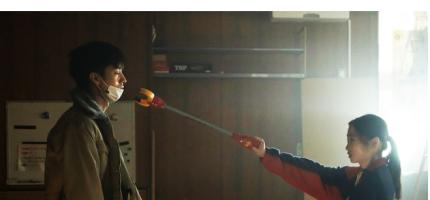
Santoshi is a newly widowed father going through depression and dealing with debt as he tries to keep his daughter Kaede happy and in school. After telling his daughter that he plans to track down a serial killer for the reward money, Santoshi vanishes, leaving Kaede to investigate what happened to him. The first quarter of the movie has an almost lighthearted tone as Kaede does her best to find leads on her father’s whereabouts, but things get dark quickly after she has a confrontation with the serial killer.

Fine Acting, Wit, and Stunning Visuals Make ‘Umbrella Men’ a Fond Addition to the Heist Film Genre

By Ben Friedman

Everyone knows the filmmaking conventions that make a good heist movie: a mismatch of eccentric characters each with their own skill set, speeches about how the impossible task is actually possible, and the execution. Heist movies always feature the debonair hero, the hothead, the uneasy alliance, the romantic interest, and a villain. A heist film lives and dies on its storyteller’s ability to overcome the derivative and craft something exciting. John Barker’s The Umbrella Men represents the highs and lows of the genre.

‘A Silent Party’ Tackles Patriarchy, Sexual Assault and Victim Blaming, Yet Misses the Mark

By Ulises Duenas

The way the story comments on Laura’s standing in her relationship and family is the only poignant aspect of the movie. You feel sympathy for her from early on and can tell she feels constrained in a relationship that’s lost its spark. Once she tells David what happened to her, he quickly takes on the responsibility of revenge as a way of proving his masculinity, and Laura’s father soon does the same. While the movie tries to do something different with an old cliché, the way it’s executed stills seems a tad exploitative .

How South Korea, Japan, and Other Countries Came to Dominate the Pop Culture Landscape

By Garrett Hartman

The growth of foreign media’s popularity poses many interesting questions as to the future shape of media in the U.S. and worldwide. While platforms like Netflix seem content to purchase and serve as a distributor for foreign content, how will American media producers, especially in fields in which they are lagging behind foreigners, try to appeal to domestic audiences? How will questions of media representation be perceived with art created in different nations and different local contexts?

‘The Weasels’ Tale’ Delivers Great Characters and Unexpected Twists and Turns

By Ulises Duenas

The chemistry among these four characters is great. Mara is stuck living in the past and sees her jaded friends Norberto and Martin as tormentors for wanting her to confront the reality that the good days are long gone. They constantly take small jabs at each other but are much more overtly hostile towards the realtors trying to manipulate Mara. While Mara is clearly delusional and self-centered, you do feel sympathy for her to some degree.

Brazilian ‘Divine Love’ Depicts a Futuristic Take on Religion and Relationships

By Ulises Duenas

In a 2027 version of Brazil, there is a new movement sweeping a country -- one of using unconditional love to become closer to God. Joana works in an office that organizes divorces. She is also a devout follower of the “Divine Love” movement and wholeheartedly believes that love can overcome anything if someone is a true believer. It’s interesting to see the clash of the bureaucracy her work involves and the humanity she displays when talking to clients.

Chinese Film ‘King of Masks’ Focuses on Themes of Love, Tradition and Redemption

By Gabriella Tutino

The film, set in 1930 Sichuan, follows a street performer who is versed in the Sichuan opera art of changing silk masks quickly; this skill earns him the name ‘The King of Masks.’ After one of his performances he is approached by another Sichuan opera artist, Master Liang, who is known for his transformations and stage-acting as a woman (his most popular role being The Living Bodhisattva). Master Liang asks the King to join his troupe.