Category

India

What the Nobel Peace Prize Means to Pakistan, India

By Sandip Roy

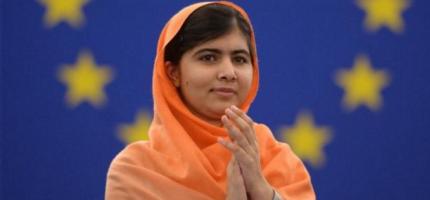
This may well go down as the Line of Control Nobel Peace Prize. Even as India and Pakistan talk tough and lob shells at each other across the border, here comes the Nobel Peace Prize committee doing their version of marriage counseling. A joint Nobel Peace Prize for Malala Yousafzai and Kailash Satyarthi -- a Pakistani and an Indian. Now if that doesn't embarrass the two belligerent armies into a ceasefire, what can?
As Violence Against Women Escalates, Indian Officials Idly Stand By

By Viji Sundaram

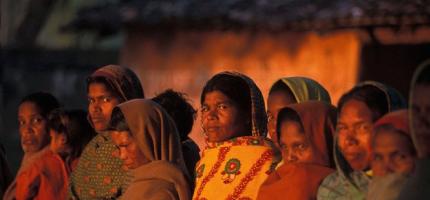
But even having a male escort is no guarantee against sexual assaults. During the wave of protests in Egypt last year to oust President Mohamed Morsi, women became vulnerable to sexual assault in public places. In India, in December 2012, a young woman was gang-raped on a Delhi bus in the presence of her male friend, who had been beaten up by the rapists. And in Mumbai last year, a young photojournalist was gang-raped in broad daylight, after she was separated from her male colleague outside an abandoned mill. 

Farewell Nehruvian India: The Dawn of Narendra Modi Has Arrived

By Sandip Roy

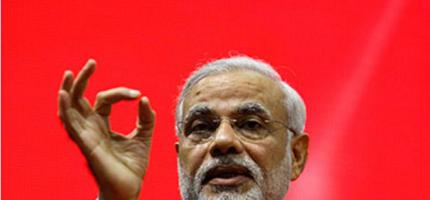
The ghost of Jawarharlal Nehru could well be an uninvited guest at the banquet marking the swearing in of Narendra Modi. Yesterday marked Modi's first official day as the 15th prime minister of India. It will also mark the 50th death anniversary of Jawarharlal Nehru, India's first prime minister.The ghost of Nehru might be a little rueful. Had his great-grandson managed to lead the Congress to victory in the elections this month, yesterday might have seen a very different kind of commemoration of Nehru's death anniversary.

How Corruption Stymies Economic Growth and Sparks Unrest

By Mark Goebel

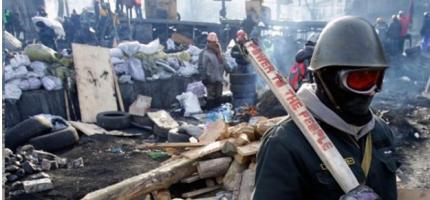
Recent impressive growth notwithstanding, corruption also threatens to hold back India’s and Brazil’s drive to join the ranks of the world’s developed countries, and has brought Venezuela and Ukraine to the brink of political collapse. Even China, this century’s economic star, is being handicapped in its long-term quest to overtake the U.S. economically by corruption, so much so that China’s new supreme leader, President Xi Jinpang, has made stamping it out one of the main priorities of his time in office.


Workers’ Rights and the Khobragade/Richards Affair

By Shamita Das Dasgupta

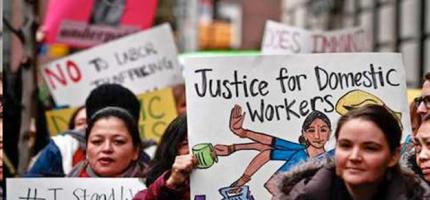
The media, politicians, and lay people in both India and the U.S. have focused on Khobragade and pontificated on the differences in lifestyle practices of the two countries, and various other legal and moral details. Sangeeta Richards, the nanny/domestic worker at the center of the storm, quickly became invisible in the melee. To my knowledge, she has surfaced only a few times in print media, mostly in articles written by social change activists. 

‘One Life to Ride’ Takes Readers on a Choppy Journey Through the Himalayas

By Annie Castellani

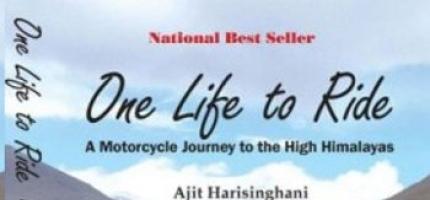
Despite these expectations – or perhaps because of them – Harisinghani's narrative never really gets out of first gear. Instead of manufactured suspense about what lies around the bend, the reader longs for richer, more expansive stories that really get to the essence of the author’s relatable spiritual journey and the awesomeness of the scenery he encounters. Aside from a few literary and physical detours, this does not happen. 

‘I Have a Dream’: A Mighty Export

By Sandip Roy

There is nothing in Dr. King's speech to imply that to be a hyphenated American is to have divided loyalties. When Jindal says American, the non-hyphenated version, he simply means Judaeo-Christian white - a whiteness that might not be visible in the color of the skin, but is definitely there in the content of the character. King's speech needs to be read again and again - not just commemorated or elocuted - to prevent it from being appropriated by the Jindals for their own ends. And not just in America.

India’s Proposed Right to Food Security Bill Won’t Solve the Country’s Crisis

By Annie Castellani

Take the highly contested Food Security Bill, championed by Sonia Gandhi, leader of the ruling party and majority alliance in India’s parliament. The proposed landmark bill guarantees subsidized food to two-thirds of 1.2 the billion people who live in India, making it the largest experiment in food security worldwide. It obligates the Indian government to procure and distribute subsidized grains to approximately 800 million people, including 50 percent of urban-dwelling Indians and 75 percent of those living in rural areas.