Category

books

‘Resistance Man’ Is Latest Addition to Martin Walker’s ‘Bruno’ Series

By Lee Polevoi

The story is set in motion by the death of a former World War II resistance fighter. In rapid succession, Bruno is called on to investigate a rash of summer home burglaries, as well as the murder of a gay British antiques dealer. As these investigations unfold, we meet several important people in Bruno’s personal life, including Pamela, his on-and-off-again lover, an old flame named Isabelle and a forensic specialist, Fabriola, who assists him in his police work. It’s a large, not to say unwieldy, cast of characters, especially for those of us new to the Bruno series.

 

Love, Loneliness Are Focus of David James Poissant’s' The Heaven of Animals'

By Melinda Parks

If a purpose of literature is to expose universal truths about life and human nature, then David James Poissant’s The Heaven of Animals has done its job. Poissant, a celebrated young writer whose stories have appeared in such publications as The Atlantic Monthly, The Chicago Tribune, and The New York Times, and whose work has already garnered impressive literary awards and critical praise, presents layered storylines and realistically flawed characters in his first collection of short stories.

Remembering Maya Angelou

By Monée Fields-White

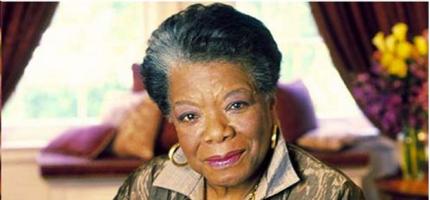
One of the United States' most prolific and beloved authors and poets has died at the age of 86. Maya Angelou was a Renaissance woman whose life inspired six autobiographies, including her internationally celebrated first memoir, I Know Why the Caged Bird Sings.  Angelou was found unresponsive in her Winston-Salem, N.C., home. Her death comes just days after she canceled an appearance in which she was to be honored at the Major League Baseball Beacon Awards luncheon in Houston.

Corruption, Greed in the Roaring ‘20s Set the Tone for ‘Truth to Power’

By Rebekah Frank

The roaring Twenties, organized crime, crooked politicians, the assault on the newspaper industry by big money, sex, love, romance; Truth to Power by J.S. Matlin has it all.  Only it still manages to fall flat.  The book, broken into three subsections, begins in 1924 with the central character, David Driscoll, pulling into a town called St. Luke in the American Midwest.  Humiliated by the discovery of his dalliance with the editor-in-chief’s wife and an unethical arrangement with an advertiser, he is sent packing from his first job at The St. Louis Star to a smalltown newspaper called The St. Luke Bugle.

Gauging the Real Effects of Media

By Marty Kaplan

There wouldn’t be an advertising industry if people weren’t susceptible to messages.  POM Wonderful wouldn’t rent billboards promising (falsely) to prevent prostate cancer, the fossil fuel industry wouldn’t spend millions on spots claiming (falsely) to produce clean energy, candidates wouldn’t fork over billions of dollars to local TV stations for (pants-on-fire) political ads if all their money could buy were some wispy correlation.


The Story of the Joads Still Matters, 75 Years Later

By Benjamin Wright

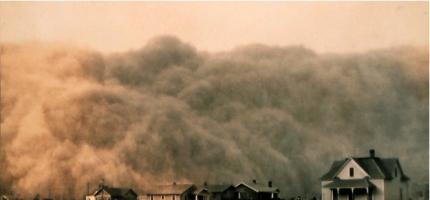
As an historical novel, The Grapes of Wrath is rooted in the events that took place three-quarters of a century ago, which may make it seem dated to some readers. But though times have changed, many of the troubles that the Joads confronted are (unfortunately) still with us – economic injustice, the struggle for human worth, corruption. Of equal significance, the work deals with nearly universal themes – human dignity, the struggle for survival and, more than anything else, hope – that make it as pertinent today as it was 75 years ago. 

Gruesome Murders Haunt ‘Quiet Dell’

By Lee Polevoi

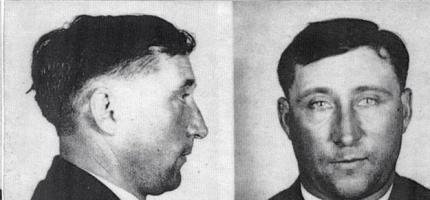
In 1931, after an exchange of love letters, a man calling himself Cornelius Pierson first relocated a middle-aged widow named Asta Eicher and later her three children, from their home in Park Ridge, Illinois, to the small town of Quiet Dell, West Virginia. Weeks later, the bodies of the Eicher family were discovered beneath the garage of a home owned by Harry Powers, who turned out to be a psychopathic killer. Powers was convicted of their murders (and others) and executed in 1932.

Leading the Life of (Not So) Quiet Desperation in Robert Stone’s World

By Lee Polevoi

Whether engendered by war and heroin, in Dog Soldiers, revolutionary zeal and madness in A Flag for Sunrise, madness again in Children of Light or religious fanaticism in Damascus Gate, these men and women find themselves headed for total meltdown. Waiting to see if the worst will happen—as it invariably does—is part of what has made Stone's work so compelling over the past five decades. But while the same kind of drug-ridden and mentally deranged anguish compels the various characters in his new novel, Death of the Black-Haired Girl, the scope of the novel is smaller than before.