Category

books

Remembering Robert Stone

By Lee Polevoi

Everyone who loves to read can name a book that changed their lives. For me, it was Dog Soldiers, a novel written by Robert Stone, who died recently in Key West. The novel, Stone’s second, grafted a compulsively readable narrative onto a precise evocation of the war in Vietnam and what was happening back home. No writer described the era’s pathos, self-absorption and reckless abandon as well as he did. The 60’s died in Dog Soldiers and by the novel’s end, we understood why. 
A Tale of Death and Texting in Matt Richtel’s ‘A Deadly Wandering’

By Lee Polevoi

A Deadly Wandering tells the story of Reggie Shaw, a Utah college student whose Chevy Tahoe veered into another lane one night in 2006 and clipped a car carrying two rocket scientists, which then collided head-on with a truck, killing the two men. Shaw was texting a friend at the time of the accident. Richtel casts a wide net in the telling of this story, including a cast of characters that ranges from the scientists’ widows and children to lawmakers, prosecutors, neuroscientists and one tireless victim’s advocate. 

Victim and Accuser Clash in David Bezmozgis’ ‘The Betrayers’

By Lee Polevoi

The setup of David Bezmozgis’ second novel is refreshingly simple. Baruch Kotler, a prominent Israeli politician (and former political prisoner in the USSR) has fled Tel Aviv in disgrace with his much younger mistress, Leora. They come to Yalta, a resort town in the Crimea, where, after a mix-up over hotel reservations, they rent a room in an apartment owned by a Russian woman, Svetlana. As we quickly discover, Svetlana’s aged husband, Chaim Tankilevich, is the man who long ago denounced Kotler to the KGB, which led to Kotler’s 13 years of exile and imprisonment.    

Joshua Ferris Examines the Life of a Cyberstalking Victim in New Book

By Lee Polevoi

The plot, such as it is, kicks in when Paul discovers that someone, perhaps a former patient, has begun to impersonate him online. First, a new company website appears (not of Paul’s doing), with more or less accurate staff bios for everyone but him (which instead of facts about his life promulgates strange notions about religion). Then there’s a Facebook page, a Twitter account and a Wikipedia entry—every upsetting development reported to Paul by Connie or Mrs. Convoy while he’s hard at work deep inside the mouths of his patients.

The Story of James Joyce’s ‘Ulysses: From Contraband to Masterpiece

By Lee Polevoi

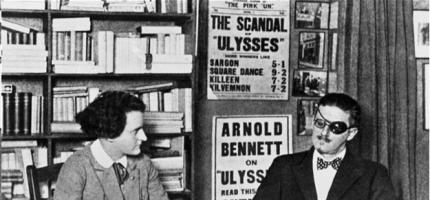
Modern-day readers of a novel published in 1922 and banned as “obscene” in Europe and America might legitimately wonder what all the fuss was about. Almost a century later, in a culture saturated by explicit references to sex, masturbation and everything in between, the international uproar over references to sex and bodily functions in James Joyce’s Ulysses seems hard to imagine. But, as Kevin Birmingham illustrates in his engagingly written “biography of a book,” the 720-page, epoch-defining work changed both the way novels are written and the way novels are read. 

Covert Attempts at Mideast Peace Detailed in ‘The Good Spy’

By Lee Polevoi

That long intelligence war is the focus of the book, which goes into considerable detail about Ames’ comings and goings throughout the Middle East (and in the Washington, D.C. area). Bird writes at great length about many clandestine meetings Ames arranged and conducted with PLO members at that time, an account that comes to have, for the reader, gradually diminishing returns. The fact that he had so many unauthorized encounters with the PLO is significant for the time, but is not in itself terribly interesting. 

The Life and Times of Paul Bowles: The Man Inside the Cage

By Sandra Bertrand

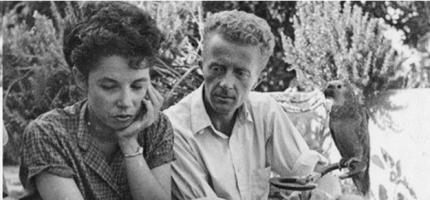
It seems in many ways that Paul Bowles led a charmed life.  The new sounds of jazz had been forbidden in an inordinately strict household—though his mother’s reading of Edgar Allen Poe became an inspiration for his later stories.  A closeted homosexual and a fatalist at heart, he had tossed a coin:  heads he would take his own life, tails he would head for the City of Light.  His early musical talents caught the ear of composer Aaron Copland, his traveling companion for his first trip to Tangier.  But it was in Paris that Gertrude Stein discovered her “Freddie.”  

Smuggling Guns and Battling Fascism in Alan Furst’s ‘Midnight in Europe’

By Lee Polevoi

No one can accuse Alan Furst of veering away from a successful formula. In Midnight in Europe, he once again sets his spy drama in the perilous realms of various European countries just before the Second World War. As any faithful reader will tell you, Furst has carved out a unique niche in espionage fiction, with an emphasis on deeply researched details of those times. But by now, in his 14th novel, a sort of underlying familiarity has set in, which the talented author does little to up-end in the course of the story.