Category

american artists

The Adventures of American Impressionist Tilden Daken

By Bonnie Portnoy

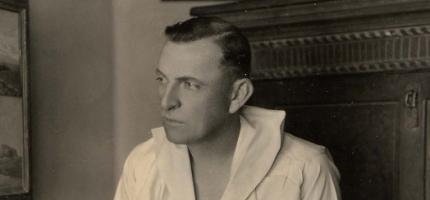
Born within months of one another in 1876, Jack London in January and Tilden Daken in June, the painter and the writer, both 25 at the time, hit it off straight away. The westbound train was scheduled to arrive the following morning. That night, in the Reno railyard, London taught Tilden his rules of the road, the precarious practice of clinging to the brake beams inches above the track, or in the hobo vernacular, “riding the rods.”
Judy Chicago’s Story and More than 80 Others at the New Museum

By Sandra Bertrand

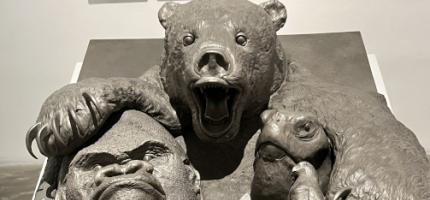
If anger plays its part in some of Chicago’s most blatant imagery, the Extinction suite puts her compassion for the death of entire species front and center. Her eco-feminist view demands a close look at the brutality against nonhuman life, which is no better exemplified than in The End.

John Hultberg’s Cinematic ‘Mindscapes’ Are Focus of New Exhibit

By The Editors

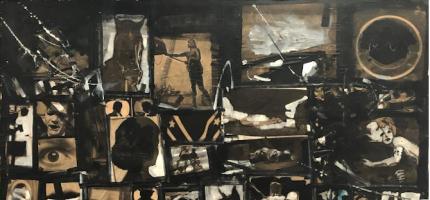
Hultberg’s works are featured in 140 international institutions, including the Albright-Knox Art Gallery; Carnegie Institute Museum of Art; the Metropolitan Museum of Art; Museum of Modern Art, New York; Museo Tamayo, Mexico; Smithsonian Institution; the Solomon R. Guggenheim Museum; Stedelijk Van Abbe Museum; Whitney Museum of American Art; and many others.
 

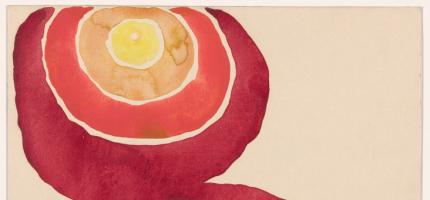
Georgia O’Keeffe at MoMA: A Closer Look at Greatness

By Sandra Bertrand

From her early days on Wisconsin farmland — a high school stint in Virginia, followed by the Art Institute of Chicago and the Art Students League of New York, a summer at Lake George, camping trips in Appalachia, and teaching stints in Texas and South Carolina--she was endlessly experimenting. Over 120 works, including examples from MoMA’s collection, demonstrate the ways in which O’Keeffe developed, repeated, and changed motifs that blur the boundary between observation and abstraction.

Edward Hopper’s New York: A Study in Isolation at the Whitney

By Sandra Bertrand

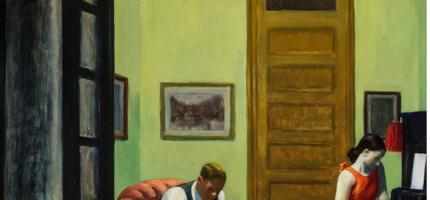
The Whitney is ground zero for promoting and preserving the legacy of this iconic genius. Its holdings comprise 3,100 works and represent 10 percent of the entire collection. The first painting purchased was Early Sunday Morning (1930). It is a study in isolated storefronts, a horizontal view where a barber pole and a fire hydrant seem to be stand-ins for an absent populace. It’s as good a place as any to begin our journey to understand Hopper’s obsession with the city.

Winslow Homer at the Met: A Study in Conflict

By Sandra Bertrand

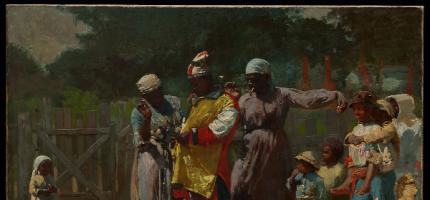
Dressing for Carnival,(1877) features a Black man being sewn into his Harlequin costume by family members for a traditional African celebration. Is this a promise of better times for these former slaves, which the wall notes suggest? Perhaps. A helpful hint to visitors would be to let the magnitude of the art speak for itself first, then use the history lesson as needed. A good example is The Cotton Pickers (1876).  A pair of hardy muscle-bound women fills the canvas. Their dark forms cut into the foreground, contrasted by the clusters of snowy cotton in their shoulder bags. The image needs no explanation.

The Frost Museum of Art Showcases the 2021 MFA Exhibition

By The Editors

Every year the Patricia & Phillip Frost Art Museum features works by students graduating from the Master of Fine Arts program in the College of Communication, Architecture + The Arts at Florida International University. This year, the museum is featuring the work of Dianna Grace and Elizaveta Kolesnikova. Grace is informed by immersive spaces and engages in innovative experimentation with materials. Kolesnikova's current work presents Peruvian cultures and traditions.

The Art of Darrell Urban Black

By The Editors

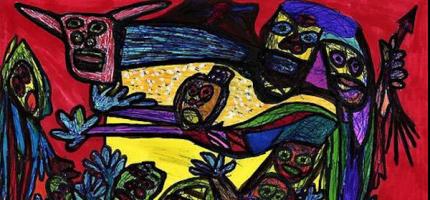
His creative process is a mixture of works on paper, acrylic paint, found objects and non-toxic hot glue, which creates a three-dimensional effect on any surface that gives a sense of realism and presence in his artwork. Darrell refers to this optical artistic illusion as “Definism,” which in his opinion portrays various differences in human nature from life’s everyday dramas to humankind’s quest to understanding the self.