
Category

climate change

The Rise of Greenwashing

By Angelo Franco

Meanwhile, “green” lines of entire industries have popped up everywhere to try to meet consumer demand, with one of the clearest examples of this being the beauty industry. Proclaiming to be “all natural” and “non-toxic” or free of “harsh chemicals” is a pervasive type of branding for beauty products, from moisturizers to sunscreens. But because there is no standard definition for “clean” or even for what constitutes a “harsh chemical,” these sustainability claims can vary wildly.

It’s Time to Reduce Our Carbon Footprint

By Dan Reider

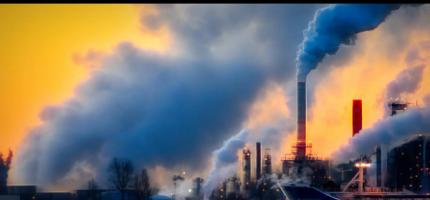
What we have now in the U.S. and most parts of the world is a lot of interest and ideas on how to address our carbon footprint to reduce global warming. While we cannot dictate to the rest of the world what we think needs to be done, we can certainly lead by example if we want to take those necessary steps. It seems to me that if we look where we should be in the future, we need to start coming together now and discuss the best ways to move forward. These are difficult issues potentially impacting all of our lives.

Devastating Fires Capped a Year of Climate Disasters in 2021

By Shuang-Ye Wu

The western U.S., with the exception of the West Coast, is dry in part because it lies in the rain shadow of mountains. The westerly wind from the Pacific Ocean is forced upward by the mountain ranges in the West. As it moves up, the air cools and precipitation forms on the windward side of the mountains. By the time the wind reaches the leeward side of the mountains, the moisture has already rained out.

Mega-Cities Face Peril as Climate Change Intensifies

By Christina Conklin and Marina Psaros

In his major post-storm speech, Mayor Michael Bloomberg noted that in 2050, one-quarter of the city’s land and 800,000 residents would be within the one-hundred-year flood zone. But instead of talking about the devastation as an opportunity to reshape the city’s shoreline to better reflect future sea levels and more frequent storm surges, he doubled down. “As New Yorkers, we cannot and will not abandon our waterfront. It’s one of our greatest assets. We must protect it, not retreat from it,” he said.

Joe Biden and John Kerry Can Rebuild U.S. Global Climate Leadership

By Dolf Gielen and Morgan Bazilian

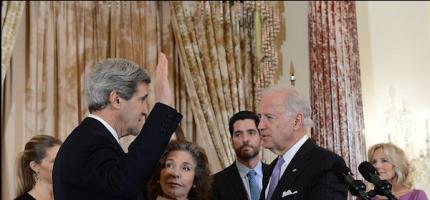
John Kerry helped bring the world into the Paris climate agreement and expanded America’s reputation as a climate leader. That reputation is now in tatters, and President-elect Joe Biden is asking Kerry to rebuild it again – this time as climate envoy, a position Biden plans to include in the National Security Council. It won’t be easy, but Kerry’s decades of experience and the international relationships he developed as a senator and secretary of state may give him a chance of making real progress.

New Surfing Sci-Fi Book Promotes Marine Biology, Ocean Conservation

By Brian Tissot

Later, she learned he was born into a family of movie stars and media darlings, and his entire life had revolved around fame and fortune. His parents raised him in the social media world, with every achievement, or failure, being broadcast to the galaxy. Although they loved him, they simply didn’t have time for Milo in their busy schedules, as they so publicly claimed in each broadcast, so he was raised by nannies and assistants and guarded by Moshe. Now, he lived and died through the adoration of his fans on the holoscreen.

Earth Day: Dinner With America

By Rick Bass

We might talk about what makes a great American. Great ones we’ve known. Teachers would be thick among them, and older people of integrity we’ve been lucky to know. My grandfather. My parents. Artists are my heroes, too. I’d talk about Berger, and Merwin’s poem “Thanks.” We’d stay up late. I’d plug in the porch lights.The pie would be pretty great. And after we caught up on her last ten thousand years — Say what you want about global warming, she’d laugh, but I was pretty excited at first, when that last ice sheet started to go away — she might ask what I’ve been up to.

The Problem With Science’s Plastics Addiction

By Alice Bell

Scientific research is one of the more hidden users of disposable plastics, with the biomedical sciences a particularly high-volume offender. Plastic petri dishes, bottles of various shapes and sizes, several types of glove, a dizzying array of pipettes and pipette tips, a hoard of sample tubes and vials. They have all become an everyday part of scientific research. Most of us will never even see such equipment, but we all still rely on it. Without it, we wouldn’t have the knowledge, technologies, products and medicines we all use. It is vital to 21st-century lives, but it is also extremely polluting.