
Category
american writers
‘The Life and Times of Allen Ginsberg’ Paints a Dry Picture of the Controversial Poet
One of the most interesting aspects is hearing his father's poetry and realizing how influential he was to his son as Allen’s work uses the same sort of structure -- like two artists using the same framework yet filling the spaces with different themes and ideas. His mother says that they would even argue about poetry as though they were colleagues. Ginsberg clearly loved his parents and the poems that he wrote about their lives and his mother’s deterioration are some of his most moving.
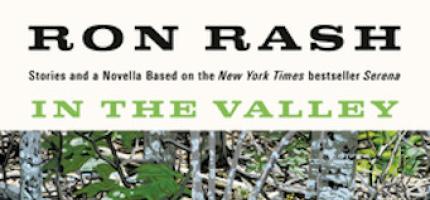
Troubles Plague Appalachia, Past and Present, in Ron Rash’s ‘In the Valley’
The stories in his new collection, In the Valley, are set primarily in Appalachian. They plunge the reader into challenging, sometimes life-threatening situations that often resolve in surprising ways. Stacy, a mentally fragile park ranger, must hold her own against a lawbreaker twice her size in “Flight.” During the last days of the Civil War, a widow named Rebecca is confronted by a gang of violent Confederates, in “Neighbors.” A young man named Brent takes drastic action when a rich client cheats Brent’s blue-collar father out of money owed in “When All Stars Fall.”
New Novel Navigates a Grim Personal Journey and Unraveling World
My goal was to try not to think. When I was away, I was a good enough father through texts. I would wait to hit send once the wheels left the tarmac. I don’t know why I would procrastinate until a single column of cell signal remained. By the end of the year, though, I was taking seven pills a day just to freeze the frame of my decline. Grief can bleed you into white nothing. Colin soon became symptomatic.
Earth Day: Dinner With America
We might talk about what makes a great American. Great ones we’ve known. Teachers would be thick among them, and older people of integrity we’ve been lucky to know. My grandfather. My parents. Artists are my heroes, too. I’d talk about Berger, and Merwin’s poem “Thanks.” We’d stay up late. I’d plug in the porch lights.The pie would be pretty great. And after we caught up on her last ten thousand years — Say what you want about global warming, she’d laugh, but I was pretty excited at first, when that last ice sheet started to go away — she might ask what I’ve been up to.
How Dorothy Parker Getting Fired From ‘Vanity Fair’ Launched the Algonquin Round Table
That afternoon, Parker and Benchley went to the Algonquin to tell their stories, staying for hours of gossip and rounds of drinks. After repeated recountings, the Round Table wits, who had long heard the complaints about Nast and Crowninshield, sprang into action. Alexander Woollcott persuaded his editors at the New York Times that the paper should cover the story. His article appeared the next day — good publicity for the trio, tantamount to a free "for hire" listing.
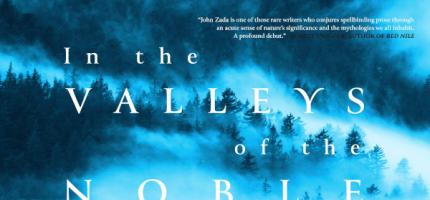
Desperately Seeking Sasquatch in John Zada’s ‘Valleys of the Noble Beyond’
John Zada went on multiple journeys to the Great Bear Rainforest in British Columbia for his new book, In the Valleys of the Noble Beyond. In small towns and villages, Zada meets many people who claim to have seen the Sasquatch, “the alleged race of half-man, half-ape giants” on the loose in the wild. Like its distant counterpart, the Yeti, a rumored denizen of the Himalayans, the Sasquatch, aka Bigfoot, has purportedly left behind footprints and engaged in random encounters with hunters, fishermen, and members of the Kitasoo, Heiltsuk, and other First Nation peoples.
Remembering the Genius of Kurt Vonnegut and ‘Slaughterhouse-Five’
As a young man, few books exerted anything like the formative power held by Kurt Vonnegut's Slaughterhouse-Five. Despite the grim acceptance of a world with conflict and war, Vonnegut still fell into writing an anti-war book, perhaps an anti-war book highly ranked among the best. This year marks the 50th anniversary of its publication, and, accordingly, Modern Library has released a new edition with a foreword by Kevin Powers. And, as the foreword shows in splendid detail, the lessons of Slaughterhouse-Five are just as relevant today as they were in 1969.