
Category

Obama

Focus Lost: How the Benghazi Attack Became a Political Sideshow

By Michael Cancella

As Senator McCain himself repeated relentlessly, American lives were lost at Benghazi and given the obvious lapses in security measures, that is simply unacceptable.  Instead of insisting the focus remain on an examination of those security measures in an effort to ensure that any mistakes made were never repeated, McCain nearly singlehandedly created a political sideshow of questionable value that only distracted attention away from the real and important issues.  If this distraction in any way detracts from identifying and correcting the mistakes made, then another tragedy could possibly occur, one, like that which occurred at Benghazi, could have been prevented if the right people had been paying attention to the right issues.

The Trillion Dollar Fail: How the War on Drugs Was Lost

By Gabrielle Acierno

According to the Office of National Drug Control Policy, The War on Drugs costs the federal government approximately $15-20 billion per year, and with negligible success in lowering the supply of drugs or drug abuse rates, politicians and experts on all points of the political spectrum have deemed the War on Drugs an objective failure. With particular emphasis on cutting off the supply of narcotics, the United States drug policy has been predicated on the theory that eradication of an unwanted external malefactor can only be achieved through persecution of the malefactor and its backers. 

A Country's Sympathy: Lessons Learned From the Tragedy in Newtown

By Mike Mariani

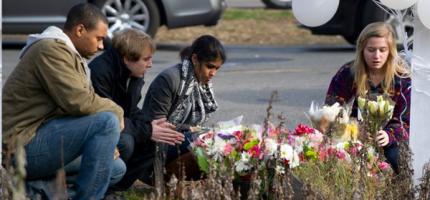
The tragedy in Newtown should provide a lesson in sympathy to us all. No matter what we feel and how we choose to handle those feelings, we should at least know that, theoretically, we have a responsibility to others, and that responsibility can inform and inspire the inchoate sympathies we all feel at one time or another in our lives. We could feel existential terror from realizing that if this happened in Newtown, Connecticut, then it can happen anywhere; burning indignation from accepting that Adam Lanza will never stand trial for his crimes; or vicarious heartbreak when we consider that many parents have been forced to bury their children in the days following the tragedy. 

Goodbye Fiscal Cliff, Hello Debt Ceiling Crisis

By Paul Kleyman

Ah, Washington. The good news is that our national leaders saved our butts (for the moment) from bottoming out off the “fiscal cliff.” The bad news is: Watch your head—it’ll soon come crunching up against another unnecessary “debt ceiling” crisis. The most important Good vs. Bad News about the New Year’s Day cliff dive is that the Ugly—the prospect that Congress’ failure to raise the debt ceiling could actually cause the United States to default on its international debts with genuine economic consequences—is now put off, but only until March.

The Ongoing Battle to Save Social Security

By Peter McDermott

“Media elites have convinced themselves that there is a crisis in Social Security,” said Eric Kingson, a professor of social work at Syracuse University and co-chair of the advocacy group Social Security Works. Kingson, who served as a policy advisor on presidential commissions on the issue in the 1980s and ’90s, said there is indeed an increasing crisis around adequate funding for retirement in America. “But they [journalists] focus on the most conservative framing of the crisis,” he said. In reality, Kingson added, “Social Security is the one bright spot” in the federal government.

After Hurricane Sandy, Climate Change Is Back on the Political Agenda

By Katherine Bagley

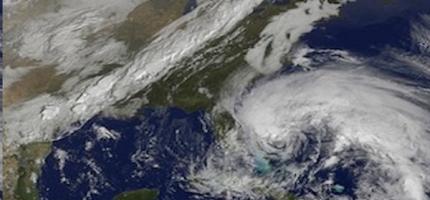
This was the year climate change vanished from the political agenda—and then suddenly reappeared, after Hurricane Sandy shook the country. It was just a few years ago that President Obama flew to Copenhagen to rescue faltering climate-treaty talks amid bipartisan calls for global warming action. But in 2012, there wasn't a single congressional proposal or hearing on climate legislation. Neither was there mention of climate change on the presidential campaign trail, or in the debates for the first time in decades. 

Will the U.S. Economy Go Over the Fiscal Cliff?

By Paul Kleyman

Will the U.S. economy go over the “fiscal cliff” after New Years Day? If so, what will that mean to the country’s most financially vulnerable people? Former White House economic advisor Jared Bernstein of the Center on Budget and Policy Priorities (CBPP) told reporters on a national telephone briefing Thursday, organized by New America Media and CBPP, that he believes Democrats and Republicans will take the budget negotiations to and possibly over the cliff’s edge. 

A Year After Withdrawal, One Million Iraqi Refugees Remain Displaced

By Andrew Lam

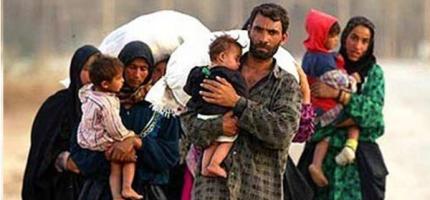
Five years ago the United Nations High Commissioner for Refugees (UNHCR) described the Iraqi refugee crisis as “the largest long-term population movement in the Middle East since the displacement of Palestinians following the creation of Israel in 1948." Not much has changed at the end of 2012, a year after US forces pulled out of Iraq. “Some one million people remain displaced throughout the country, of whom hundreds of thousands live in dire conditions,” the UNHCR recently noted.