Category

Obama

The Grinches Who Stole Jobless Benefits

By Imara Jones

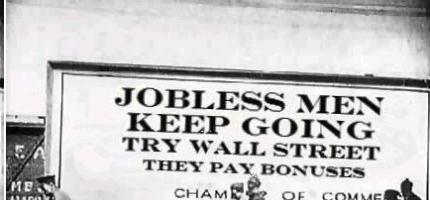
While the week before Christmas is a time when most Americans begin to pay less attention to the outside world in order to focus on friends and family, 1.3 million people will find that nearly impossible. That’s the number of the long-term unemployed—individuals who’ve been jobless for more than six and a half months—-whose unemployment benefits will expire just days after Christmas. The long-term unemployed are disproportionately people of color.
Where Have You Gone, David Brinkley?

By Dave Helfert

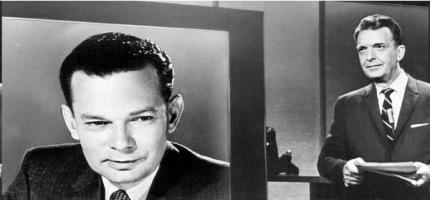
Media reporters and experts cover, weigh and analyze each day’s events, and that’s appropriate.  But many of them use the day’s events to issue pronouncements about the future, picking winners and losers in an off-year election 11 months away or deciding who’s ahead in a presidential race three years from now.  It’s like a movie critic reviewing an entire two-hour film after looking at one frame. Some of this is intrinsic to modern journalism. News is what’s happening right now, or just happened, or is about to happen.  

A Return to the Political Center

By Jim Jaffe

The center is holding.  Despite the enormous stresses of responding to a deep, painful recession while awkwardly implementing a long-sought national health insurance program, America’s politics are moving back toward the middle, fueling frustrated responses from fringe elements who see opportunities for fundamental change evaporating. The economy is coming back.  Threats of a government shutdown – or even default – seem to be receding. 

The Rise and Fall of the Republican Party

By Tyler Huggins

Post-Romney/Ryan defeat, Republicans ordered an autopsy report on their '12 campaign season. The report, entitled the Growth and Opportunity Project exposed several large anachronisms and rifts in the party. To quote directly from the report: "These are voters who recently left the Party [sic]. Asked to describe Republicans, they said that the Party is 'scary,' 'narrow-minded,' and 'out of touch" and that we were a Party of 'stuffy old men.' This is consistent with the findings of other post-election surveys." 

What We Want to Hear From Michelle Obama

By Keli Goff

In less than three months, President Barack Obama will celebrate the anniversary of being sworn in for his second term as president. Although many conservatives are looking ahead with anticipation to the end of his final term in office, many liberals are looking ahead with the hope that in his final years as commander in chief, the president might begin pushing a more aggressively progressive agenda. Then there are those of us who are hoping that in the president’s final term, we might get to see the Michelle Obama we haven’t seen since the early days of the 2008 presidential campaign.

The GOP’s 'No Win' Strategy

By Bob Neuman

Here is a bold and risky conclusion:  the Republican Party, as now constructed, knows it cannot win the White House.  It probably cannot get a majority in the Senate.  But it can continue its hold on the House of Representatives and thus continue its strategy of blocking legislation rather than acting on the needs of the nation. Looking at current polling numbers, the GOP is at a historic low in public opinion.  

The Government Shutdown Ended. What Now?

By Bob Neuman

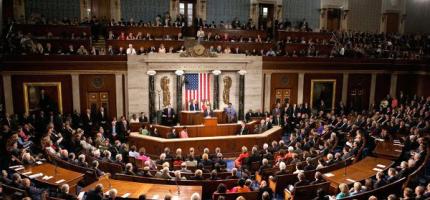
The shutdown has ended…and now for the showdown. Recent polls show the great majority of Americans are unrepresented in the Congress. And it is time for them to exercise their muscle. The problem is that the hard right and the hard left have an advantage because of unfettered campaign funding in controlling the purchase of advocacy advertising and lavish funding given to candidates of their likemindedness, left and right, far extreme from the center.

Have We Done Enough to Prevent Another Financial Catastrophe?

By Mark Goebel

More than three years after Dodd-Frank financial reform was signed into law by President Barack Obama and five years since Lehman Brothers failed, touching off a global financial crisis, U.S. financial markets remain vulnerable to the kind of meltdown that brought the economy to its knees in 2008. Dodd-Frank –which is supposed to prevent large financial institutions from taking excess risk of the kind that caused JP Morgan to lose more than $6 billion on a series of failed derivatives trades in London—is slowly but surely being watered down.