Category

civil rights

‘I Have a Dream’: A Mighty Export

By Sandip Roy

There is nothing in Dr. King's speech to imply that to be a hyphenated American is to have divided loyalties. When Jindal says American, the non-hyphenated version, he simply means Judaeo-Christian white - a whiteness that might not be visible in the color of the skin, but is definitely there in the content of the character. King's speech needs to be read again and again - not just commemorated or elocuted - to prevent it from being appropriated by the Jindals for their own ends. And not just in America.
50 Years Later, Civil Rights Leaders Face Daunting Challenges

By Earl Ofari Hutchinson

A Pew study specifically released to coincide with the 50th anniversary celebrations graphically made the point that the economic and social gaps between whites and African-Americans have widened over the last few decades despite massive spending by federal and state governments, state and federal civil rights laws, and two decades of affirmative action programs. The racial polarization has been endemic between blacks and whites on everything from the George Zimmerman trial to just about every other controversial case that involves black and white perceptions of the workings of the criminal justice system.

1960s-Style Civil Disobedience Fuels Present-Day Activism

By Raj Jayadev

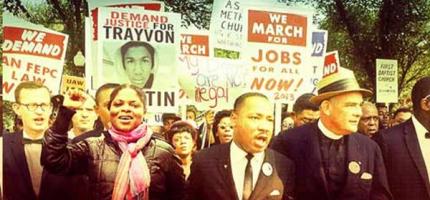
This August marks the 50th anniversary of the March on Washington -- that watershed moment of the civil rights era that showed how mass movement could force the nation to address issues of inequality and change the political direction of the country. Had America not recently experienced some of the most poignant, traumatic, and racially-charged episodes in years, this march anniversary may have only been a nostalgic, obligatory, nod to the past. 

Trayvon Martin and Oscar Grant: Accidental Heroes

By Sandip Roy

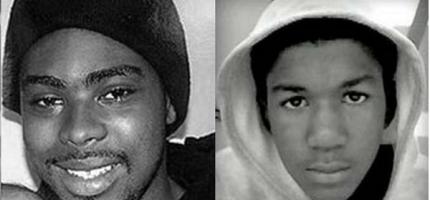
They were all trying to get home -- Oscar Grant in Oakland, Trayvon Martin in Florida, or the woman who was raped in a bus in New Delhi and christened Nirbhaya or the fearless one by the media, or the woman gangraped on her way back from college in Kamdhuni near Kolkata. They didn't want to spark off great protests. They didn't want to become symbols, placards or posters. They didn't want docudramas made about their lives.

Remembering Medgar Evers

By Corey Dade

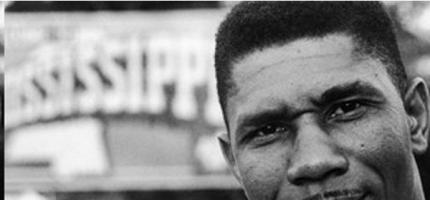
Wednesday will mark the 50th anniversary of the assassination of civil rights leader Medgar Evers, and the timing couldn't be more significant: Any day now, the Supreme Court could strike down a pair of landmark remedies owed in part to Evers' activism. Uncertainty hovers over observances that began at Evers' gravesite at Arlington National Cemetery last week, as the civil rights community warily awaits rulings that might fundamentally change, if not outright limit, minorities' access to college and participation in elections.

All Eyes Are on Supreme Court Over Fate of Voting Rights Act

By Earl Ofari Hutchinson

The GOP’s hoped-for trump card to stave that off as long as possible is the Supreme Court. The conservatives on the court read the election tea leaves and three days after President Obama’s re-election announced that they would take up a challenge to the Act. They dropped strong hints that they may well vote to gut the Act. Justice Anthony Kennedy said he was troubled by the provisions. Chief Justice John Roberts bluntly said that things have changed in the South and that blacks supposedly vote everywhere in the South without any barriers or prohibitions. 

USPS Honors the Legacy of Civil Rights Hero Rosa Parks

By Jeanne Theoharis

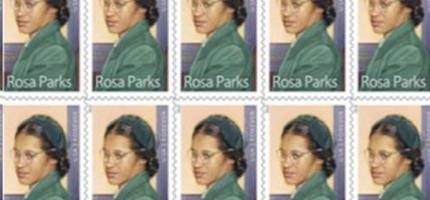
To honor the centennial of the birth of Rosa Parks on Feb. 4, 1913, the United States Postal Service has issued a Rosa Parks stamp. Last year, a stone carving of Parks was added to the National Cathedral. In 2005, she became the first woman and second African-American to lie in honor in the nation's Capitol and, through a special act of Congress, a statue of her was ordered placed in the Capitol. Yet these tributes to Rosa Parks rest on a narrow and distorted vision of her legacy

What Lies Ahead For President Obama in His Second Term

By Earl Ofari Hutchinson

The crucial job that voters in 2008 believed Obama could do best, and still want done in 2012, is to make the economy right, rein in the Wall Street greed merchants, save jobs and homes, and get the credit pipeline to businesses open. He also will continue to be the firewall against all efforts to gut Medicare, Social Security, and Medicaid. His ability to accomplish these things didn’t fully happen during his first four years. The modest proposals that he put forward to attack these towering problems only gave the GOP ammunition to rally millions to harangue, hector, and obstruct Obama’s efforts.