
Category

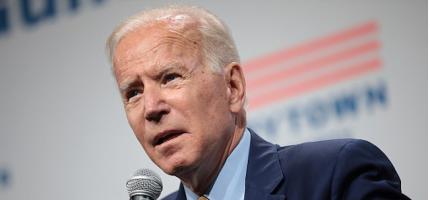
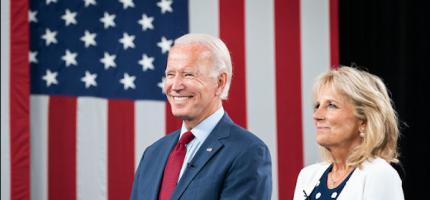
president biden

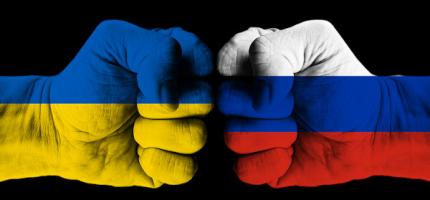
The Ukraine Quandary: Assessing Conservative Resistance to Further Financial Commitments

By Antonio Graceffo

The conflict has imposed significant economic strain, with escalating fuel and food prices affecting numerous countries. The continuous stream of news detailing the horrors of the war can lead to emotional desensitization for many individuals. Media coverage of the conflict has either diminished or become lost in the background noise of the overly saturated media landscape. Even discussions about funding allocations are losing their audience.

The Debt Ceiling, Monetary Policy, and Inflation

By Antonio Graceffo

In times of economic downturn, such as the 2008 financial crisis or the pandemic lockdown, the government enacts expansionary fiscal and monetary policy to “stimulate” the economy and create jobs. These policies also create inflation and many economists argue that the growth is illusory. The pandemic-related spending and stimulus caused inflation  to reach 9.1% in June 2022.

We Can’t All Get Along -- Remembering Rodney King’s Forsaken Plea

By Eric Green

This example of getting along came in marked contrast to how some legislators in Congress (mis)behaved during President Biden’s February 7 State of the Union address. As Biden talked about how a minority of GOP members aimed to cut spending for the Social Security and Medicare programs, Rep. Marjorie Taylor Greene and a few of her fellow Republicans interrupted the speech by booing, shouting out rude objections, and generally making fools of themselves.

Impact of the U.S National Defense Authorization Act on Taiwan

By Antonio Graceffo

Although the Foreign Relations Authorization Act for  fiscal 2003 designates Taiwan as a “major non-NATO Ally,” Washington maintains “strategic ambiguity” -- meaning that the U.S. takes no official position as to whether  Taiwan belongs to China. Taiwan’s fate is to be negotiated between China and Taiwan; however, that negotiation must be free and peaceful. To ensure that Taiwan is not invaded by China, the Taiwan Relations Act of 1979 requires Washington to provide Taiwan weapons of a defensive nature.

Ukraine: A Deeper Look Into the Threat of a Potential World War

By Antonio Graceffo

At the end of World War II, Russia wanted assurances that NATO would not shift eastward, threatening Russian territory. After the fall of the Soviet Union, however, Ukraine and other Eastern European nations became independent, removing the buffer zones between Russia and NATO. Romania, Bulgaria, Poland and the Baltics have all become NATO members, and Russia sees this as a security concern.

Putin’s Dangerous Aggression Is About Creating a New Russian Empire

By Emily Channel-Justice and Jacob Lassin

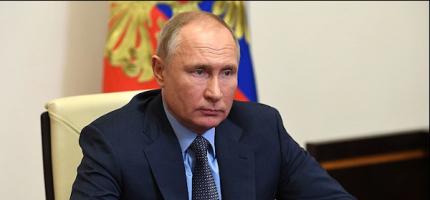
In a speech on Feb. 21, 2022, Putin recognized the occupied territories in Ukraine of Donetsk and Luhansk and moved Russian forces into them. In his view, Ukraine’s independence is an anomaly – it’s a state that should not exist. Putin sees his military moves as a way of correcting this divergence. Largely absent from his discussion was his earlier emphatic grievance that an eventual spread of NATO to Ukraine threatens Russia’s security.

The New Great Game and Shifting Alliances: U.S., India, Russia, China, and Pakistan

By Antonio Graceffo

The original Great Game was played out in the 19th Century, between Britain and Russia in Afghanistan, an ever-shifting military, economic, and geopolitical competition, which often took the form of proxy wars, with the great powers backing local forces, to fight one another. Today, the region is host to an even larger and more complex Great Game, with implications for the fate of the modern world, as it is being played out between several of the world’s largest, nuclear-capable, armies: the United States, India, Russia, China, and Pakistan.

Why the Taiwan Question Matters

By Antonio Graceffo

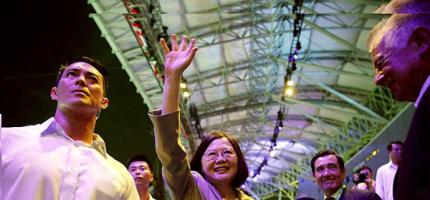
Taiwanese President Tsai Ying-Wen, a popular, pro-independence leader who has been elected to her second term, has thanked the U.S. and other Western countries for their support. She gave a speech on National Day, saying, “We will not bow to China.” Taiwan is firmly committed to remaining independent, but is careful not to declare independence.