
Category

nonfiction

How a 1920 Wall Street Bombing Tanked the Career of a Famous Detective

By Jeffrey D. Simon

As is often true when there are multiple witnesses to a crime, there were varying accounts of the explosion. A sample of 21 witnesses did, however, reveal some points of agreement. Most of them said that a horse-drawn wagon was parked in front of or near the U.S. Assay Office, which was located on Wall Street at the time, and that it was old and dilapidated, its paint worn off.

Burkhard Bilger’s Discovery of a War Criminal in the Family in ‘Fatherland’

By Lee Polevoi

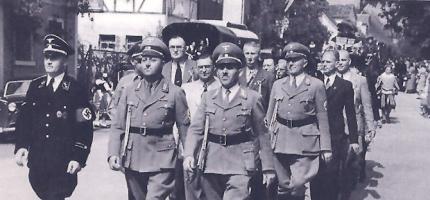
Soon after the liberation of France, Karl Gönner (called “Karl” throughout the book) was charged with ordering the execution of a villager aligned with the Resistance. A series of investigations followed, leading—many years later—to Karl’s official exoneration (though even that label was later rescinded by a German investigative committee.

Straddling the Wilderness Between Russia and China in Colin Thubron’s ‘Amur River’

By Lee Polevoi

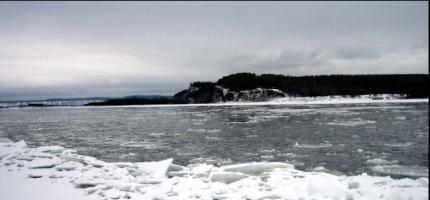
During his travels, Thubron crosses more than 1,100 miles along this vast waterway—not only on horseback, but by train, car, and boat. His trek encompasses visits to desolate villages and decaying monasteries, with encounters that range from friendly and well-meaning, to more sinister interactions with local police. Who says no one is intrepid anymore? Colin Thubron is intrepid.

Snakes, Arm Wrestling, and Childhood Adventures in Padgett Powell’s ‘Indigo’

By Lee Polevoi

And now Powell’s fans get a different view of the stubbornly individualistic author. The essays in Indigo encompass, among other things, a profile of Cleve Dean, a one-time arm-wrestling champion who has “ballooned to nearly seven hundred pounds”; memories of an eventful childhood in Florida; a quirky tour of the French Quarter in New Orleans; and insightful (though frustratingly brief) assessments of writers like Flannery O’Connor, Donald Barthelme, and William Trevor.

A Chronicle of the Never-Ending Virus in Lawrence Wright’s ‘Plague Year’

By Lee Polevoi

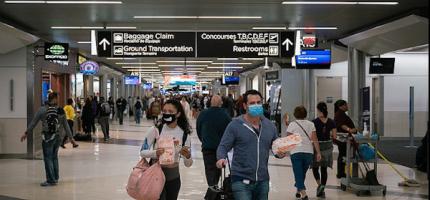
As months passed, that reading grew more problematic. Too many people were still becoming infected and far too many were still dying. Cynical, opportunistic politicians jumped on an anti-vaccine bandwagon, while the voters they claimed to represent were succumbing to the terrible disease. People were (and still are) inexplicably rejecting science, clinging to a demagogue-inspired belief that somehow, in some way, vaccines against this deadly disease threaten their “individual freedom.”

Adopting a New Worldview That Is Intellectually Sound

By Jeremy Lent

Something I learned on that journey, and which will become clear through the book, is that one’s personal search for meaning cannot be isolated from all that is going on in the world around us. In the pages that follow, as we trace the intimate connections that link our lives to those in our community, to all of humanity, and to the entire living Earth, we’ll discover how inextricably we are all interrelated—and explore some of the profound implications arising from that relatedness.

Land and the Sweep of History in Simon Winchester’s New Book

By Lee Polevoi

His ownership serves as a springboard for what emerges as a thorough examination of how land ownership has influenced the sweep of history. In the course of his far-reaching study, Winchester looks at demarcation of property lines in the Bronze Age, the cruel land grab from Native Americans in the 18th and 19th centuries, mass starvation in Stalinist Russia, and the age-old conflict over territory between Israel and Palestine.