
Category

Facebook

Personal Accountability in the Age of Social Media

By Michael Odenthal

This is an age of unparalleled transparency. With the steady grind of an always-hungry-for-content 24-hour news cycle, and the unprecedented window into individuals’ personal lives provided by social media outlets like Facebook, Twitter, Vine and Instagram, so much of what people do or think is documented that, for those who embrace these modes of communication, it would seem nearly impossible for anyone to disown a statement or action expressed through one of these public forums. 

Move Over, Facebook: Welcome to the World of Anonymous Apps

By Veronica Mendez

The last year has seen the emergence and popularity of anonymous social networks and apps such as Secret, Whisper and Anomo that promised users anonymity and a diminished digital trace. These anonymous networks seem to be a cultural reaction to the oversaturation of social media and the invasions of privacy on behalf of the corporations and the government. As people become more and more aware of just how permanent and sellable the digital footprint really is, there is a new consciousness growing within the online self. 

Facebook and the Powers of Media Manipulation

By Marty Kaplan

The average Facebook user sees only 20 percent of the 1,500 stories per day that could have shown up in their news feed.  The posts you receive are determined by algorithms whose bottom line is Facebook’s bottom line.  The company is constantly adjusting all kinds of dials, quietly looking for the optimal mix to make us spend more of our time and money on Facebook.  Of course the more we’re on Facebook, the more information they have about us to fine-tune their formulas for picking ads to show us.  

Celebrity Deaths in the Age of Google and Facebook

By Sandip Roy

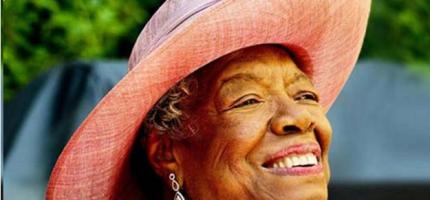
For the record the Google search yielded 513,000 results in 0.27 seconds. That's a lot of Maya Angelou to choose from even for the most Angelou-ignorant. Once when a legend died, the problem was what to say if you hated him. But to have an opinion, good or bad, about a legendary literary figure you had to read her. Now for instant and innocuous insight you can just Google her. Once you faked sorrow. Now you fake familiarity.

10 Years Later: Where is Facebook Headed Next?

By Karolina R. Swasey

On February 4th Silicon Valley popped corks to celebrate Facebook’s 10th birthday. What began as a relatively exclusive event for the East Coast elite, very soon hit a central nerve and changed the way 1.23 billion people worldwide communicate, interact, engage, catch up, and bristle. Let’s think about those two numbers for a moment: A company that didn’t even exist 10 years ago, has as many users as India has denizens. 

A Brief History of The New Republic: From Lippmann to Peretz to Hughes

By Benjamin Wright

The New Republic was on the verge of collapse just shy of its 100th birthday. But in March of 2012, Facebook co-founder Chris Hughes swooped down to its rescue, saving the iconic magazine from ruin, nursing it back to health, though not necessary profitability. This was not the first time the influential magazine has stood on shaky ground, nor is it the first time that it has operated at a financial loss. And judging from its recovery in recent months, it seems fair to say now that it will likely not be the last. 

Crashing the All-White Party in Silicon Valley

By Semany Gashaw

In a thriving Bay Area technology sector where black and brown faces are the exception and not the norm, Chris Cruz, a Filipino American, and Isaac Reed, an African American, are crashing the party. A study conducted in 2011 by three California-based groups looked at workforce diversity at a dozen companies in Silicon Valley, including industry giants Intel, Cisco and Ebay, and found an industry where African Americans and Latinos are grossly underrepresented when compared to their percentages of the state population.

From Arab Spring to Autumn Rage: The Dark Power of Social Media

By Andrew Lam

Nakoula/Bacile is currently in hiding and may in fact be fictitious. Much evidence now points to him as a Egyptian Coptic Christian, who allegedly holds grudges against Islam. On Thursday, U.S. Attorney General Eric Holder announced that Nakoula was convicted two years ago on federal charges of financial fraud. The jury is out on who instigated the violence against U.S. workers in Libya, resulting in the death of the American ambassador and three other personnel. The attack was carefully planned, it was reported, and not the mere work of angry protesters