Category

Egypt

‘The Square’ Vividly Captures the Turmoil in Egypt

By William Eley

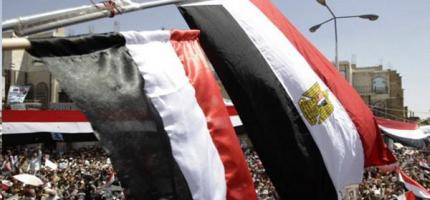
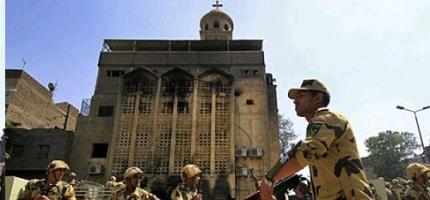
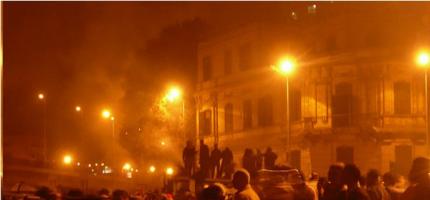
With this “battle of images” so resonant, to relegate this film as only an award-winning depiction of the on-going fight for social justice and freedom across Egypt would be an act of missing the point. This film is a tangible action, an expressive continuation of this endeavor towards democracy just as important as the raw material of which Noujaim’s narrative is composed. The underlying thesis that makes The Square so unique is that it eschews both the construct of a conclusion and the notion of a singular authorship, as the film chronologically traces the relationships of its six disparate characters.
In Egypt, the Revolution That Many Regret

By Andrew Lam

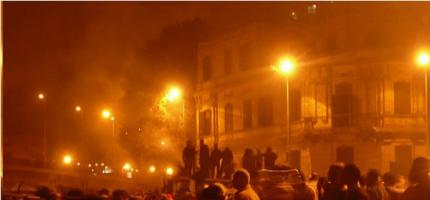
“Before the revolution,” said the 28-year-old, “I worked so hard that I begged for one day off a month and the company always said no. Now I get to do three jobs a month and I have to beg them to pick me.” It’s a phrase you hear often in Egypt. “Before the revolution,” locals say, things were bad but manageable. Before the revolution, everyone hated the same regime. After the revolution, hope has turned to fragmentation and fear. And tourism – once a mainstay of the economy – has slowed to a trickle. 

What Is the Difference Between Morsi and Mubarak? Only Religious Fundamentalism

By Michel Rubeiz

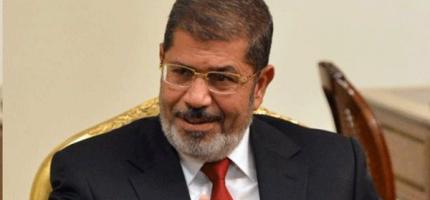
Is political Islam matching the aspirations of the Arab Spring? Egyptians may have a clear answer after living a few years under a Muslim Brotherhood administration. Early signs from Cairo are not encouraging. President Morsi, representing the Brotherhood, won the post-uprising Egyptian presidential elections for three main factors: support of a relatively well-organized grassroots movement, being a leader of a resilient opposition to a series of corrupt regimes and a promise to take a moderate approach to political Islam. It turns out that the Morsi model of governance is a disappointing mixture of hardline religious fundamentalism, pragmatic capitalism and survival politics. 

From Salman Rushdie to Sam Bacile: Why Fanatics Are Easily Offended

By Sandip Roy

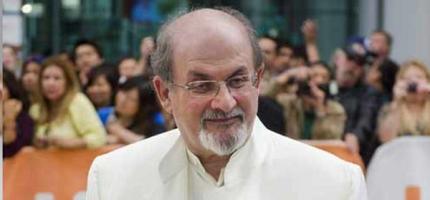
A mysterious man in California hires a soft porn director and tricks some low-rent actors into making a trashy movie about the Prophet Muhammad. Now an Iranian foundation ups the price on Salman Rushdie's head saying that if he had been killed earlier for blasphemy, this newest anti-Islam film would never have been made. We are expected to believe that Salman Rushdie is the slippery slope that has led to Sam Bacile. The logic is so ludicrously tortured that it should be the butt of jokes. Instead it turns deadly serious and leaves a US ambassador and others dead in Libya and a gathering storm of mobs from Pakistan to Yemen.

Obama’s Middle East Dilemma

By George Abraham

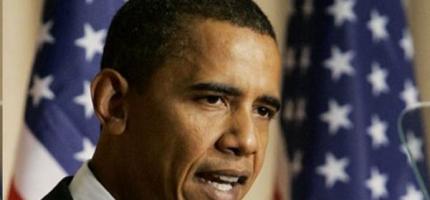
The killing of U.S. Ambassador Christopher Stevens in Benghazi, Libya, on the anniversary of September 11 should provoke a similar examination of the Obama presidency. Here was a quintessential ambassador – an Arabic speaker, popular among ordinary Libyans, who had worked with the revolutionaries to overthrow Muammar Gaddafi – killed in the line of duty.  It was a colossal failure, marking a nadir in a presidency that boasted a break with Bush-era unilateralism and a promise to “commit ourselves to an effort – a sustained effort – to find common ground” with the Muslim world. 

Is Egypt in Danger of Becoming the Next Iran?

By Amr Emam

In a few weeks, Egypt will elect a president for the first time since a popular uprising that toppled a three-decade-old authoritarian regime under Hosni Mubarak. Violence is engulfing the country, claiming lives and spreading fear. Egypt’s Islamist forces, particularly the Muslim Brotherhood and their more conservative Salafist peers, are preparing for what seems to be an imminent clash, one that ostensibly takes center stage in the presidential election and will decide the fate of the secular government. 

One Year Ago Today…

By Suzanne Manneh

Tareq, a Syrian American graphic designer living in Silicon Valley, says his life has “completely changed 100 percent over the past year,” a change he credits to protests in Egypt’s Tahrir Square exactly one year ago today. That date has since been enshrined as the beginning of the Arab Spring. That singular event launched a wave of protests, beginning in Tunisia and rapidly spreading across the region, culminating in an 18-day rally that drew on Egyptians of all stripes and from all corners who descended on Tahrir and eventually succeeded in ending Mubarak’s 30-year rule.