Category

coronavirus

Mongolia: How a Small, Landlocked Country Dealt With the Pandemic

By Antonio Graceffo

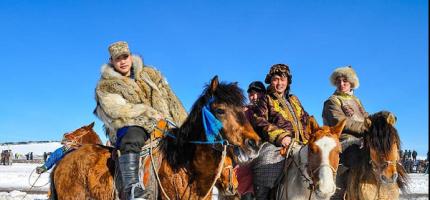
On the financial side, the government of Mongolia simply has less money to work with when it comes to addressing health issues. Under normal conditions, Amarsaikhan said, “There is a big gap between urban and rural development. Infrastructure is underdeveloped. We have poor quality of health services and inadequate health care access.” During the pandemic financial issues became even more acute. “The economy is dependent on mining exports.”

A Chronicle of the Never-Ending Virus in Lawrence Wright’s ‘Plague Year’

By Lee Polevoi

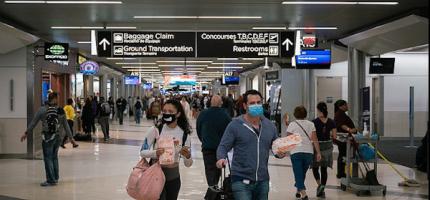
As months passed, that reading grew more problematic. Too many people were still becoming infected and far too many were still dying. Cynical, opportunistic politicians jumped on an anti-vaccine bandwagon, while the voters they claimed to represent were succumbing to the terrible disease. People were (and still are) inexplicably rejecting science, clinging to a demagogue-inspired belief that somehow, in some way, vaccines against this deadly disease threaten their “individual freedom.”

How COVID-19 Effected a Rise in the Price of Food

By BPT

Compared to 2019, supermarket operating costs were up 7.9 percent in April 2020 and 6.7 percent in May 2020, according to USDA Economic Research Service. Grocery stores have remained open during the pandemic and have had to quickly adjust to new regulations, safety and sanitation practices, and enhanced customer education — all requiring resources. In addition, some areas of the grocery store, including salad bars and hot bars, have had to shut down, meaning a loss of revenue.

Bob Woodward Turns His Mighty Pen on Trump and the Presidency

By James Fozard

During the course of advising Trump, all three found their recommendations denied or contradicted in later public statements or tweets. The intelligence agencies were widely and publicly assailed by Trump, most famously in his comments about his private meeting with Vladimir Putin in Helsinki, in which he seemed to publicly accept Putin’s denial of election interference and his distrust of his own intelligence services. 

How COVID-19 Changed America and the World Forever

By Kenneth Foard McCallion

So what would have happened if the federal government had acted with the degree of vigilance that we had come to expect from the Ebola crisis and other pandemic threats? What if those sweeping measures imposed on or after March 15 — a federal warning against large gatherings, health screenings at airports, states of emergency declared, etc. - had been announced one or two weeks earlier?

Virtual Adventures at New York’s Great Museums

By Sandra Bertrand

Not surprisingly, when you arrive on the site, you are greeted with “A Message to Our Community.”  The foundation is “creating paths that lead to a more inclusive and diverse museum and workplace.”  Nearly a year ago, it launched a Diversity, Equity, Accessibility and Inclusion Initiative.  It’s a high order and we can only hope that they can live up to the founding belief that “art can embrace the spirit and transform human behavior.” One example on the website of genius at work is a brief artist’s video profile of Simone Leigh.

A ‘Post-Truth’ Society and the COVID-19 Pandemic

By Romin W. Tafarodi

The following year, 2017, was notable for the addition of a neo-Orwellian phrase to the post-truth glossary. It began on Jan 21, with White House Press Secretary Sean Spicer claiming of Trump’s inaugural ceremony, “This was the largest audience to ever witness an inauguration – period – both in person and around the globe.” The claim was promptly fact-checked and cast into doubt. Nonetheless, indefatigable Counselor to the President Kellyanne Conway defended Spicer on television the next day, claiming he was simply providing “alternative facts.”

The Economic Forecast After the Coronavirus Pandemic

By Richard Smith

Even with widespread testing, until a vaccine is available, there are entire industries that will have less than half the pre-virus business: airlines, hotels, cruise ships, theme parks, and sports, to name a few, as well as myriad other businesses supporting or related to these industries. In addition, more than a few large retail department and specialty store chains will probably not make it. No need to list names, but they are the obvious weak ones prior to COVID-19.