

Christopher Nolan adapting the oldest story ever told -- the story from which every epic descends -- sounds too good to be true. The most influential director of the 21st century follows up his Oscar-winning historical epic, Oppenheimer, by attempting to one-up himself, finally telling the story that has quietly existed beneath his entire career.
In 2004, Nolan was in contention to direct Troy, only for Warner Bros. to hand that film to Wolfgang Petersen instead and offer Batman Begins as a consolation prize. Twenty years later, Nolan finally gets the chance to bring The Odyssey to the big screen.
Almost every film in Nolan's filmography is, in some way, a conversation with Homer's epic. The story of a great but deeply flawed man struggling to return home while battling the physical world and the relentless passage of time forms the backbone of Inception, Interstellar, and Dunkirk. Inception even opens with Leonardo DiCaprio's character washed ashore on a beach, an unmistakable homage to Odysseus. The Odyssey is not simply another epic for Nolan to adapt. It is the epic he has been chasing his entire career.
It almost feels unnecessary to summarize the plot of The Odyssey. It is the blueprint for the hero's journey: A man must return home from war to save his family and kingdom, only to face the wrath of the gods. Nolan's adaptation remains faithful to Homer's poem while infusing it with his own sense of defiance. Here, the gods are rarely tangible figures; instead, they manifest as forces of nature, fate, and inevitability. Odysseus's greatest flaw is not simply hubris, but his refusal to accept a destiny already written for him. Rather than submitting to fate, he wages war against it.
Just as Homer's poem cannot be reduced to a simple synopsis, neither can Nolan's filmmaking be reduced to words like "epic." At this point, describing a Christopher Nolan film as breathtaking, meticulously crafted, and ambitious seems redundant. He has become a genre unto himself, and The Odyssey is his most uncompromising statement yet. Every frame is overflowing with visual grandeur, elevated by Jennifer Lame's propulsive editing and Ludwig Göransson's thunderous score.
Yet scale can only carry a film so far. Where The Odyssey truly succeeds is in its meditation on the natural order and the violence that disrupts it. Throughout Nolan's filmography, civilization is defined by the forces that threaten to unravel it. In Oppenheimer, it is nuclear annihilation. In Dunkirk, it is the fear of never returning home. In The Dark Knight trilogy, it is Gotham's descent into chaos. Here, it is the Trojan War itself, the original sin that fractures the natural order. Odysseus's journey home becomes a reckoning with a world permanently changed by humanity's refusal to live within the order the gods established.
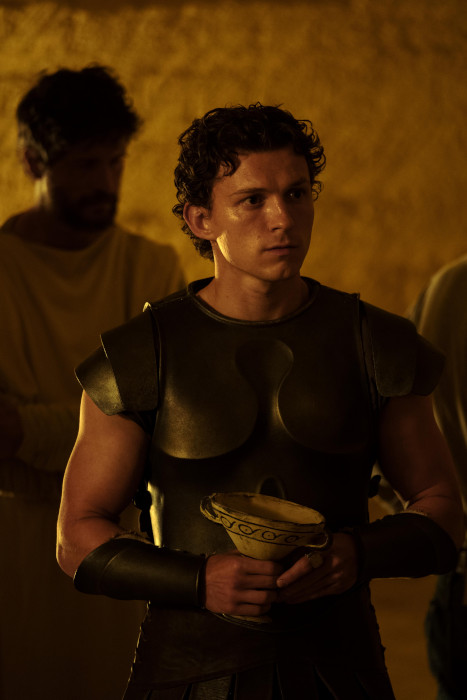
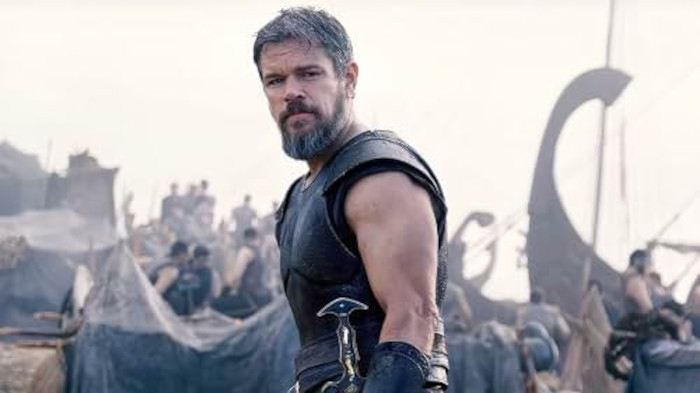
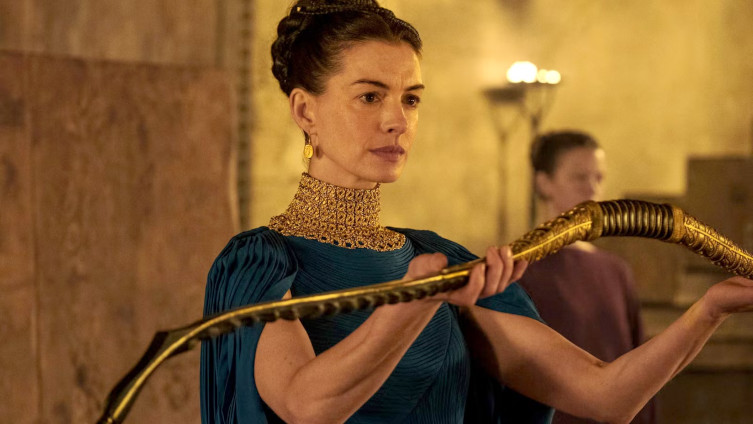
Leading the film is Matt Damon as Odysseus, delivering the finest performance of his career. Damon brings the hero's humanity to the forefront. He balances his natural on-screen charisma with arrogance and vulnerability. Surrounding him is an ensemble cast so deep that many remarkable performances barely have room to breathe. Anne Hathaway is devastating as Penelope, a woman caught between unwavering faith and the unbearable possibility that her husband will never return. Tom Holland brings a restless, boyish determination to Telemachus, a son whose search for his father becomes a search for himself. Then there's Robert Pattinson, who nearly steals the film as the slimy, manipulative Antinous.
And that's before mentioning another dozen standout performances. John Leguizamo brings warmth and unwavering loyalty to Eumaeus, the emotional heart of the film. Zendaya lends Athena an ethereal wisdom that feels both divine and strangely human. Jon Bernthal deploys his trademark aggro-bro combativeness as the King of Sparta, a performance so aggressively masculine, it seems as though the role had been waiting for him all along. Charlize Theron is hypnotic as the seductive Calypso, while Samantha Morton steals the film in a single, terrifying sequence as the witch Circe. It's the rare ensemble where even the smallest roles leave a lasting impression.
Nolan has cited Emily Wilson's 2018 translation as a major influence on his adaptation, a fitting choice for a film so interested in reexamining an ancient story through a modern lens. Wilson's translation -- the first English version of The Odyssey by a woman -- is notable for its direct, accessible language and its emphasis on the humanity of its characters, rather than simply the grandeur of their mythology.
That same philosophy extends to Nolan's casting choices. The controversy surrounding Lupita Nyong'o's casting as Helen of Troy and Elliot Page's casting as Sinon reflects a fundamental misunderstanding of mythology itself. The Odyssey has survived for thousands of years not because it remains frozen in one definitive interpretation, but because each generation has been allowed to reshape it and discover new meaning within it.
The most powerful example comes with Page's casting as Sinon. In one of the film's most moving moments, Odysseus calls Sinon the bravest man he has ever met. The line carries additional weight given the transphobic attacks Page has faced, amplified by figures like Elon Musk and other right-wing influencers who have attempted to turn Page's identity into a culture-war talking point.
Nolan's choice to cast Page represents the idea that a person cannot be defined by expectation. Sinon is not heroic because he fits the traditional image of a warrior; he is heroic because of his courage, resilience, and willingness to endure suffering for something greater than himself. By casting Page, Nolan creates a powerful parallel between actor and character and the idea that no one else gets to define who you are or what you are capable of becoming.
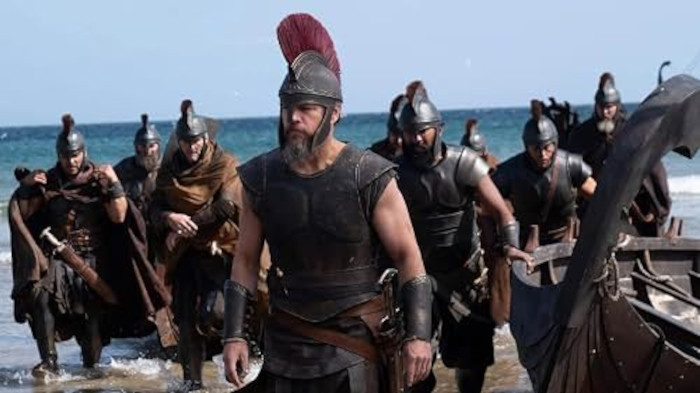
There is only one way to experience The Odyssey: on the largest screen possible. Having seen the film three times in IMAX 70mm, the format Nolan designed it for, the impact of seeing this story unfold at its intended scale is impossible to overstate. As the first film shot entirely on IMAX cameras, every frame is designed to overwhelm, from its vast landscapes to intimate moments of humanity.
With The Odyssey, Nolan has created another masterpiece in a career already filled with them. It is no doubt the culmination of everything he has spent decades exploring and a bold new chapter for one of cinema's most ambitious filmmakers. Like Homer's epic itself, Nolan's film is destined to endure.
Author Bio:
Ben Friedman is a contributing writer and film critic at Highbrow Magazine.
For Highbrow Magazine