


It’s hard to pull off a good videogame adaptation. Even if you do a good job of adapting the story, there’s the intangible benefit of experiencing it through an interactive medium. Beyond that, you also have to worry about pacing, as the plot of most games is much longer than a standard film.
Exit 8 is a Japanese movie that adapts an indie horror game. Making a compelling psychological horror film out of a game with such simple gameplay is no easy task, but director Genki Kawamura has done a great job.

The story follows a man with no name as he travels through the subway system. After exiting the train, he gets a call from an ex-girlfriend who tells him she’s at a hospital and pregnant with his child. The shock triggers an asthma attack, and as he tries to find a way to the surface street, he realizes that he’s been going in a loop.
Kazunari Ninomiya does a compelling job of expressing the increasing bewilderment of the man as he loses his composure and wonders why he’s stuck. The original game uses a first-person perspective, but seeing the character’s expressions and movements adds a lot to the experience. The atmosphere and use of liminal spaces increase the tension in the early parts of the film.
The trick in Exit 8, as in the game, is that the man needs to spot anomalies that pop up in the main corridors that he keeps looping through. If an anomaly is present, he must backtrack; if there are none, he must move forward. Getting it right moves him to the next “level,” while making a mistake resets him to zero.

Seeing the man slowly figure out the rules of the test, or maze as it were, keeps the film engaging, even though it’s just recycling the same scenery over and over. There’s also a much bigger focus on the story of the characters.
Eventually, the film focuses on other characters also stuck in the loop, and those segments go a long way in making the film more interesting and justifying the 90-minute runtime. It adds more mystique to the nature of the trials.
The man’s anxiety over the possibility of becoming a father plagues him as he tries to leave the subway. As the film goes on, a question is raised about the nature of the game. If it is a form of hell or purgatory, the people trapped within are there to overcome guilt as part of the trial.
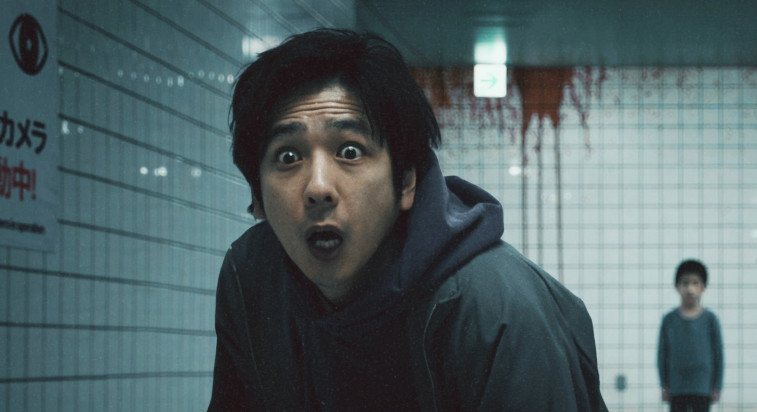
It becomes a much-needed part of the film. The tension and jump scares only take the movie so far. There are more and more instances where the camera is slowly following the man as he turns the corner of the same loop, which can create a dull effect, rather than build up tension in the storyline.
Thankfully, Exit 8 manages to stick the landing at the end, though it meanders a bit before reaching the climax. While the film lacks the videogame's crucial interactivity, the added plot makes it definitely worth watching for those interested in a unique psychological film.
Author Bio:
Ulises Duenas is a senior writer and film critic at Highbrow Magazine.
For Highbrow Magazine