

(Photo Credit: Depositphotos.com)
By now, most “Best Books of the Year” lists have already appeared, with many of the same titles recurring from one “best of” list to another. What follows here is a more idiosyncratic selection of best books published this year, celebrating three novels, a short story collection, and memoir all deserving of more notice.
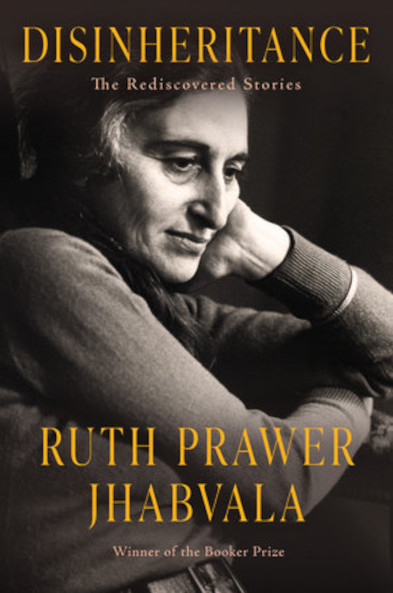
Disinheritance by Ruth Prawer Jhabvala
Ruth Prawer Jhabvala was an Oscar-winning screenwriter as well as a prolific author of novels and short stories, many of which appeared in The New Yorker. Since her death in 2013, two collections have been published posthumously, including Disinheritance: The Rediscovered Stories this year. It’s a welcome addition to the author’s distinguished oeuvre.
The men and women who inhabit these stories are often expatriates, ill at ease in their adopted homelands, and unable to make connections to sustain their lives. The locales shift easily between India, England, and New York’s Upper East Side.
These elegant, understated stories (published between 1957-2011) belong to another era but are no less memorable for that. In all her work, Jhabvala displays a profound understanding of human nature, in all its loftiest and its most corrupt forms.
The Land in Winter by Andrew Miller
A record-breaking snowfall and subfreezing temperatures crippled much of England in 1962-1963. The Land in Winter, shortlisted for the 2025 Man Booker Prize, takes place at this time in the rural countryside, the focus on two youngish couples, Bill and Rita Simmons, and their neighbors Dr. Eric and Irene Parry. Rita and Irene are both newly pregnant, facing the brutal environment of England’s harsh winter.
As the novel progresses, the women embark on an uneasy friendship, while their husbands grow enmeshed in other concerns (Bill trying to operate a dairy farm but in over his head; Eric embroiled in a turbulent affair). Things come to a head during a Boxing Day drinking party in Irene’s home, after which life is no longer the same.
The Land in Winter has a simple premise, but these men and women are such complex beings that the reader can’t always predict what they’ll do next. The bleak, wintry setting neatly colludes with the human drama, and stylistic fireworks are minimal—just graceful prose throughout and an omniscient voice that’s sharp-witted without being ironic.
As with his outstanding 2019 novel, Now We Are Entirely Free, Andrew Miller proves himself to be a master storyteller, regardless of the subject matter at hand.
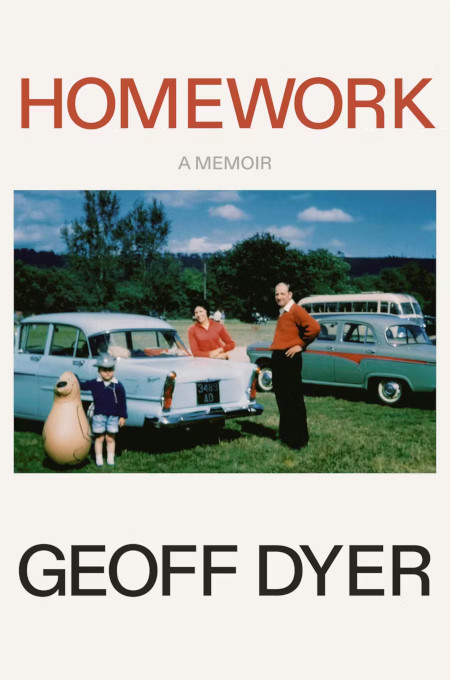
Homework: A Memoir by Geoff Dyer
Geoff Dyer’s interests range far and wide. He’s written a book about not being able to write a book (Out of Sheer Rage), one about jazz (But Beautiful), and others about “endings” in life (The Last Days of Roger Federer), and living aboard the aircraft carrier USS George H.W. Bush (Another Great Day at Sea).
In 2025, he turned his razor-sharp eye on his own life in a modestly titled memoir, Homework.
On the surface, Dyer’s background was uneventful. Born and raised in Cheltenham in the English midlands, he was the only child of a cafeteria lady and a sheet-metal worker. There weren’t many challenges in his upbringing, unless you count the ordeal of adolescent athletics, fumbled efforts at approaching girls, and his mother and father’s deeply ingrained frugality.
Nonetheless, Dyer describes his small-town misadventures in an appealing and gently
self-deprecating voice. After passing the 11-plus exams, his young life changes dramatically, leading the way to education at Oxford and an eye-opening vision of the greater world. Descriptions of his home life are both touching and sad, but Homework itself is a wry, deeply appealing account of coming of age in a difficult era.
Fox by Joyce Carol Oates
As Fox opens, a body is found in the woods of south New Jersey. The corpse may or may not belong to Francis Fox, a middle-school teacher in a small town who—unbeknownst to everyone in the community—has been endearing himself to schoolgirls for sinister purposes. While there’s no question the novel’s subject matter is cringe-inducing, Joyce Carol Oates, a master observer of the human condition’s darkest corners, is up to the challenge.
As with the notorious predator Humbert Humbert in Lolita (referenced numerous times in this novel), the tools Fox deploys in pursuit of his deviant urges are equal parts charm, menace, and the ability to fade into the background. Oates fully inhabits the predator’s consciousness, as well as that of several victims. Meanwhile, parents and school administrators are heartachingly unaware of the base evil occurring in plain sight.
Fox isn’t exactly a pleasant novel, but the author’s narrative powers (still going strong at age 87) make it nearly impossible to put down.
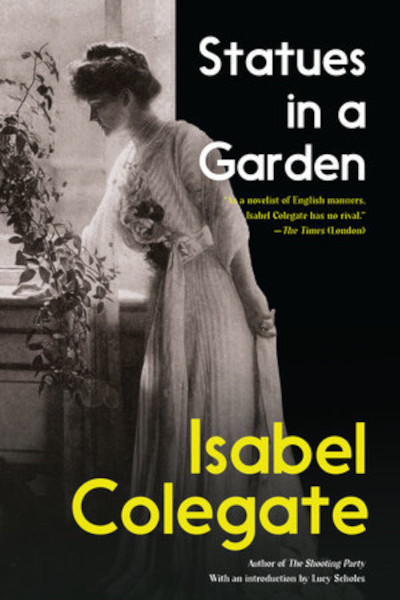
Statues in a Garden by Isabel Colegate
Isabel Colegate’s 1964 novel, Statues in a Garden, appeared for the first time in the U.S. in 2025. In tone and narrative design, the novel is just as delightful and engaging as her acclaimed masterpiece, The Shooting Party.
Like everyone else, members of the British gentry in 1914 could hardly have predicted the global devastation (and the end of their way of life) soon to come. Instead, in Statues in a Garden, the Weston family (Aylmer is a cabinet minister; his wife Cynthia an eminent social hostess) and their inner circle lead what they believe are charmed lives that will last forever.
Simmering beneath the surface is deep-rooted, upper-class familial dysfunction, the most insidious being the actions of Philip, the Westons’ adopted nephew. For complicated reasons of his own, Philip embarks on an illicit affair with Cynthia, masking his desire to see the whole family “blown to all the corners of the earth, and all their little trinkets lost.”
Long before Downton Abbey, there were Isabel Colegate’s beautiful novels, Statues in a Garden and The Shooting Party. Diehard fans of upstairs/downstairs life among the British ruling class shouldn’t miss out.
Author Bio:
Highbrow Magazine chief book critic Lee Polevoi is the author of two novels, The Moon in Deep Winter and The Confessions of Gabriel Ash. His reviews have appeared in Highbrow Magazine for more than a decade.
For Highbrow Magazine