


(Photo Credit: Depositphotos.com)
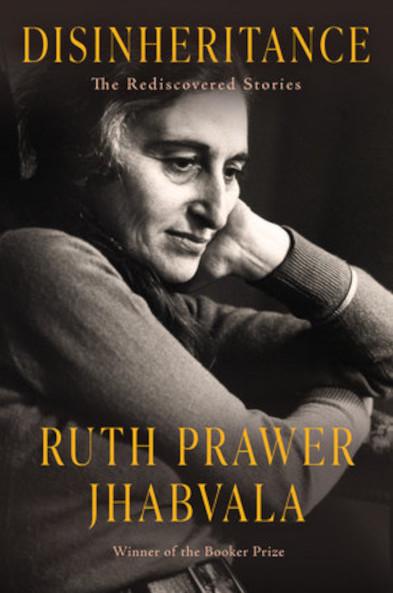
Disinheritance: The Rediscovered Stories
By Ruth Prawer Jhabvala
Counterpoint
352 pages
Ruth Prawer Jhabvala (1927-2013) is probably best known for her work as a screenwriter for prestigious Merchant-Ivory films such as Remains of the Day, and Oscar-winning adaptations of Howards End and A Room with a View. But she was also a prolific writer of fiction, including her novel Heat and Dust, recipient of the 1975 Booker Prize.

(Photo Credit: Depositphotos.com)
A collection of her short fiction, At the Turn of the Century, was published posthumously in 2018, and now there’s Disinheritance: The Rediscovered Stories, which should be the final word on this author’s distinguished career. Many of these elegant and understated stories first appeared in The New Yorker and are a welcome addition to her collected works.
The locales shift throughout Disinheritance, some set in Delhi (later New Delhi), London, and New York’s Upper East Side. Expatriates feature prominently, Jhabvala herself being a lifelong expat—born in Germany, later a resident of India and New York.
Other stories read more like fables from exotic Old India. “The Sixth Child” is a touching story about a father desperately hoping his pregnant wife will, after birthing five daughters, give him a son. Typically spare with atmosphere and details, Jhabvala offers an evocative look at a residence in Delhi, circa 1958:

(Photo Credit: Depositphotos.com)
“The house was behind a temple, hedged in by many little stalls selling flower garlands and sweetmeats and plaster-of-Paris images of the gods. Pilgrims sat resting by the side of the road, and there were clusters of ascetics in orange robes on the steps of the temple, and, just down the road, a few dirty gray cows walked about and two pariah dogs snuffling in the gutter for refuse.”
In one of the strongest stories, “In Love with a Beautiful Girl,” Richard, a young British intellectual living in the Indian capital falls hopelessly, obsessively in love with Ruchira, the young, aforementioned beautiful Indian girl. Richard disdains his Western colleagues, but Ruchira wants only to immerse herself in Western culture. Complications ensue:

(Photo Credit: Depositphotos.com)
“She was immensely proud, immensely intolerant, utterly unfair. And he loved her all the more for it, for being so strong and unreasonable, like some force of nature—a monsoon storm or a tiger in a jungle.”
Turns out, a thin line separates unrequited love and outright cruelty. By the story’s end, Richard and Ruchira are both “happy,” insofar as each party gets what they wish for (sort of).
In “An Indian Citizen,” an aging German expat named Dr. Ernst tries settling in among the residents of the city with limited success. Recently let go by the Ministry of Information and Broadcasting, Dr. Ernst now spends his days leisurely walking through different neighborhoods. He’s also in the habit of showing up unannounced on the doorsteps of his many acquaintances, whom he prefers to think of as friends:

(Photo Credit: Depositphotos.com)
“He had long since learned that the trouble with dropping in on people without any specific purpose but only for the sake of good fellowship was that the atmosphere tended to be strained.”
The stories in Disinheritance date in publication from the 1950s up until the author’s death. They seem to belong to a bygone era but are no less enduring for that.
Jhabvala’s characters are often lonely, frustrated, and out of place in their adopted lands. The stories themselves are rarely bleak. Instead, the protagonists’ quandaries, moral and otherwise, are described in a wry voice that displays a deep grasp of human nature, in all its loftiest -- and its most corrupt -- forms.
Author Bio:
Lee Polevoi is Highbrow Magazine’s chief book critic and author of two novels, The Moon in Deep Winter and The Confessions of Gabriel Ash.
For Highbrow Magazine