

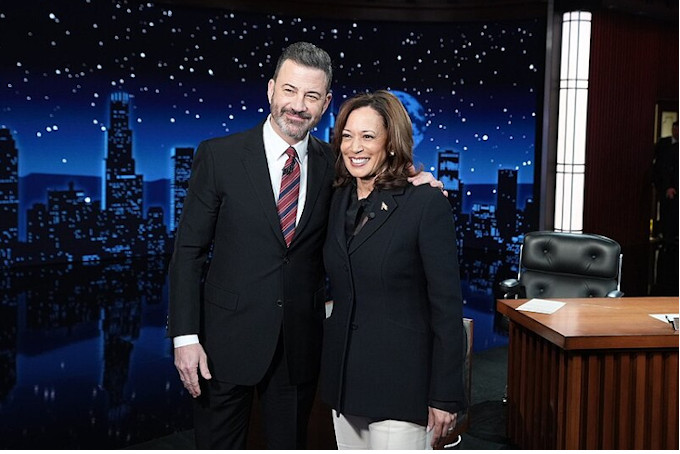
In my college classes, when a professor asks us where we get our news, I rarely respond. When I do, I often snidely remark, The Onion.
I’m mostly joking, but only mostly. Whenever I am curious about the biggest political news stories, I make my way to The Onion’s political section to see what it’s making fun of. I then navigate to the Associated Press to see how depressingly accurate the satire is and get context to the real story.
This is an exercise that has made politics and news far more fun than when I tried to establish a habit of listening to National Public Radio at work to stay informed.
That’s a habit I dropped because of how frustrating it was to hear about a never-ending stream of distressing news about Gaza and Ukraine, a depressing Biden campaign, and ever-inflammatory rhetoric from the right wing.
It’s far easier to cope with a hopeless news cycle with sardonic ambivalence than facing every day holding a layer of tacit rage seething beneath your skin. Diffusing political tension with comedy has not just been a personal practice.
Comedy has become an increasing part of how Americans consume news. The Daily Show and Last Week Tonight are popular comedy programs with an inherent news and political slant.
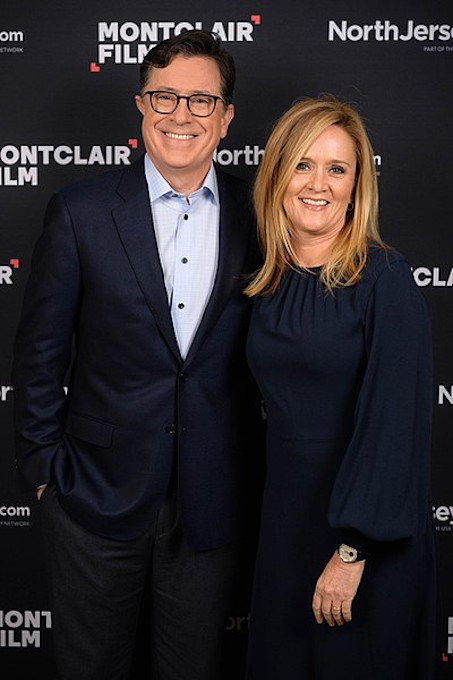
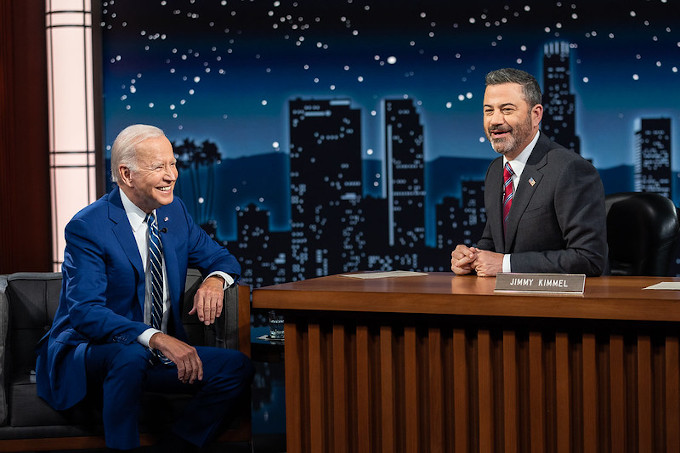
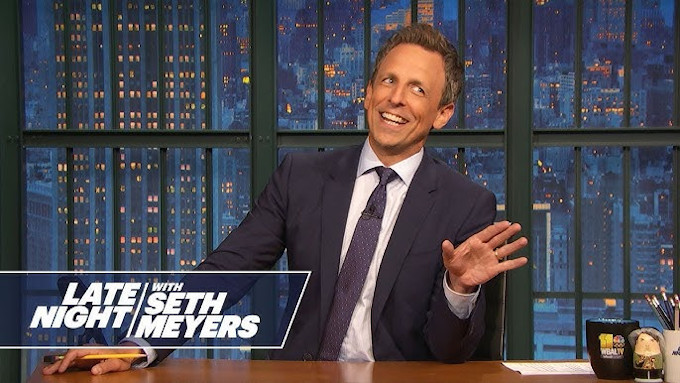
Other late night talk shows like Jimmy Kimmel Live!, The Late Show With Stephen Colbert, and Late Night With Seth Meyers frequently poke fun at politics on their programs. The “Best of Late Night” article category on The New York Times site shows a deluge of jabs at Trump by these personalities.
Election/political sketches and the Weekend Update segments have become fundamental parts of Saturday Night Live. The use of comedy for political purposes has reached beyond traditional media outlets as well.
One only need glimpse at the Kamala HQ and Team Trump social media accounts. Those campaign accounts are tonally different from their official outlets, embracing memes and youth internet culture.
Tiktok, specifically, has become a big part of America’s media diet, with Pew Research Center reporting that 52% of Tiktok users claim they regularly get their news there. The same report states that 54% of Americans get some news from social media, and that 25% of Americans are frequent consumers of news through those channels.
The Democratic National Committee deployed activism-centered creators as part of its strategy to push youth voters towards the Harris campaign. Something mimicked by the GOP when they deployed over 70 influencers to create Tiktoks and other content at the Republican National Convention.
Social media and alternative news programs seem to provide a refreshing perspective from traditional outlets. Last Week Tonight has won three Peabody awards, praising the show for its blend of satire and journalism.
While it's hard to make a direct-causation argument, data indicating an increase in young voters by both NPR and Pew Research Center may reflect that these alternative outlets have contributed to a more active young electorate.

When reflecting on my own cynically apathetic view of politics, I began considering if this increase in “infotainment”-style content is indicative of our increasingly divided nation, perhaps spurring a more jaded attitude to politics.
One glimpse at the examples in this article shows a clear lean to the left. Off the top of my head, I struggle to identify a single mainstream conservative equivalent.
Perhaps Matt Walsh’s recent Am I Racist? satirical documentary would apply, but in the context of five separate talk shows as stated above -- the volume of content is hardly comparable.
However, as noted in a Forbes article, Trump went on a significant tour of “‘Bro’ Podcasts,” popular with young men. Similar to the liberal comedy programs, these possess an emphasis on entertainment, but perhaps a less political edge.
While the ridicule in liberal comedy may inspire young progressives, the mockery aimed at the right has frequently been used to push a narrative of disenfranchisement. Reclaiming Hillary Clinton’s labeling of Trump supporters as “deplorables” was notable in 2016.
Similarly, Biden’s poorly worded remarks about a joke told at a Madison Square Garden Trump rally were interpreted as an assertion that Trump supporters are “garbage.”
The amount of “deplorable” merchandise is indicative of how this view of marginalization is worn as a source of pride.
This tracks with the BBC’s coverage of Trump’s appearance on “bro” podcasts. The BBC highlights commentary from the leader of a conservative think tank, which expresses that young men are having difficulty negotiating their changing place in society.
Voter turnout data from AP indicates that both Trump and Harris had an increased showing of young voters in comparison with the 2020 election. Trump, however, had a much more significant jump, 5% compared to Harris’ 2% increase.
The AP shows one of the biggest differences between Trump’s 2020 and 2024 performance is a boost in young male votes.
This begs the question whether the denigration of opponents in liberal comedy does anything more than further the divide and perceived catastrophic consequences of either party having control.
As the prevalence of comedy news purports a ridicule of conservatives, the BBC’s reporting seems to reflect that the popularity of “bro” podcasts symbolizes elements of the same martyr-complex beliefs of Trump supporters.
Late-night liberal comedy may be a delayed response to the tradition of talk radio established by characters like Rush Limbaugh, spiritually succeeded by personalities like Alex Jones, Steve Bannon, and Tucker Carlson -- not to mention Fox News’s foundational and ongoing presence in inflammatory conservative “journalism.”
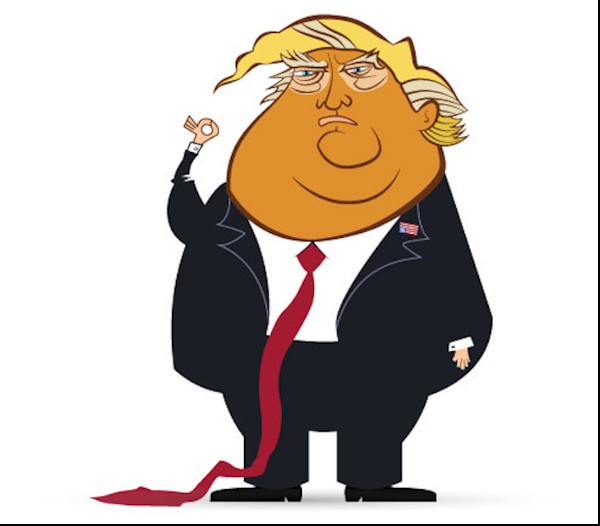
While less political in nature, perhaps the same line can be drawn to the prevalence of the “bro” podcast.
Regardless, the history and number of conservative, albeit more niche, outlets make it dubious at best to claim the issue is with popular liberal comedy. Yet, my personal perspective on American politics compels me to take issue with the culture this political attitude creates.
Failure to understand opposing views, even in a completely objective and unsympathetic way, can be reasonably tied to the perception of apocalyptic consequences in elections like the one on November 5.
When your opponents are reduced to caricatures who are worried about immigrants eating pets, or advocates for gender-affirming surgery for detained migrants, it's difficult to acknowledge the more reasonable concerns that generally motivate voters.
I won’t argue that people need to be the “bigger person” and set aside ridicule of the ridiculous. It would be naive to suggest that. However, a more insightful and realistic interpretation of news, even through the lens of comedy, is critical.
Understanding your opponent in sheer utilitarian terms is how the country can recover.
Trump's election for a second term with a Republican Senate and House of Representatives is evidence that the focus on crime, accusations of fascism, and social paranoia will not supersede economic suffering.
I won’t push the disingenuous notion that we all need to accept and empathize with synthetic victim-hoods and bigoted, outrageous rhetoric. However, an understanding must be achieved purely to combat an increasingly reactionary culture.
Author Bio:
Garrett Hartman is a contributing writer at Highbrow Magazine.
For Highbrow Magazine
Photo Credits: V.P. Harris (Wikipedia Commons); The White House (Flickr, Creative Commons); Montclair Film (Wikimedia Commons); Wikipedia Commons.


