


Voting for Donald Trump in the upcoming 2024 election doesn’t make sense. When we examine the issues that matter most to voters today—like inflation, employment, healthcare, and national security—Trump’s proposals are not just misguided, they often make the problems worse. Whether it’s his protectionist trade policies that drive up consumer costs or his healthcare stance that threatens millions of Americans’ access to affordable healthcare, the reality is clear: Trump’s approach fails to offer real, viable solutions for the challenges the country faces. Kamala Harris, on the other hand, presents a forward-thinking alternative, grounded in expert-supported strategies designed to create lasting, meaningful change.
We’re going to dive into some key issues that are on voters’ minds. We’ll take a closer look at what Trump and Harris have to say about these topics and, more importantly, what the experts think about their plans. Because at the end of the day, it’s not just about what sounds good in a speech or rally; it’s about what actually works. That’s why expert analysis and fact-based examinations are important. They help cut through the noise and show us which policies are grounded in reality, and which are more likely to fail. By the end, it’ll be clear which candidate offers real solutions that can work in the real world. Spoiler alert: The evidence suggests it’s not Trump. Harris’s ideas are backed by experts and designed to move us forward.
Surveys suggest some key issues American voters are concerned about include inflation; jobs and employment; healthcare; immigration; reproductive rights; and national security and foreign policy.
Let’s break it all down.
Inflation
Inflation has been a major concern for voters, and it’s easy to see why—rising costs of goods, housing, and everyday essentials directly impact people’s wallets. Many believe that the economy isn’t as strong as it should be, and while the headlines may focus on inflation easing in recent months, for those dealing with higher grocery bills and rent, it doesn’t seem as though anything is improving. Even with recent data showing that inflation rates have dropped significantly, the question remains as to which candidate has a plan that not only addresses inflation effectively but does so without making matters worse.
Trump’s Inflation Plans:
Donald Trump’s approach to tackling inflation centers on increasing U.S. manufacturing and reducing reliance on foreign imports. His “Agenda 47” plan proposes enacting high tariffs, particularly on goods from China, to encourage domestic production. He argues that these measures will lower costs for Americans by boosting local industry and reducing federal spending. Trump’s “Agenda 47” targets inflation through protectionist measures like high tariffs, aiming to boost U.S. manufacturing and cut federal spending. He promises to transform the U.S. into a “manufacturing superpower” and enhance domestic energy production. His plan includes a 20% tariff on imports, especially those from China, to encourage local production.

Experts’ Take on Trump’s Inflation Plans:
Economists criticize Trump’s approach, suggesting that tariffs may increase prices for consumers rather than reduce inflation. Tariff-driven policies have previously led to higher consumer costs, and experts warn they could worsen inflation and potentially cause a recession. Even the Wall Street Journal (yes, the Wall Street Journal) agrees that implementing Trump’s tariffs would, in fact, hurt American consumers, raise costs for Americans across the board, and do little to deter Chinese influence on the American economy.
Harris’s Inflation Plans:
Kamala Harris’s approach aligns with the Democratic focus on controlling inflation through balanced policies, such as targeted investments in critical sectors like renewable energy and infrastructure. Harris’s plan to combat inflation focuses on structural solutions and targeted relief for middle- and lower-income families. Building on policies like the Inflation Reduction Act, she emphasizes increasing competition, especially in industries like groceries and housing, to drive down costs.
One of her key proposals is to ban price gouging by corporations, particularly in essential sectors like food and housing, to protect consumers from excessive price hikes driven by monopolistic practices. Harris’s housing plan aims to expand affordable housing through the construction of 3 million new units and regulate rent hikes by removing tax incentives for investment firms that monopolize housing markets. Additionally, she wants to support middle-class families by expanding tax credits and providing assistance for first-time homebuyers.
Harris’s approach also includes tackling income inequality by expanding tax credits and lowering healthcare costs. Her plan involves capping prescription drug prices and offering expanded tax relief for middle- and lower-income families, ensuring they have more disposable income. This multifaceted strategy aims to build economic resilience while supporting working families and adapting to the structural shifts in the global economy.
Experts’ Take on Harris’s Inflation Plans:
Economists believe that Harris’s multipronged approach, particularly as inflation has significantly eased, would be more beneficial in the long term. Current inflation rates have dropped to 2.9%, close to the Federal Reserve’s target of 2%, indicating that the peak inflation period has passed. Experts argue that while inflation remains a concern, it is no longer the immediate crisis that Trump portrays. Analysts note that Harris’s policies are aligned with the current economic trend of cooling inflation, aiming to sustain the economic recovery rather than exaggerating the threat.
In Short:
While inflation remains a concern for many voters, the latest economic data shows it has significantly eased, with rates dropping close to the Federal Reserve’s target. Trump’s focus on tariffs and protectionist policies as a solution might resonate with those feeling financial strain, but experts warn that his approach could actually drive up costs and hurt consumers in the long run.
On the other hand, Harris’s strategy aligns more closely with the current economic reality, targeting structural solutions like increasing competition, regulating price gouging, and investing in critical sectors. Experts agree that her approach is far more sustainable for maintaining the economy’s recovery and stabilizing prices for American families.

Jobs and Employment
With concerns about job security, wage growth, and the future of work, people are looking for solutions that will ensure stable, well-paying jobs in the long term. While traditional industries like manufacturing still hold importance, the modern economy is increasingly driven by sectors like technology, green energy, and automation. This shift means voters should not only be asking, “Where will the jobs come from?” but also, “Will they be the right jobs for the future?” Understanding how each candidate plans to navigate these changes is critical in determining which path will lead to real, lasting job growth and security for American workers.
Trump’s Employment Plans:
Donald Trump’s stance on employment revolves around revitalizing American manufacturing and reducing regulations. His “Agenda 47” focuses on cutting corporate taxes further for companies producing domestically, aiming to incentivize job creation within the U.S. He also proposes high tariffs on imports to encourage businesses to bring manufacturing back from overseas. Trump suggests that by boosting domestic production and reducing federal regulations, he can generate jobs across various sectors, especially in traditional industries like manufacturing and energy.
Trump has promised to reintroduce policies from his previous administration, such as cutting red tape for businesses and expanding energy production, which he believes will not only create jobs but also increase wages. He emphasizes a return to “America First” policies, advocating for a workforce focused on manufacturing and fossil fuel industries.
Experts’ Take on Trump’s Employment Plans:
Economists argue that Trump’s policies, while potentially offering short-term boosts to specific sectors like manufacturing, may not align with the modern economy’s long-term needs. Trump’s emphasis on tariffs and domestic manufacturing seeks to revive traditional industries, but experts caution that this approach overlooks significant trends like automation and globalization, which are reshaping the workforce.
For example, while tariffs aim to incentivize companies to produce goods in the U.S., the reality is that many firms may choose cheaper production alternatives abroad or invest in automation rather than hiring domestic labor. Automation, driven by advances in technology and incentivized by economic downturns, has already become a prominent trend in the manufacturing sector. This shift means that even if manufacturing output rises, it doesn’t necessarily translate to more jobs, as companies increasingly rely on machines instead of human labor. Economists from Brookings and Wharton highlight that these trends indicate the limits of protectionist measures in a globalized economy, where supply chains and production processes are interconnected and often resistant to abrupt policy shifts like tariffs.
Evidence also suggests that while Trump’s first-term policies led to some initial job growth in manufacturing, these gains plateaued and even declined by 2019, well before the pandemic. The long-term pressure on employment due to international competition and technology advancements suggests that a focus solely on boosting traditional manufacturing may not provide sustainable job growth.
Harris’s Employment Plans:
Harris’s proposal focuses on modernizing the workforce and expanding job opportunities in emerging sectors. Her plan includes investment in green energy and infrastructure projects, aiming to create millions of new, sustainable jobs. Harris also supports expanding federal programs for job retraining and education, particularly targeting communities affected by automation and economic shifts. By promoting technology and clean energy industries, she plans to transition the U.S. workforce into future-oriented fields that offer long-term growth and stability.
In terms of job creation, Harris emphasizes the development of the green economy and technology sectors, supporting the growth of small businesses through tax breaks and access to capital. For instance, her proposed tax incentives for new small businesses and investments in community development financial institutions (CDFIs) aim to empower underserved communities and foster entrepreneurship. These initiatives are designed to create sustainable, high-paying jobs that align with the needs of a modern, tech-driven economy.
Her emphasis on diversifying economic growth beyond traditional manufacturing to include sectors like green energy, technology, and affordable housing addresses the current and future needs of the economy.
Harris’s plan to boost the green economy, for example, not only addresses climate change but also positions the U.S. as a leader in renewable energy, a sector that is expected to grow significantly over the coming decades. By focusing on infrastructure and clean energy projects, her policies are designed to generate jobs that have longevity and growth potential, rather than relying on industries that may continue to face automation and global competition.
Experts’ Take on Harris’s Employment Plans:
Experts argue that Harris’s approach of using targeted investments and regulatory measures, while ambitious, aligns with the realities of a modern, interconnected global economy. The focus on emerging industries and adapting workforce skills through education and training programs positions the U.S. workforce for the demands of the future, rather than attempting to revive industries that are declining due to automation and global shifts. This strategic adaptation is why economists believe her plan offers a more sustainable path for long-term economic growth and stability.
In Short:
The issue of employment is about more than just job numbers—it’s about creating jobs that are sustainable and fit the needs of a modern, evolving economy. Trump’s focus on reviving traditional industries through protectionist measures like tariffs may offer short-term boosts in sectors like manufacturing, but experts argue that this approach overlooks long-term trends such as automation and globalization.
Harris’s plan, however, focuses on future-oriented industries like green energy and technology, while also investing in job retention and education to help workers adapt. Experts agree that her forward-thinking strategy is better aligned with the direction the global economy is headed, making it more likely to create lasting job growth and economic stability.

Healthcare
Healthcare remains a top concern for voters in the 2024 election, with a strong emphasis on affordability and access. Several surveys, including those conducted by the Kaiser Family Foundation (KFF), show that healthcare costs, particularly unexpected medical bills and prescription drug prices, are among the highest financial worries for Americans. Over 70% of respondents report being very or somewhat concerned about their ability to afford healthcare expenses.
Key aspects of healthcare policy that voters are paying attention to include the future of the Affordable Care Act, prescription drug prices, and access to reproductive health services. The Biden-Harris administration has worked to expand ACA coverage and reduce uninsured rates, resulting in record enrollment numbers. However, many voters remain unaware of these achievements, with a significant portion believing that the uninsured rate has either stayed the same or increased.
Trump’s Healthcare Plans:
Donald Trump’s stance on healthcare for the 2024 election remains centered around efforts to repeal and replace the ACA. Despite his previous administration’s unsuccessful attempts to dismantle the ACA, Trump has pledged to try again if elected, promoting a healthcare plan that he claims will be superior – though he has not given any specifics about what this plan would be. His past proposals included converting the ACA into block grants for states, capping federal Medicaid funding, and allowing states to relax protections for pre-existing conditions. If implemented, these changes could significantly reduce federal support for healthcare over the next decade.
Regarding healthcare costs and insurance premiums, Trump has criticized the ACA for increasing premiums and vowed to lower these costs through his new plans. However, his previous actions, such as repealing the individual mandate and reducing ACA subsidies, led to higher premiums for many Americans. Trump’s healthcare proposals include allowing the importation of cheaper drugs from other countries and capping insulin costs for Medicare recipients, but experts argue that his lack of detailed, consistent plans raises concerns about how effective these measures would be.
Experts’ Take on Trump’s Healthcare Plans:
Experts and economists express significant concerns about Trump’s healthcare proposals, particularly his promise to repeal the ACA. They emphasize that such actions could lead to detrimental effects for millions of Americans, especially those with pre-existing conditions and low-income families who rely on Medicaid and Medicare.
If the ACA is repealed, it would likely result in millions of Americans losing their health insurance coverage. Estimates suggest that over 24 million people could face higher out-of-pocket costs and potential loss of insurance protections, such as those safeguarding against lifetime coverage limits and providing preventive care at no additional cost.
Medical experts warn that dismantling the ACA’s protections would increase premiums significantly for individuals with chronic conditions like asthma, cancer, or pregnancy-related complications. The return of high-risk insurance pools—similar to pre-ACA policies—would drive up costs for the most vulnerable populations, making healthcare unaffordable for many.
Paul Krugman, a Nobel Prize-winning economist, criticizes Trump’s approach, arguing that it shows a lack of understanding of healthcare economics. He suggests that eliminating ACA protections would be catastrophic, disproportionately harming those who need affordable healthcare the most. Furthermore, experts like Sabrina Corlette from Georgetown University note that Trump’s campaign lacks a detailed replacement plan, making it difficult to predict specific outcomes. However, the rollback of ACA protections would undoubtedly create instability, leading to higher premiums and reduced access to healthcare for millions.
Harris’s Healthcare Plans:
Harris’s healthcare stance focuses on building and expanding the Affordable Care Act (ACA)—which is immensely popular—rather than dismantling or replacing it. Harris aims to make healthcare more affordable by making the ACA’s premium tax credits permanent, which currently help reduce the cost of insurance premiums for millions of Americans. These credits, extended under the Biden-Harris administration’s Inflation Reduction Act, are scheduled to expire after 2025, but Harris has pledged to ensure they become a permanent feature.
To tackle healthcare costs, Harris proposes capping out-of-pocket drug expenses at $2,000 annually for all Americans, not just Medicare recipients. Additionally, she supports expanding the $35 monthly insulin cap to apply beyond Medicare beneficiaries, ensuring broader access to affordable insulin.
Harris’s vision for the future of the ACA includes enhancing protections for individuals with preexisting conditions and maintaining access to preventive care services without additional costs. She emphasizes the importance of continuing Medicare’s ability to negotiate drug prices, a feature introduced under the Biden-Harris administration, to further lower prescription costs for millions of Americans.
Experts’ Take on Harris’s Healthcare Plans:
Economists and healthcare analysts view Harris’s commitment to maintaining the ACA’s framework as crucial for maintaining the significant coverage gains achieved in recent years. Under the Biden-Harris administration, ACA enrollment reached historic levels, and experts believe Harris’s plans would further these gains by expanding Medicaid in states that have yet to adopt it and extending premium tax credits to keep insurance affordable.
Healthcare experts highlight Harris’s focus on making ACA premium tax credits permanent. They argue that this move would stabilize insurance markets by keeping costs low for millions of Americans, ensuring continued access to healthcare, especially for low- and middle-income families. This strategy is seen as a way to mitigate the risk of coverage loss if temporary ACA subsidies expire after 2025.
Additionally, her push to cap out-of-pocket expenses for drugs and to lower insulin prices addresses some of the most pressing financial burdens that Americans face in healthcare. By proposing measures that expand Medicare’s drug price negotiation capabilities, Harris aligns with expert recommendations for reducing overall healthcare expenditures and increasing access to affordable medications.
Harris’s plan to protect and enhance preventive care services, such as cancer screenings and vaccinations, also draws approval. Experts note that maintaining and expanding these provisions is essential for both cost savings and improving long-term health outcomes for millions of Americans.
In Short:
Trump’s approach focuses on dismantling the ACA framework and shifting responsibility to the states, with promises of lower premiums and reduced costs. However, his track record and lack of specifics suggest challenges in achieving these goals while maintaining affordability and access to healthcare for all Americans. Overall, experts conclude that repealing or significantly overhauling the ACA, as Trump proposes, would not only reduce healthcare access but also raise costs, undermining the very goal of making healthcare more affordable.
Harris’s approach aims to strengthen the ACA framework, reduce healthcare premiums, and ensure that key protections and affordability measures remain accessible to all, contrasting sharply with Trump’s approach of repealing the ACA.

Immigration
Voters’ concerns range from border security and undocumented immigration to how immigration policies impact local communities and the economy. Voters are divided on how to handle these issues, with some prioritizing stricter border control and enforcement, while others focus on creating pathways to citizenship and humane treatment for those seeking refuge. The way each candidate approaches immigration will shape not only the future of immigration law but also the broader cultural and economic landscape of the country.
Trump’s Immigration Plans:
Donald Trump’s stance on immigration for the 2024 election emphasizes stringent measures aimed at border security, limiting legal pathways, and increasing deportations, aligning closely with his first-term policies but expanding them further.
A. Border Security and Migration Control: Trump has promised to complete the construction of the U.S.-Mexico border wall and hire an additional 10,000 border agents to enhance enforcement efforts. He plans to reinstate and expand the “Remain in Mexico” policy, which requires asylum seekers to wait in Mexico while their cases are processed. Trump also advocates for deploying more surveillance technology and increasing patrols to prevent illegal crossings, arguing that such measures are necessary to secure the border effectively.
B. Legalization and Pathways for Undocumented Immigrants: Trump opposes pathways to citizenship for undocumented immigrants and has vowed to end programs like Deferred Action for Childhood Arrivals (DACA) and Temporary Protected Status (TPS). His 2024 campaign proposes revoking the legal status of hundreds of thousands of immigrants currently protected under these programs, advocating for stricter policies that would limit legal migration and tighten eligibility for asylum. Trump’s plan includes terminating humanitarian parole programs introduced under the Biden administration, which currently allow thousands of individuals from countries like Cuba and Venezuela to live and work temporarily in the U.S.
C. Impact on Local Communities: Trump’s approach would likely result in large-scale deportations and increased interior enforcement, and it would see the construction of detention camps. He has pledged to expand operations to deport millions of undocumented immigrants from within the U.S. He also aims to invoke laws such as the Alien Enemies Act to deport suspected gang members and drug cartel affiliates without due process, which could lead to significant legal challenges.
Experts’ Take on Trump’s Immigration Plans:
Experts have raised significant concerns about Trump’s proposed immigration policies, labeling many of his claims and solutions as misleading or exaggerated. His emphasis on the state of the southern border, for instance, often misrepresents data. Trump has claimed that millions more people have crossed the border illegally under the Biden-Harris administration than what is supported by official statistics. In reality, while unauthorized crossings have increased, they are nowhere near the inflated figures Trump suggests.
Economists and policy analysts argue that Trump’s plans to build more border walls and hire thousands of additional agents may not be the most effective solution. Studies and reports have shown that walls and barriers often only redirect migration flows rather than stopping them, and technological monitoring paired with policy reforms may yield better results.
Trump’s promise to terminate TPS and DACA, which protect over a million individuals, has also been critiqued by legal experts. They point out that previous attempts to end these programs were blocked in court, and experts anticipate similar legal challenges if he tries again. They warn that ending these protections could destabilize communities and harm the economy by removing significant numbers of working individuals and families from the labor market.
Moreover, Trump’s narrative that immigrants are significantly contributing to crime is largely debunked by studies. Research shows that immigrants, regardless of legal status, are less likely to commit crimes than native-born Americans. Experts argue that Trump’s rhetoric not only misrepresents facts but also fuels xenophobia and divides communities.
Harris’s Immigration Plans:
Kamala Harris’s stance on immigration focuses on balancing border security, providing pathways for legalization, and addressing the impact of immigration on local communities through comprehensive reform.
A. Border Security and Migration Control: Harris emphasizes the need for strong border security, building on her experience as Attorney General of California, a border state. She supports deploying additional border agents and advanced technology to intercept fentanyl and human trafficking at ports of entry. Harris has pledged to enforce laws against unauthorized crossings by deporting individuals caught crossing illegally and imposing bans on re-entry. She criticizes Trump’s approach as ineffective, pointing out that his administration failed to pass meaningful reforms or address the root causes of migration.
B. Legalization and Pathways for Undocumented Immigrants: Harris advocates for creating a pathway to citizenship for undocumented immigrants with deep ties to the U.S., especially those brought as children (DACA recipients). She supports a system where immigrants who have contributed positively to their communities can earn legal status through a structured, fair process. Her campaign includes expanding legal immigration options and streamlining the asylum process to make it more efficient, ensuring that those seeking refuge have a clearer and more humane pathway.
C. Impact on Local Communities: To support communities affected by migration, Harris has proposed increasing federal resources for local governments and nonprofit organizations, ensuring they have the capacity to manage new arrivals effectively. Her plan includes partnerships to provide housing, legal services, and other essential support for migrants while promoting policies that stabilize affected neighborhoods. Harris aims to ensure that federal policies are coordinated and do not unduly burden border communities.
Experts’ Take on Harris’s Immigration Plans:
Kamala Harris’s immigration proposals are pragmatic, balancing the need for border security with humane pathways for legal immigration and reform efforts. Economists and policy analysts call her approach nuanced, which contrasts sharply with more extreme, enforcement-only strategies. She aims to enhance border security infrastructure with technology and personnel while simultaneously addressing root causes of migration. This includes efforts like the “Partnership for Central America,” which mobilized significant investment to improve conditions in Central American countries, thereby reducing migration pressures. Some critics do warn, however, that while this long-term approach is beneficial, it may not produce immediate results that can be measured easily.
Harris’s advocacy for pathways to citizenship for DACA recipients and other long-term undocumented residents is generally well-regarded by immigration and social policy experts. They highlight that this strategy not only stabilizes immigrant communities but also integrates them into the workforce, boosting economic growth. The American Civil Liberties Union and other advocacy groups support her stance, emphasizing that these pathways are essential for addressing systemic immigration issues while maintaining humanitarian standards.
By proposing support for local governments and community organizations to manage the impacts of immigration, Harris’s plan is seen as addressing the critical needs of border communities. Social workers and community advocates argue that such measures help provide necessary resources and reduce the strain on these areas, making the integration of migrants more feasible. Though some experts caution that bipartisan support will be necessary to implement these plans effectively, given the divided nature of Congress.
In Short:
While Trump’s approach appeals to voters concerned about border security, experts highlight that his proposals are either unlikely to achieve the stated outcomes or are legally and economically impractical. Meanwhile, experts agree that Harris’s proposals align with broader societal and economic needs, aiming to create an immigration system that is both secure and humane. Though they note the challenges of executing these policies amid political opposition, they warn that while Harris’s proposals would effectuate longer-term solutions, people may not see the immediate appeal.

Reproductive Rights
Largely shaped by the Supreme Court’s 2022 decision to overturn Roe v. Wade, reproductive rights are at the forefront of this year’s election. The ruling has intensified voter focus, particularly among Democrats and independents, who overwhelmingly support reproductive rights. Key issues for voters include the accessibility of reproductive services, the legality of abortion in their state, and the federal government’s role in protecting or restricting reproductive rights.
Polling indicates that reproductive rights have become a decisive issue. About half of voters believe the outcome of the 2024 presidential and congressional elections will have a major impact on abortion access. Suburban women in swing states and voters in states with recent abortion restrictions are particularly motivated by this issue. For these groups, reproductive rights are seen not only as a healthcare concern but also as an individual rights issue, reflecting broader debates about autonomy and freedom.
Trump’s Reproductive Rights Plans:
On the Republican side, there is division. While a majority of Trump supporters oppose abortion in most or all cases, there is a notable minority—especially among younger Trump supporters—who believe it should be legal in some instances. This internal split has created challenges for Republican candidates who must balance appealing to their base while not alienating moderates or independent voters who lean toward fewer restrictions.
Donald Trump’s stance on reproductive rights has evolved significantly over the years, but he consistently positions himself as an ally of the anti-choice movement. During his presidency, Trump appointed three Supreme Court justices—Neil Gorsuch, Brett Kavanaugh, and Amy Coney Barrett—who were pivotal in overturning Roe v. Wade. This achievement has been a central talking point for Trump, as he credits himself for delivering this long-sought victory to the anti-choice base.
Historically, Trump’s administration took concrete steps to restrict abortion access. His Department of Health and Human Services removed funding from clinics participating in the Title X program if they referred patients for abortions, impacting over 1,000 clinics. Trump was also the first sitting president to speak at the March for Life, reinforcing his support for anti-choice activists.
In this 2024 election cycle, Trump’s rhetoric has become inconsistent. While he has discussed the possibility of a national abortion ban, he has also stated that reproductive rights policy should be left to individual states. He has expressed skepticism about passing federal abortion legislation due to the current political imbalance in Congress, emphasizing that each state should set its own policies.
Trump’s criticism of restrictive state-level abortion bans like Florida’s six-week ban may indicate a shift toward a more nuanced position. This approach may be aimed at moderating his stance to appeal to broader segments of voters, particularly women and independents who oppose strict bans. But his shifting stance has made it all but impossible to rely on a specific policy he may or may not support.
Despite these attempts to moderate his image, Trump remains under pressure from anti-choice advocates within his party. His running mate, Senator J.D. Vance, and other allies have suggested leveraging older laws like the Comstock Act to restrict abortion access further, including barring the mailing of abortion pills. But Trump has been noncommittal about enforcing such measures, indicating uncertainty about how aggressively he would pursue abortion restrictions if re-elected.
Experts’ Take on Trump’s Reproductive Rights Plans:
Experts have highlighted several concerns regarding Trump’s stance on reproductive rights, especially as he navigates between maintaining his anti-choice base and appealing to a broader electorate. Medical professionals, economists, and policy analysts criticize the ambiguity and inconsistency of his current position. This lack of clarity makes it difficult for healthcare providers and policymakers to anticipate and prepare for potential regulatory changes.
Medical experts warn that Trump’s approach could have significant negative impacts on reproductive healthcare access. By defunding clinics through changes to the Title X program during his administration, Trump significantly limited low-income individuals’ access to both contraceptive and abortion services. Analysts argue that a similar approach could further exacerbate disparities in healthcare if re-implemented.
Economists also express concerns that further restricting reproductive healthcare access, particularly in conservative states, could lead to long-term economic consequences. Studies show that access to reproductive healthcare, including abortion, has positive economic benefits for women, allowing them to participate more fully in the workforce. Experts argue that limitations could result in higher economic dependency and reduced labor market participation, which might negatively impact state and national economies.
Harris’s Reproductive Rights Plans:
The Harris campaign is using reproductive rights as a rallying point, emphasizing the importance of federal protections and aiming to restore or codify the principles of Roe v. Wade. This focus is reflected in recent state ballot measures where voters, even in conservative-leaning areas, have supported reproductive rights protections, highlighting the issue’s potential to mobilize voters in key battlegrounds.
Harris has consistently emphasized her commitment to restoring and protecting access to reproductive healthcare, especially in light of the Supreme Court’s decision to overturn Roe v. Wade. She has pledged to work with Congress to pass legislation that would codify the protections previously established under Roe, ensuring federal support for reproductive rights and limiting state-level bans that have proliferated since the ruling.
Historically, as California’s attorney general and later as vice president, Harris championed reproductive freedom by regulating anti-choice centers and advocating for comprehensive reproductive healthcare. She became a prominent voice within the Biden administration, pushing for policies that expand access to abortion medication through telehealth and defending legal challenges aimed at restricting these services. Harris’s strong stance has been consistent, as she frequently underscores the importance of federal protections to safeguard reproductive rights across all states, particularly to prevent disparities in access based on geographic location.
Harris also targets discriminatory practices like the Hyde Amendment, which limits federal funding for reproductive health services through Medicaid. She has called for its repeal, arguing that such policies disproportionately harm low-income women and marginalized communities. This focus aligns with her broader campaign message of ensuring that reproductive healthcare is accessible to all, regardless of income or state of residence.
If elected, Harris has vowed to push for legislative measures that would not only codify abortion rights but also repeal antiquated laws like the Comstock Act, which some conservatives have suggested using to restrict the mailing of abortion pills nationwide. Her goal is to prevent future administrations from exploiting such laws to undermine reproductive freedoms.
Experts’ Take on Harris’s Reproductive Rights Plans:
Experts highlight Harris’s consistent advocacy for expanding and protecting access to reproductive health. Medical professionals and policy analysts underscore her focus on codifying federal abortion protections and expanding healthcare services like medication abortion through telehealth. Her commitment to repealing the Hyde Amendment and safeguarding contraceptive access is seen as critical for supporting marginalized communities. Even Catholic voices concede that Harris’s proposals for reproductive rights are the best way to implement far-reaching policies that will benefit most Americans.
Economists emphasize that protecting reproductive rights, as Harris proposes, benefits the economy by allowing women to participate fully in the workforce. But experts acknowledge that achieving federal legislation will be challenging, requiring bipartisan cooperation in a divided Congress.
In Short:
Experts caution that Trump’s inconsistent messaging and historical record of restrictive policies signal a likely return to more aggressive anti-choice measures, potentially resulting in significant legal, medical, and economic ramifications. Harris’s historical advocacy and current campaign promises position her as a staunch defender of reproductive rights, focusing on legislative and policy solutions to expand and protect reproductive healthcare nationwide.

Foreign Policy
Foreign policy is a crucial issue in the 2024 election, especially as global tensions continue to rise. From the ongoing war in Ukraine and the Israel-Hamas conflict to the growing influence of China and concerns over national security, voters are paying close attention to how the next president will handle America’s role on the world stage. Foreign policy decisions affect not only international relations but also the economy, security, and America’s standing as a global leader. Each candidate’s approach will signal how they plan to navigate these challenges, whether by strengthening alliances and promoting democracy, or by pursuing more isolationist, deal-driven strategies.
Trump’s Foreign Policy Plans:
A. Russia-Ukraine War: Trump has claimed he could negotiate an end to the Russia-Ukraine conflict if re-elected. He asserts that his relationship with both Ukrainian President Volodymyr Zelenskyy and Russian President Vladimir Putin—whom he has called “genius” for invading Ukraine—positions him uniquely to broker peace. Trump suggests that Ukraine and Russia could reach a compromise benefiting both sides, a strategy he claims would save lives and reduce costs for the U.S. However, he has not explicitly said whether he supports Ukraine’s victory, and he has criticized the Biden administration’s support for Ukraine, arguing that Kyiv should have compromised with Moscow earlier.
B. Israel-Hamas Conflict: Trump has expressed strong support for Israel, positioning himself as a staunch ally of Prime Minister Benjamin Netanyahu, with whom he claims to speak with almost every day. However, he assails Jews who lean more democratic. He has criticized the Biden administration’s handling of the conflict, suggesting that under his leadership, Israel would receive unequivocal support against Hamas. Trump’s campaign has focused on reinforcing Israel’s defense and ensuring continued U.S. military assistance.
C. Russia: Trump’s approach to Russia remains controversial. While he has consistently claimed he could have prevented Russia’s invasion of Ukraine, critics highlight his admiration for Putin and his reluctance to criticize Russia’s actions directly. Trump’s stated goal is to re-establish a working relationship with Russia to avoid further escalation and conflict, emphasizing diplomacy over punitive measures like sanctions. This approach has raised concerns among allies and opponents.
Experts’ Take on Trump’s Foreign Policy Plans:
Experts have expressed deep concerns about Trump’s national security and foreign policy stances, particularly his approach to Russia and his relationships with authoritarian leaders. Analysts and diplomats warn that a second Trump term could lead to a more isolationist and unilateral foreign policy, with significant implications for U.S. alliances and global stability.
Regarding Russia, Trump’s reluctance to criticize Vladimir Putin or explicitly support Ukraine’s victory raises red flags. Experts point out that his approach to the Russia-Ukraine conflict—framing it as a deal to be brokered rather than a stand against aggression—could embolden Russia further. Trump has repeatedly claimed he would end the war within 24 hours without offering a concrete plan, which experts argue undermines NATO’s collective efforts and signals a willingness to compromise Ukraine’s sovereignty.
Critics also highlight Trump’s history of praising authoritarian figures, including Putin, North Korea’s Kim Jong-un, and other strongmen leaders. This pattern, according to experts, reflects a worldview that often prioritizes personal relationships over strategic alliances, raising concerns about the U.S.’s commitment to defending democratic values and human rights globally. This approach, experts argue, could damage U.S. credibility, as allies may perceive Trump as unreliable and inclined to support autocratic regimes if it suits his agenda.
Additionally, military and diplomatic experts warn that Trump’s rhetoric and policies may destabilize traditional alliances like NATO. His previous threats to withdraw from the alliance and his skepticism toward multilateral agreements suggest that another term could weaken these critical relationships, making it harder for the U.S. to maintain its influence and leadership in global security matters.
Harris’s Foreign Policy Plans:
A. Russia-Ukraine War: Harris remains committed to supporting Ukraine in its war against Russian aggression. She has reinforced the U.S. stance of providing military and economic aid, ensuring that Ukraine has the resources needed to defend its sovereignty. Harris rejects any proposal for Ukraine to cede territory to Russia, emphasizing that decisions about peace must respect Ukraine’s autonomy. She has also pushed for maintaining sanctions on Russia and rallying NATO allies to keep pressure on Moscow until the conflict is resolved favorably for Ukraine.
B. Israel-Hamas Conflict: Harris has backed Israel’s right to defend itself against Hamas but is also vocal about the humanitarian crisis in Gaza. She supports a ceasefire and increased humanitarian aid, advocating for measures that protect Palestinian civilians while addressing Israel’s security needs. Harris has reaffirmed her support for a two-state solution, urging efforts to rebuild the Palestinian Authority and hold extremist groups accountable. Her position reflects a balanced approach, seeking both security for Israel and humanitarian relief for Palestinians.
C. Russia: Harris continues the Biden administration’s hardline stance against Russia. She supports NATO’s expansion and readiness measures, ensuring that the alliance is prepared to respond to any aggression. She has reaffirmed the U.S.’s commitment to NATO’s Article 5, highlighting that any attack on a NATO member would trigger a collective response. Harris prioritizes maintaining strong ties with European allies to counter Russian influence and prevent further destabilization in Eastern Europe.
Experts’ Take on Harris’s Foreign Policy Plans:
Experts generally view Kamala Harris’s stance on national security and foreign policy as a continuation of the Biden administration’s approach, emphasizing multilateral cooperation, support for democratic values, and strategic competition with authoritarian regimes like Russia and China. Analysts and diplomats welcome Harris’s consistency in supporting U.S. alliances, particularly NATO, and her commitment to strengthening transatlantic ties, which is essential for maintaining European security, especially amid the Russia-Ukraine conflict. Her participation in high-level summits, such as the Munich Security Conference, demonstrates her readiness to engage with international leaders and uphold U.S. commitments abroad.
Regarding the Russia-Ukraine war, experts commend Harris for maintaining firm support for Ukraine, advocating for long-term military and economic aid, and holding Russia accountable for war crimes. Her approach aligns with the broader strategy of deterring Russian aggression while ensuring Ukraine’s security, which is crucial for European stability.
On China, Harris’s stance involves balancing confrontation over human rights abuses and unfair trade practices with cooperation on transnational issues like climate change and public health. Experts note that this dual approach is pragmatic, as it seeks to manage competition without provoking unnecessary escalation, while also securing areas for diplomatic engagement where possible.
Military experts and diplomats also highlight her focus on reinforcing the U.S.’s commitment to the Middle East, particularly regarding support for Israel while advocating for a two-state solution to address the humanitarian crisis in Gaza. Harris’s balanced approach indicates a commitment to long-standing U.S. alliances while navigating complex regional dynamics.
In Short:
Overall, Trump’s foreign policy platform prioritizes negotiation and reducing military engagements abroad, but his positions on Russia and China signal a continuation of his first-term focus on direct deals and economic pressure rather than multilateral cooperation. While this may seem as necessarily aggressive at face value, it demotes peacekeeping as deals to be brokered with aggressors rather than actionable plans to upkeep democracy, thus diminishing America’s position on the international stage. It's also worth noting that several high-ranking military and policymaking officials from Trump’s first presidency warn that Trump would not only not know how to implement his proposals, but that the proposals themselves would be catastrophic.
Harris’s foreign policy approach builds on the Biden administration’s strategies but emphasizes multilateralism and cooperation to address global challenges. Harris’s foreign policy approach focuses on strengthening alliances, maintaining international pressure on adversaries, and using diplomatic channels to resolve conflicts while upholding U.S. values and interests globally.
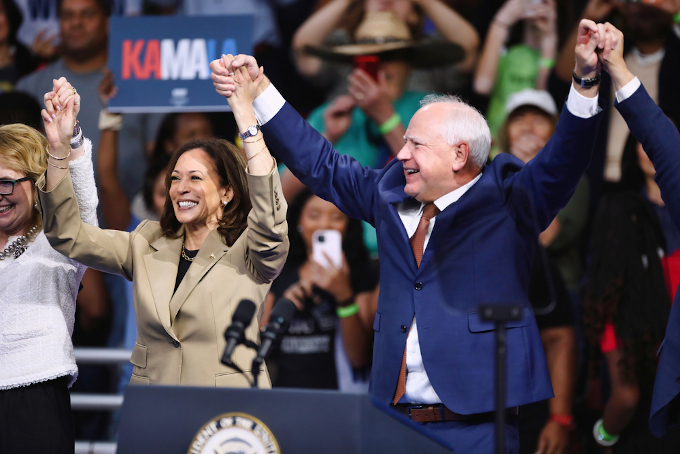
The Harris-Walz Ticket Is the Best Choice for America
The choice comes down to what kind of future we want. Kamala Harris represents a path forward with thoughtful, fact-based solutions to the challenges we’re facing—whether it’s keeping inflation in check, creating future-ready jobs, or maintaining America’s leadership on the global stage. Experts back her approach because it’s designed to actually work in the real world, not just sound good on a campaign trail.
On the flip side, voting for Donald Trump just doesn’t add up. His policies, from tariffs to isolationist foreign policy stances, have been criticized for being more harmful than helpful. And then there’s the fact that Trump is now a convicted felon, with several ongoing investigations into everything from falsifying business records to attempting to undermine the 2020 election. These legal issues aren’t just side notes; they raise serious concerns about his ability to lead effectively.
Trump’s track record, combined with his legal battles, makes it difficult to see how he’s the right choice for anyone who wants real, lasting solutions.
When we look at the big picture, Harris clearly offers a more stable and promising future.
Author Bio:
Angelo Franco-DeWitt is Highbrow Magazine’s chief features writer.
For Highbrow Magazine
Photo Credits: Depositphotos.com