

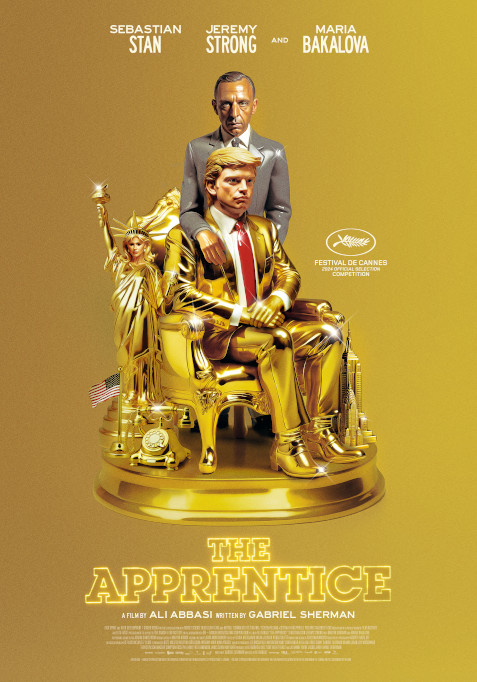
During a recent episode of The Late Show with Stephen Colbert, Jeremy Strong, co-star of the new Donald Trump biographical film The Apprentice, was pointedly asked to address criticism that the movie overly humanizes its subjects. The 45-year-old Succession breakout star paused thoughtfully before reflecting on a quote from William Saroyan’s 1939 play The Time of Your Life: “Despise evil and ungodliness, but men of ungodliness and evil, these understand.” This perspective reflects the sincere approach taken by Strong, Sebastian Stan, and Iranian-Danish director Ali Abbasi in The Apprentice, which explores Trump’s early business career under the mentorship of Roy Cohn, the New York prosecutor infamous for his association to the Red Scare.
In The Apprentice, benevolence is present, but finite amongst the two leads. The film introduces Sebastian Stan as a young man desperately trying to get out from under his father’s shadow and forge his own future. His warm, mild-mannered persona masks a devious ambition that deprives him of a moral compass, leading him to strike a deal with the Devil, in the form of infamous New York attorney Roy Cohn, portrayed by Jeremy Strong.
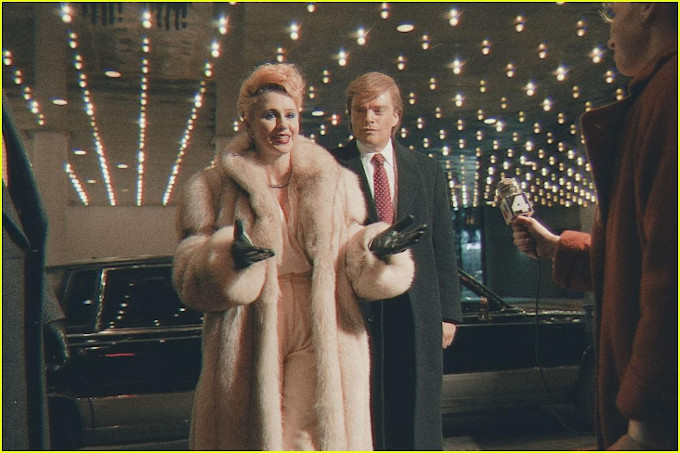
When the two men meet, Cohn finds a kindred spirit in search of power. Trump is not malevolent, rather he possesses no guiding principles making him the perfect vessel for Cohn to corrupt. Cohn takes the role of surrogate father as he guides Trump into his kingdom of immorality that is 1970s New York City. To navigate power, Cohn imparts three rules onto his apprentice: Attack, deny everything, and always claim victory.
Strong’s remarkable sense of restraint helps him deliver an unnerving performance as Cohn. The tension in his facial muscles gives him an almost serpentine appearance while his bluntness and nonchalance convey an otherworldly malevolence. This effect is further emphasized by Stan’s portrayal of Trump. While Cohn embodies pure corruption, Trump displays virtue in his relationship with two key figures: his alcoholic brother, Fred Trump Jr. and his first wife, Ivana.
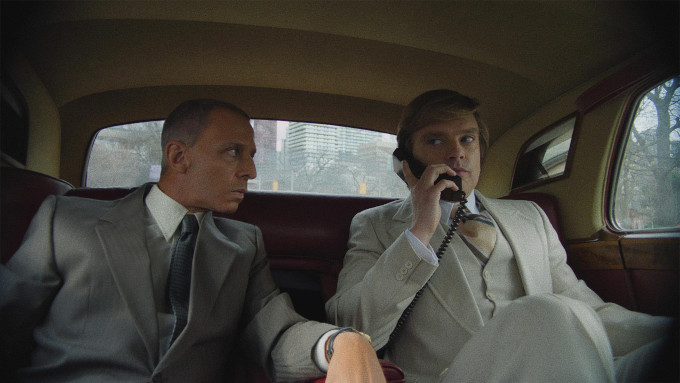
Stan delivers a masterclass performance, steering clear of caricature. By choosing not to mimic Trump’s voice or mannerisms, he allows the character’s actions to speak for themselves. As Cohn’s presence in the young man’s life grows, Stan’s performance becomes far more exaggerated, yet he never falls into the trap of mimicry. Instead, he mirrors Strong’s performance allowing the audience to witness Trump’s ascent as guided by Cohn.
While The Apprentice effectively explores men’s quest for power, its female protagonist, Ivana, seems like an afterthought. Maria Bakalova portrays Trump’s first wife and the mother of three of his children. Her role as the object of Trump’s desire is largely thankless. Her chemistry with Stan is stilted, which would be appropriate if their relationship was portrayed as transactional; however, the film aims to depict their love as genuine. Although there are moments of palpable attraction, Ivana's role is mostly confined to the final act, where we witness the dissolution of Trump’s love and the cruelty he inflicts as a result.
After the film’s premiere at Cannes Festival, the Trump campaign threatened legal action leading to a prolonged standoff as the film sought U.S. distribution. When asked about the ongoing legal threats from Trump’s team, director Ali Abbasi responded, “I don’t necessarily think that this is a movie he would dislike.” Whether this is a tongue-and-cheek response or willful ignorance on the director’s part, it underscores the narrative turmoil of presenting a nonpartisan story of the most polarizing figure of the 21st century. While the film at moments highlights the hypocrisy of American conservatism—particularly through Cohn’s unwavering support, despite his being homosexual — these moments are too fleeting for the film to be considered political, despite Abbasi’s call to “Make movies political again.”
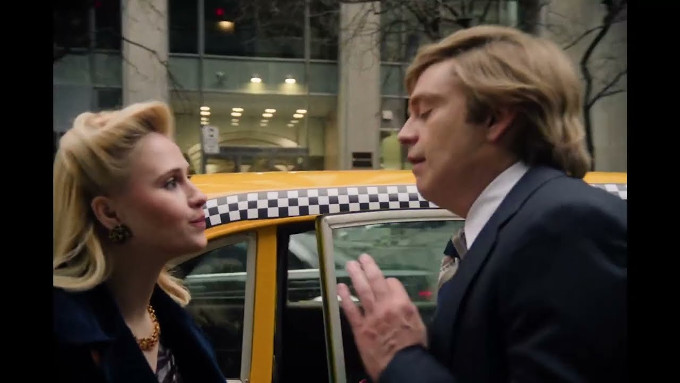
While The Apprentice is not deeply political in its content, its existence is politically charged, reflecting the stark partisan divide that threatens to undermine democracy as Election Day approaches.
Similar to its real-life counterpart, the film lacks clear ideological beliefs. For its characters, politics serves merely as a means to an end in their pursuit of power. In the film’s final act, as it moves into the 1980s and Trump’s influence has surged, Cohn gazes at his apprentice with a blend of disbelief, pride, and terror at the monster he created. In that moment, he appears to break the fourth wall, as if to say, “He’s your problem now,” signaling that the circle is complete and the apprentice has now become the master.
Author Bio:
Ben Friedman is a contributing writer and film critic at Highbrow Magazine.
For Highbrow Magazine