Category

2012 elections

Increasing the Relevance of Minority Voters in Elections

By Julie Pham

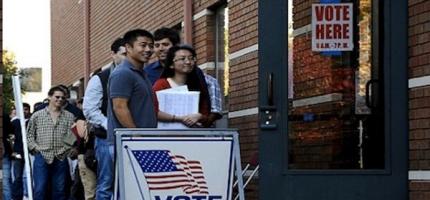
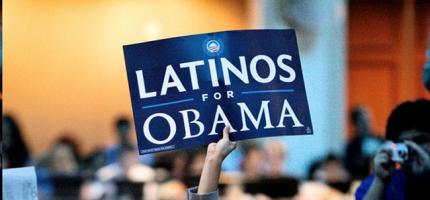
In May 2012, minority newborns began to outnumber their white counterparts in the US. But even with an African American president and huge growth of minority populations, why is it minorities are still far from exercising the full potential of their political power as voters? Voter turnout numbers are relatively low because of: 1) immigrants who are eligible for naturalization but don’t become citizens; 2) citizens who don’t register to vote; and 3) registered voters who don’t vote.

Obama v. Romney: Impressions of the Presidental Debate

By NAM Contributors

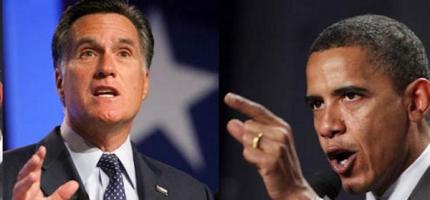
When the first presidential debate was televised in September of 1960, Americans chose Jack Kennedy over the more knowledgeable Richard Nixon mainly because Nixon's upper lip was sweaty and Kennedy looked gold-dusted in an expensive suit and he seemed serene. (Kennedy wore make-up; Nixon refused it.) Presidential debates, ever since then, have been about who "looks" more presidential or makes the snappier zinger or doesn't look bored (by glancing at his watch). 

Thousands Plea to Add Climate Change to Presidential Debates

By Jason Plautz

Aside from Mitt Romney's recent jab at Barack Obama's concern over global warming—and the president's tit-for-tat response—climate change has been largely under the radar in the campaign. But several groups, backed by hundreds of thousands of petitions, are trying to change that, at least for one night. Nine environmental organizations Friday delivered more than 160,000 petitions to Jim Lehrer urging him to ask a question about climate change during Wednesday's first presidential debate. 

1 in 3 Asian-American Voters Remains Undecided

By Khalil Abdullah

Asian Americans have been trending Democratic in their voting patterns but remain highly independent in party allegiances, according to a newly released survey. In 1992, less than one-third of Asian Americans for the Democratic presidential candidate but more than two-thirds voted for Obama in 2008. Today, 33 percent now identify themselves as Democrats, 14 percent are Republicans, and two percent cite some other affiliation. The other 32 percent of likely voters remains undecided in their choice for president.

Who Are the 47 Percent, Exactly?

By Edward Wyckoff Williams

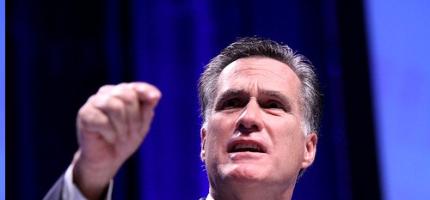
Mitt Romney -- whose candidacy has been characterized by more "Dr. Jekyll and Mr. Romney" moments than are easily quantifiable -- is finally starting to reveal who he really is. On Monday, veteran Washington reporter David Corn of Mother Jones magazine released a video that was secretly taped in May at a private campaign fundraiser, in which Romney expresses disdain for "the 47 percent" of Americans who, according to him, don't pay federal income taxes.

Tea Party Loyalists Expected to Participate in Voter ‘Bullying’ Tactics

By Zenitha Prince

A swarm of right-wing loyalists with intimidation on their minds can be expected to descend on polling places in minority neighborhoods this November, two public interest groups warned government officials Monday. In a new report titled, “Bullies at the Ballot Box,” Demos and Common Cause describe campaigns by conservative groups—particularly the Tea Party-affiliated True the Vote—to train and deploy as many as 1 million people to police the polls.

Democrat v. Republican: What’s the Difference, Really?

By David Barwinski

But it’s clear that most members of Congress are not really loyal to their party ideologies the way their constituents who voted them into office are.  They are loyal primarily to political expediency, which for them really means, “How will this vote affect my political career/ability to get re-elected?”   Since 2008, there has been a slight shift in voter registration as 2.5 million people have left the Democratic and Republican parties, while the ranks of the Independents has seen a modest increase. And what about when the POTUS  gets into office?  How many of his campaign promises does he actually keep?

#IHeartPresidentialElections: Obama, Romney and the Social Media War

By Loren DiBlasi

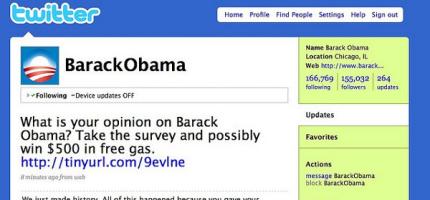
Once again, the Obama campaign has done a great job of engaging voters through the two most popular social media platforms, Facebook and Twitter, with Romney right on his tails. Ironically, the candidates’ official sites appear to be nearly identical to each other; loaded with pictures, facts, and links for visitors to click if they happen to be feeling generous, they seem more like personal blogs than campaign sites. This sort of behind-the-scenes, intimate approach works well for both candidates. President Obama’s Twitter account, for example, often feels like an extension of his own diary.