
Category

Mad Men

From ‘Mad Men’ to ‘The Americans’: How Television Handles the Issue of Sexual Assault

By Megan Walsh

One of the methods often used to integrate a rape storyline into a show is as a tragic backstory – a flashback used to explain why a woman is the way she is, particularly if that woman is of the colder, less trusting variety. The Americans did this with lead character Elizabeth Jennings, a Soviet spy undercover as a normal American citizen. In the pilot of the series, during a flashback, we see a young Elizabeth preparing for her future role as a spy and subsequently being assaulted by a commanding officer. 

‘White House Down,’ ‘Under the Dome’ Arrive on DVD, Blu-ray

By Forrest Hartman

The plotting is ridiculous, just as it was in “Olympus Has Fallen,” but Emmerich does a far better job with the over-the-top material. He recognizes and embraces the silliness of the story, turning “White House Down” into a bracing action film that is often funny and always entertaining. Tatum, of course, has a great deal to do with this. His natural charisma and impressive physique allow him to be witty and heroic simultaneously, and he is particularly good when playing across from Foxx. 

The Rise and Fall of Don Draper

By Loren DiBlasi

How could a character so admired, so charismatic, become so thoroughly unappealing quite so fast? In reality, though, the wheels of Don Draper’s downward spiral have been churning slowly since the very beginning of the series. What made season six immediately different was that, for the very first time, we weren’t really on Don’s side. Prior to this season, even within the throws of his most despicable past deeds-- the lies, the cheating, the arrogance-- Don has remained an appealing anti-hero that most viewers stood by, loved, and even defended. 

Reading 21st Century American War Stories: Heroes, Hell, and Back

By Kara Krauze

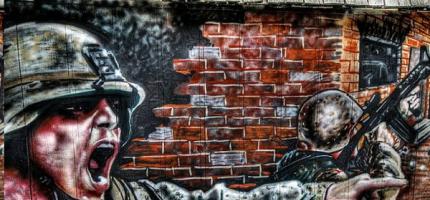
The 21st century in America has been permeated by war, almost from the start; even while most of America’s citizens remain unaffected—directly anyway—by its vicissitudes.  We need a literature that can begin to convey the multiplicities of war: the adrenaline; the sweat and blood; the isolation; the brotherhood; the memories and questions; and the return home. We need a narrative for America’s 21st century wars, and yet no single narrative will suffice.