


It’s never easy watching your elderly parents decline physically and mentally.
Sometimes with that decline you must have a difficult conversation about what’s in their best interests and welfare, no matter whether you want to have that talk.
In my case, that discussion focused on telling an older parent that, based on what’s been happening with him, the rest of his family and I think he must stop driving.
This was the situation with my stepfather, which sounds like a Shakespearian tragicomedy. Even before he reached his 80s, my wife and I, not to mention his two children by his first wife, were always worried that he would get into a terrible car accident.

My stepfather was an aggressive driver -- which seemed polar opposite to his normal peaceful personality, with a gentle disposition toward others, along with being a caring father to his children. He was a PhD in political science; held a top job in the federal government; loved opera; and read serious books about politics, economics, and the classics. You could call him an intellectual.
He and my mother were both progressive. They loved to discuss world affairs and traveled the globe widely, including embarking on trips to the Greek Islands, England, and the Caribbean, often with tour groups.
But with all that said, my stepfather transformed into almost hell-on-wheels when he climbed into the driver’s seat. I wouldn’t call it road rage exactly; rather, he just wanted to get to wherever he was going -- as fast as possible.
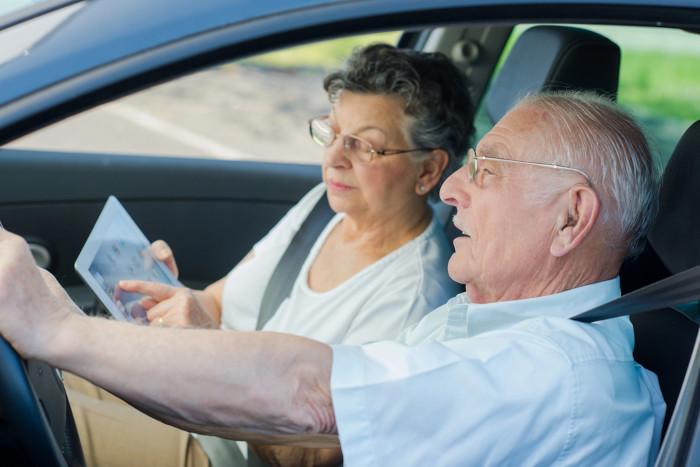
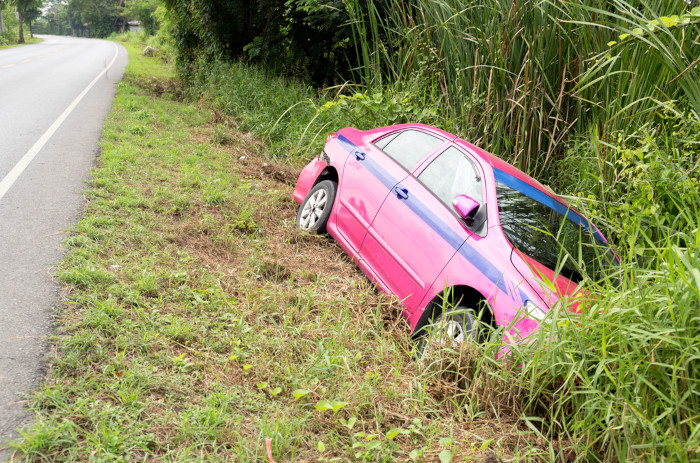
That’s why I wasn’t exactly shocked when I heard that while driving on the New Jersey Turnpike with my mother, he landed the car in a ditch on evening. Their car was towed away, and they had to arrange for a rental car to get home. Luckily, they were uninjured. But the trauma from that accident left a huge mental scar on my mother. That followed my stepfather’s other near accidents on local roads, where he almost mowed down pedestrians on crosswalks.
After my stepfather’s near misses with tragedy, my mother threatened that she would never ride in the car with him again.
It got to the point where my mother said she would take up driving lessons herself after previously giving up driving for good. She didn’t want to rely on my stepfather anymore to take her to doctors’ appointments and grocery shopping.
However, it also became a matter of urgency when my stepfather was to be tested for sleep apnea, and the doctor’s instructions were that he shouldn’t drive himself home. Yes, he could have taken a cab. But my mother said she’d drive him.

Things didn’t exactly go smoothly that day after the doctor’s appointment. It turned out my mother, who was in her late 70s, was too tense to drive with my stepfather, who was doing the backseat driver routine. He complained about how slow she was going--maybe 15 mph in a 30-mph zone. Out of fear of incoming traffic, she couldn’t bring herself to make a left-hand turn when the red light changed to green at the intersection. Then, turning right, she almost smashed into a mailbox.
After about five minutes of this nerve-racking adventure, my mother said she had to stop. She told my stepfather--who was at wits’ end with her driving performance--that “I can’t drive with you in the car.”
That was the last time my mother ever drove. From then on, it was city buses, taxicabs, or back to letting my stepfather drive her, which stressed her out to the point she didn’t ever want to leave home if it meant he was behind the wheel.
Unfortunately, a few years later, my mother passed away, and my stepfather said he was reluctantly moving to an independent living complex because he was increasingly having trouble caring for himself.
As we helped him move, he almost smashed his car into another car in the parking lot in front of his building. It was at that point that we suggested, in as low-key a manner as possible, that maybe now, as a widower, he didn’t need to shepherd a wife around town. In fact, he really didn’t need a car at all. He didn’t take kindly to that suggestion. We dropped the subject, which we would later regret.
According to experts, “driving is an essential form of freedom. It’s important to recognize that you aren’t just asking your parent to give up their keys. You are asking that they radically change their lifestyle.”
AARP claims that warning signs for seniors who should stop driving include “delayed response to unexpected situations, hitting curbs when making right turns or backing up, having frequent close calls, and driving too fast or too slow for road conditions.”
That sounded all too familiar. With my stepfather, the die was finally cast. That’s when one day on a residential street, he smashed his car into five other parked cars, as well as into a house nearby.

How he managed to accomplish that feat remains beyond my comprehension. After he was given several driving citations and then taken to the hospital, where, luckily, he wasn’t seriously injured, my stepfather first claimed that the accident couldn’t possibly be his fault. Something must be wrong with the car, he insisted. It turned out that he probably had unknowingly stepped his foot on the accelerator instead of the brake while steering the car out of its parking space.
It was at this inflection point that my stepfather finally, and reluctantly, accepted cold reality. He consented -- at long last -- to give up driving.
My stepfather passed away several years ago. I don’t think he’d mind me relating this story now because it might serve as a warning to other families facing a similar situation.
My stepfather’s outlook on life was that we shouldn’t be so selfish about our own personal wants and needs to the detriment of society. I think he’d agree that, based on his own experiences, if and when it becomes appropriate, it’s the children’s duty to tell their elderly parents they should give up driving not only to stay alive, but also for the greater good and well-being of others.
Author Bio:
Eric Green, a Highbrow Magazine contributor, is a former newspaper reporter, U.S. congressional press aide, English-as-a-second-language teacher, and now a freelance writer in the Washington D.C. area. His articles have appeared in various newspapers and websites, including the Washington Post and Baltimore Sun.
For Highbrow Magazine