


(Photo Credit: Depositphotos.com)
In the 1980s, Ray Oldenburg looked at the American landscape and saw a sturdy tripod holding up our sanity: the home (first), the workplace (second), and the "third place"—those low-stakes anchors of civic life like the local diner, the barbershop, or the public square.
He assumed these spaces were permanent fixtures of our geography, as foundational as a Zip Code. But 30 years later, between the aggressive policing of public spaces and the transformation of the neighborhood café into a high-turnover laptop morgue, the simple act of existing in public without a receipt has become a logistical hurdle. We have successfully commercialized the hangout to death, turning communal breathing rooms into luxury goods reserved for those who can afford a $7 latte as the price of admission.
(Photo Credit: Depositphotos.com)
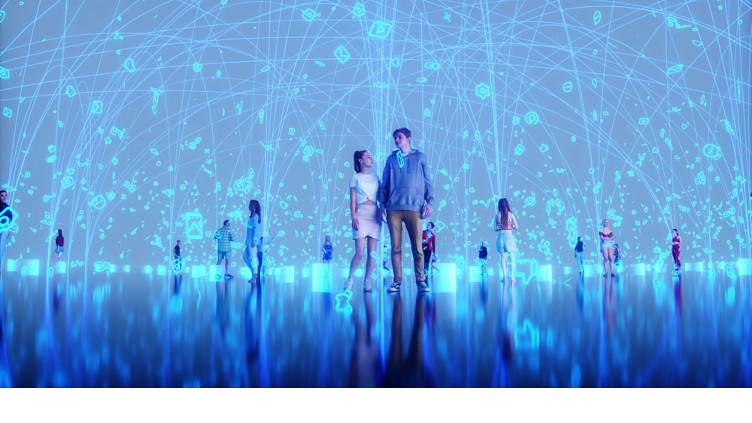
What’s rushing in to fill this architectural void is a transformation far stranger than a simple substitution. Stripped of our physical haunts, we are busy reconstructing localism on the internet, attempting to map the intimacy of a dive bar onto the architecture of a server.
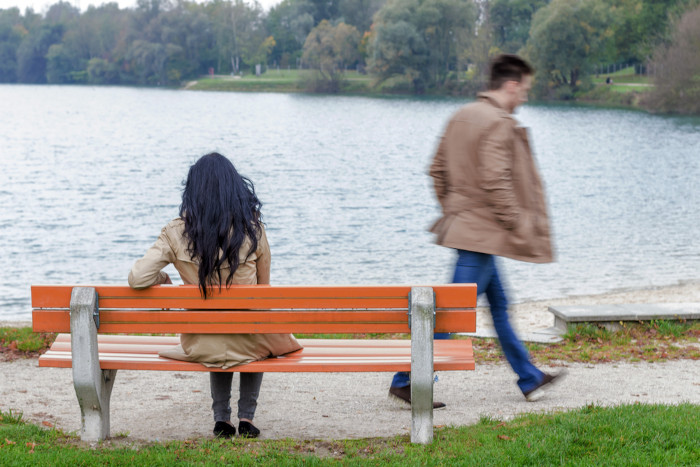
Discord channels have become the new salons; group chats are our bowling alleys. We show up to these digital flickering hearths every night for the same reason our grandparents went to the diner: just to be somewhere together. Yet, as we trade the sidewalk for the screen, we have to ask if an algorithmically-sorted space can do the same heavy lifting as a physical one. We are successfully replicating the feeling of community, but we may be losing the vital, uncomfortable friction of the real world, the kind of civic intimacy that only happens when you’re forced to share a bench with a stranger.

(Photo Credit: Depositphotos.com)
The transition from a shared public square to a private enclosure didn't happen with a bang, but with a series of bureaucratic subtractions when we began to treat our physical environment less like a stage for civic life. You see it in the hostile architecture that has infested our transit hubs, the slanted benches designed to make sitting a temporary discomfort rather than a communal act, or the strategic placement of armrests to ensure that the public square remains a place of movement, not of rest.
By mapping the rise of these hostile urban designs against our social needs, we find that our modern cities have been re-engineered to prevent the very accidental encounters that once defined urbanity.
This spatial contraction is fueled by a pay-to-play model of existence that has effectively turned the sidewalk into a storefront. The local diner, once a place where a single cup of coffee bought you three hours of political debate, has been replaced by sleek, high-turnover hubs where the Wi-Fi password is gated behind a QR code and a transaction history. We are living through a "latte tax" on sociality, where simply existing in the company of others requires a purchase of some sort. When the few remaining truly public spaces are either policed into sterility or priced into exclusivity, the "third place" stops being a democratic right. It’s no wonder we’ve begun to look elsewhere for a place to put our feet up; we’ve been priced out of our own neighborhoods.

(Photo Credit: Depositphotos.com)
With the physical world increasingly barricaded by hostile benches and the "latte tax," we’ve done what any displaced population does: We’ve migrated -- this time, into the glowing rectangle of the screen. Discord has become the flagship of this movement, offering a "third place" with a physics engine; a space where you don't just post, but where you inhabit a room, mimicking the "dropping in" culture of the neighborhood watering hole, where the stakes are low, and the door is always figuratively ajar.
We’ve seen the lobby culture of MMORPGs transform from mere gaming hubs into genuine town squares. In these virtual worlds, players often "park" their avatars in busy city centers just to exist in a crowd, chatting about their day while their digital selves lean against a virtual wall. It is a clever, if perhaps desperate, attempt to reclaim the "accidental encounter" in a world that has engineered them out of existence. Even our most solitary acts have been gamified into communal ones; the hushed, dusty intimacy of library stacks and local book clubs has been traded for the transactional ecosystems of NetGalley or the algorithmic buzz of BookTok. We are still reading together, but the "together" part is now mediated by a database rather than a shared table.
(Photo Credit: Depositphotos.com)
What is particularly biting about this migration is the irony of finding neighborhood intimacy with people 3,000 miles away while remaining total strangers to the person on the other side of our apartment wall. We are replicating the feeling of community but doing so in silos of interest. Reddit functions as a sprawling, chaotic town hall, yet it is a town hall where you only ever have to hear the voices of people who share your hyper-specific obsessions. By trading the unpredictable "other" for a perfectly curated digital reflection of ourselves, we are losing the vital, uncomfortable, and necessary civic friction that occurs when sharing spaces with strangers.
Certainly, to cast this digital migration as a purely tragic retreat is to overlook the radical utility of these spaces for those whom the physical world was never designed to hold. For the marginalized, the "death" of the physical third place is less a recent tragedy and more a longstanding status quo. Our urban landscapes, for all their supposed democratic infrastructures, have historically functioned as a series of barriers for the disabled, the queer, and the neurodivergent. When the local town square is a gauntlet of broken elevators, uncurbed sidewalks, and the looming threat of social policing, the internet can offer sanctuary.
(Photo Credit: Depositphotos.com)
And in these digital enclaves, accessibility isn't a begrudging afterthought mandated by a building code. For a person who is housebound or living in a region hostile to their identity, a Discord server or a subreddit can be a lifeline to a "neighborhood" that finally speaks their language. These are the only third places where the “regular” can show up as their authentic self without the weight of physical surveillance. While we may be losing the intersections of the street, we are gaining a level of safety and information equity that the physical world—with its high curbs and higher prejudices—has stubbornly refused to provide.
This is the central tension of our digital age: We are trading the broad, civic muscle of the physical square for the specialized, protective warmth of the digital silo. For many, that trade is the first time they’ve ever had a place to call home. The friction we lament losing in the physical world is, for others, the very thing that made existing in public impossible in the first place.

(Photo Credit: Depositphotos.com)
While these digital sanctuaries provide a vital refuge, they also facilitate a strange new phenomenon: a hyper-localized intimacy that has no interest in geography. We are witnessing the rise of niche localism, a world where you feel a more profound sense of neighborhood duty to a Discord moderator in Berlin or a fellow reader on NetGalley than to the person living in the apartment directly above you. We have decoupled the community from the commute, allowing us to find our tribe in the furthest reaches of the fiber-optic map while remaining total strangers to our actual physical neighbors. It is a peculiar irony of the modern age that we can be deeply invested in the granular drama of a server 3,000 miles away, yet couldn't tell you the first name of the person we’ve shared a hallway with for years.
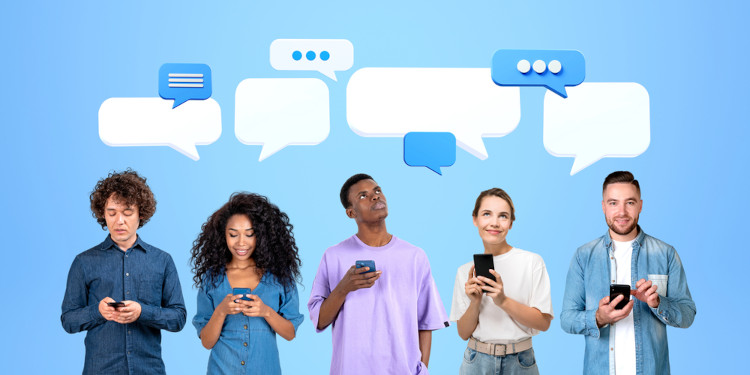
To bridge this gap, digital architecture has become obsessed with a mimicry of belonging, attempting to code the feeling of physical presence into the very interface of our platforms. Discord’s voice channels are designed to function like an open door; you don’t "call" someone, you simply "sit" in a room and wait for others to drift in, replicating the low-stakes culture of a neighborhood dive bar. Our group chats have morphed into 24/7 salons, a rolling, never-ending conversation that follows us from the breakfast table to the subway. We are building digital ghosts of physical habits, trying to trick our brains into feeling the warmth of a crowd through the blue glow of a screen.

(Photo Credit: Depositphotos.com)
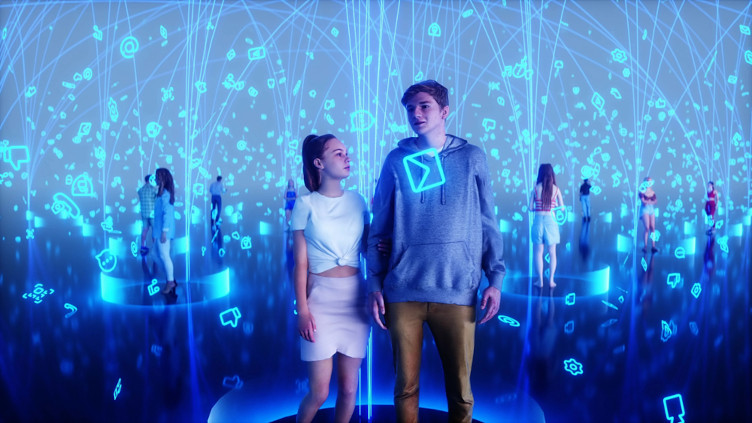
However, as we perfect this simulation, we must confront what happens when that togetherness becomes too efficient. In our quest to build a better, safer, more accessible third place, we have inadvertently created a world where we never have to encounter anything or anyone we didn't explicitly sign up for. We may be replicating the feeling of community but only by stripping away the very thing that makes a society communal: the unavoidable, uncurated presence of the "other."
The danger of a frictionless life is that it eventually atrophies the muscles required for a functional democracy. When we trade the physical sidewalk for the digital server, we are opting for an echo chamber with better upholstery. In a physical third place—the unfiltered reality of a public library or a local park—you are forced into the proximity of the unselected. You might have to tolerate the guy with the abrasive political take, the neighbor with the loud laugh, or the stranger whose life experiences are a jarring affront to your own. This is civic friction, and it is a vital, uncomfortable process of negotiating shared space with people you didn't choose and which, in turn, builds empathy.
(Photo Credit: Depositphotos.com)
In the digital third place, however, friction is a bug to be patched out. If someone bothers you, you block them. If a community's vibe shifts, you leave the server. The architecture of platforms like Discord and Reddit is designed to minimize discomfort by maximizing curation, ensuring that our "neighborhoods" remain ideologically and socially sterile. We are losing the uncomfortable diversity that builds civic muscle, replacing the broad intersections of a city with a model where we only ever encounter a digital reflection of ourselves. It is a world of low-stakes intimacy where the togetherness is real, but the accountability is nonexistent.
The great irony of our digital exodus is that in our rush to build a more perfect, frictionless version of the neighborhood, we may have accidentally designed a world where we no longer know how to live in one. We have mapped the "third place" onto the cloud, creating virtual havens that are safer, more accessible, and infinitely more tailored to our specific whims than the crumbling, hostile geography of the modern city. For many, these digital squares are the only places they can feel safe. But we are social creatures currently living in a state of self-imposed house arrest, loud and ambitious as ever, but shackled to a system that has forgotten how to simply let us be together.
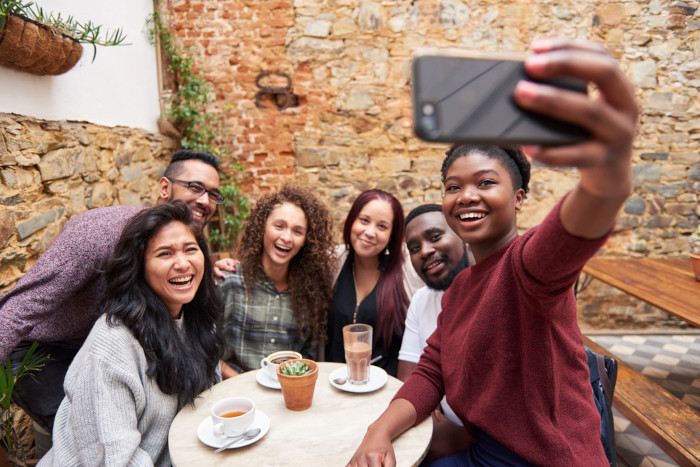
(Photo Credit: Depositphotos.com)
Reclaiming the square isn't just about tearing down the anti-houseless spikes on park benches or lowering the "latte tax" at the local café. There must be a fundamental refusal to let our civic life be optimized into oblivion. We cannot "patch" our way out of social isolation with a better Discord interface or a more immersive VR lobby. Those spaces can be lifelines, but they are not a replacement for the vital, messy, and deeply inconvenient work of being physically present with one another. If we continue to retreat into our curated silos, we risk becoming a society of roommates who never see each other in the hallway, connected by fiber-optic cables but separated by a total lack of shared reality.
Ultimately, the death of the third place is only final if we accept the digital substitute as the new standard. Every metropolis currently gasping for air needs spaces that are designed for people, not for profit or movement. Until we demand a better deal from our urban planners and ourselves, we will remain transfixed by the spectacle of our own isolation, staring at the digital flickering hearth while the real world outside continues to grow gray as concrete. We have assembled the most sophisticated community-building tools in human history, but they won't matter if we’ve forgotten how to simply share a bench.
Author Bio:
Angelo Franco-DeWitt is the chief features writer at Highbrow Magazine.
For Highbrow Magazine