


(Photo Credit: Depositphotos.com)
White River Crossing
by Ian McGuire
Crown
274 pages
Gold is the driving force behind the action in Ian McGuire’s new novel, White River Crossing. The story takes place in 1776 in northern Manitoba (known then as the “Barren Grounds”). Three men, enlisted by the Hudson Bay Company, investigate a possible untapped source of the precious metal deep within sub-Arctic Canada.
At first, no one on the ill-fated expedition fully grasps what they’re getting themselves into:

(Photo Credit: Depositphotos.com)
“They realize the vastness and desolation that awaits them in the far north, but they do not properly fear it yet, because in their hearts, despite all they have been told, they still cannot quite believe that such a place is real.”
But the place is real, and frighteningly so. In the world described here with such immediacy, acts of violence erupt with devastating consequences for all involved.
These men all surrender to the allure of “a morsel of gold, however small, [that] will catch the light and hold it like nothing else on earth.” But greed discourages harmony. John Shaw, the strong-willed and borderline amoral leader, battles with Tom Hearrn, a former priest and ex-sailor who is more skeptical of the journey’s greater mission. The third man, Abel Walker, is caught in the middle of an explosive personality conflict.
McGuire’s brilliant earlier novel, The North Water, treads similar ground. Set in 1859, the novel describes a grisly turn of events aboard a whaling ship on its voyage to the Arctic Circle. With sharply drawn antagonists and exquisitely detailed acts of violence, the author portrays a hellish world that is both unsparing and utterly convincing.
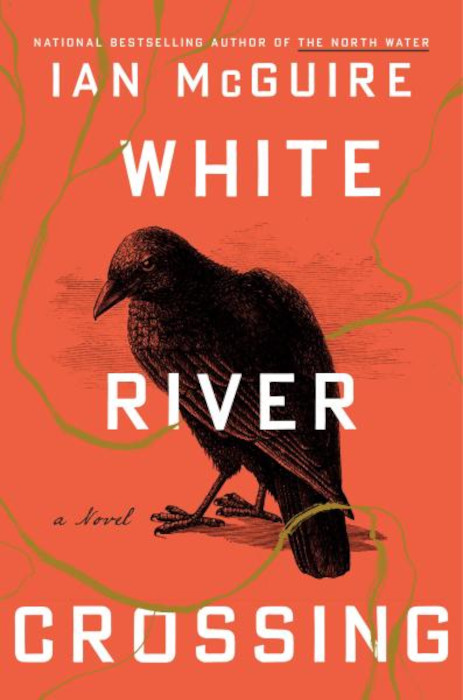
Throughout White River Crossing, the prose is clear and crisp, particularly regarding the terrible climate in which these men strive to find gold:
“On the island’s crumbling rim, above a broken layer of schist, the bare-limbed trees, draped in shadow, lean and cling together like keeners at a burial. There is no sound as the two men stand there except the cold wind droning in the trees, and no light except the silver ice-light of the moon.”
At the same time, the opening chapters carry the weight of considerable background exposition. These chapters threaten to stall the actual story which—once the expedition gets underway—gathers steam and immerses the reader in the bitterly cold, unforgiving environment just below the Arctic Circle.

(Photo Credit: Depositphotos.com)
The novel includes an “author’s note,” addressing the issue of cultural appropriation. Several chapters are told from the perspectives of Indigenous character—both the Northern Indians and the local tribe, called Esquimaux. But because these sections are written with care and delicacy, the author’s note feels unnecessary.
Here, as in his other books, the influence of Cormac McCarthy’s apocalyptic language is unmistakable:
“… and, for a fervent moment, [he] wishes he were back at sea, with only the ship’s black hull curved beneath him, the gray arc of the sky above, and this whole restless, suffering world purged and purified, shorn down and stripped to its core.”
While White River Crossing might lack the palpable dread and pervasive horror of The North Water, Ian McGuire succeeds admirably in dramatizing “this raw and savage place that seems by its implacable enormity to give the lie to all mere human endeavors.”

(Photo Credit: Depositphotos.com)
Author Bio:
Lee Polevoi is Highbrow Magazine’s chief book critic and author of a novel, The Confessions of Gabriel Ash.
For Highbrow Magazine