

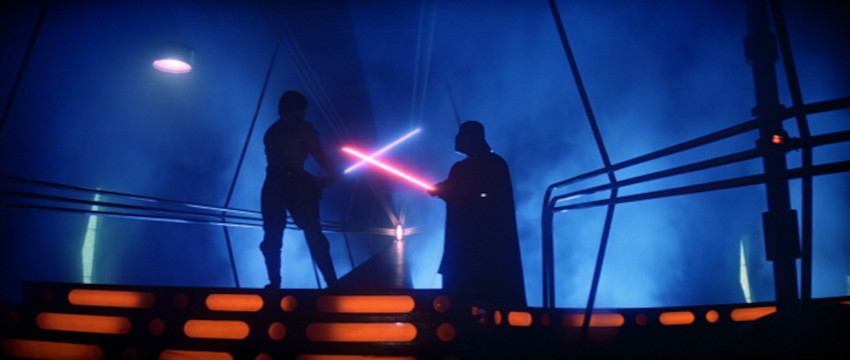
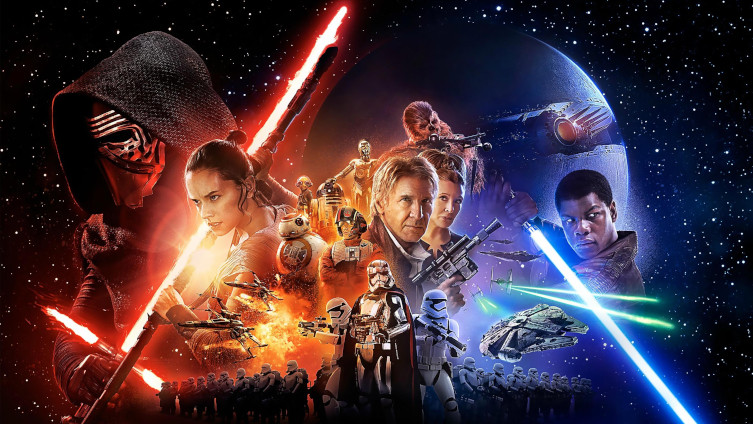
Friday, December 18, 2015, 7 p.m. It felt like my life had been leading up to this moment. Here I was: four weeks from getting accepted to Chico State, three weeks shy of turning 18, two weeks away from my first kiss, and, in just a few minutes, about to experience my first Star Wars movie in theaters.
Life couldn’t have felt better as I sat down and experienced John Williams’s score blaring while the opening crawl soared above me, setting forth the mystery of The Force Awakens: “Luke Skywalker has vanished.” Finally, it was here. And it was monumental.
Walking out of Episode VII: The Force Awakens, I was in a daze. This wasn’t like my dad’s experience - and many others’ - walking out of The Phantom Menace in horror. J.J. Abrams had done it. Star Wars was alive again! More than alive, it had become the cultural zeitgeist in a way I had only heard about but never experienced myself.
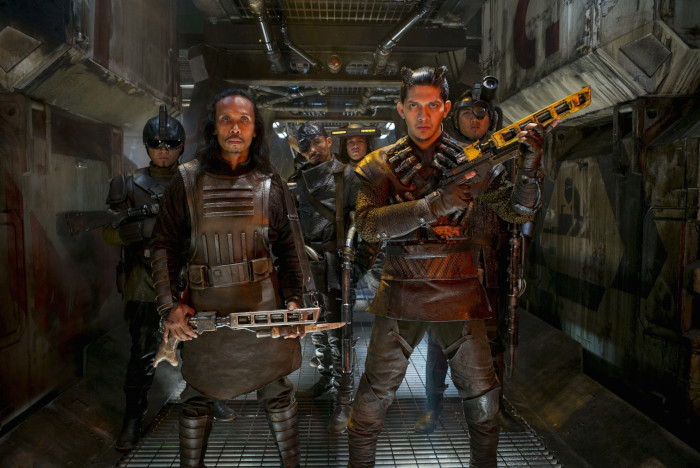
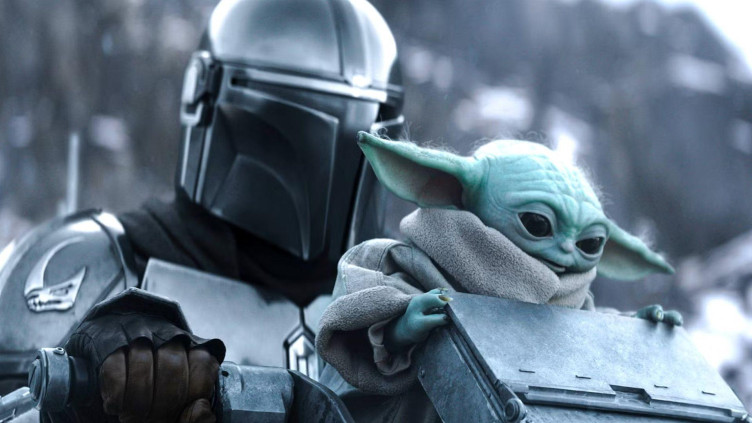
Now, 10 years later, a new Star Wars film releases in theaters, and it feels like any other major studio blockbuster. Walk into a Target and you’ll find shelves lined with Baby Yoda plushies. Go to Burger King and you can grab a Mandalorian souvenir cup (which I proudly own). Walk into Bath & Body Works and you can smell like the Force with the new “Force Flow” fragrance (who knew the force smelled like apple?).
It’s ubiquitous, yet the mania appears absent.
People will see this movie, and if I had to guess, it’ll be successful. Based on my last trip to Disneyland, Disney has likely made its money back through Grogu merchandise alone.
But for the first time in my life, Star Wars is crossing a new threshold: It is no longer special.
Since December 18, 2015, we’ve had five theatrical releases, 85 episodes of live-action television, 257 episodes of animated TV, 12 videogames, more than 100 novels, thousands of comics, and entire theme park lands in Disneyland and Disney World.
What feels different now is the integrity of the imagination. When a new Star Wars movie arrived, it felt less like an event and more like obligatory content to keep the streaming service afloat. The mystery has been replaced by maintenance.
I don’t want to fall into revisionist history and pretend Star Wars wasn’t heavily commercialized before Disney. George Lucas turned Star Wars into a merchandising empire long before the Mouse arrived. He spent years unsuccessfully trying to launch a live-action television series, and if he’d had access to the resources of the streaming era, he probably would have gone even further.
However, he didn’t have those resources, and because of that, two very different eras of Star Wars now coexist in juxtaposition: the era of the visionary filmmaker pushing cinematic technology forward, and the era of the corporation filling release calendars across theaters and streaming platforms for their stakeholders.
Video killed the radio star, and the glut of streaming killed studios’ willingness to take risk.
For all the grievances aimed at the prequels, their world-building is extraordinary. These much maligned films introduced dozens of new planets, vehicles, weapons, and mythologies, while deepening our understanding of characters and worlds.
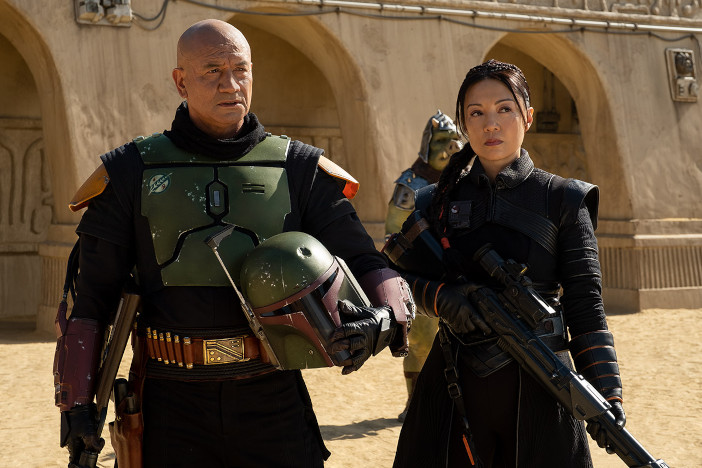
Yet in the streaming era, where availability is at an all-time high, the world of Star Wars has paradoxically shrunk. The Mandalorian, The Book of Boba Fett, and Kenobi repeatedly return to Tatooine, the same desert planet first introduced in A New Hope. Once defined by endless possibility, the galaxy has become increasingly trapped by its own iconography and fan fervor.
This wasn’t always the direction Disney-era Star Wars seemed destined to take. Early on, Lucasfilm appeared genuinely interested in moving the franchise forward with new heroes, villains, and mythologies beyond the Skywalker legacy.
Then came 2017 when Star Wars: Episode VIII - The Last Jedi broke the internet and divided the fandom forever.
Rian Johnson’s film complicated and challenged the mythology surrounding Luke Skywalker, portraying him not as an untouchable legend but as a man crushed by shame and failure after briefly contemplating killing his nephew, Ben Solo. It was a daring, creative choice: a hero confronting the weight of his own myth in a galaxy that still demanded salvation from him. The backlash was immediate and relentless, spilling far beyond film discourse and into the broader cultural fragmentation consuming the internet itself.
From there, Star Wars fundamentally changed.
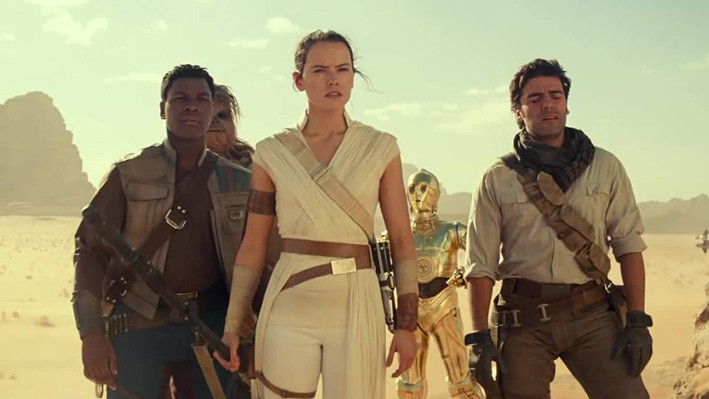
Look no further then: The Rise of Skywalker, a film that concerns itself little with pushing the series forward, and instead retreats to the safety of the past (“Somehow, Palpatine returned” remains a low point for a franchise that brought us Jar-Jar Binks). Barely functioning alongside the previous two installments, Episode IX openly retreats from many of The Last Jedi’s thematic weight: Ben Solo hides behind the mask again; lineage matters after all; and Rey ultimately adopts the Skywalker name.
The message was unmistakable: Star Wars no longer wanted to challenge its audience. It wanted to reassure them.
The Disney+ shows (minus Andor, which if you haven’t watched are fantastic and the best piece of Star Wars storytelling since 1980) soon followed a similar trajectory. While the first season of The Mandalorian succeeds largely because of its simplicity of a lone bounty hunter unexpectedly becoming a pseudo-father, later seasons increasingly rely on legacy characters and references to other television shows. Fan-favorite animated characters like Ahsoka and Bo-Katan are brought into live action, while Luke Skywalker returns through deepfake CGI technology, an apt metaphor of preserving the past exactly as it once existed.

Can the franchise escape this gravitational pull of nostalgia? Under Lucasfilm president Dave Filoni, I have my concerns.
Filoni clearly loves Star Wars. In many ways, he understands the mythology better than almost anyone alive. But love for a franchise and the ability to evolve it are not the same thing. More often than not, modern Star Wars seems afraid to let go -- afraid to move beyond familiar imagery, familiar characters, and familiar emotional beats.
Maybe this is the gift of aging. You let go of the relics of childhood and move forward. The things you love never completely disappear, but they stop meaning the same as thing they once did.
I think back to a decade ago, seeing The Force Awakens for the first time. Since then, I’ve graduated from university, lost my grandma, buried a few friends, and kissed a few girls along the way, only to eventually met the woman who stole my heart. As she and I prepare to move across the country to the East Coast, we agreed to do one thing together before we leave: Go see The Mandalorian and Grogu.
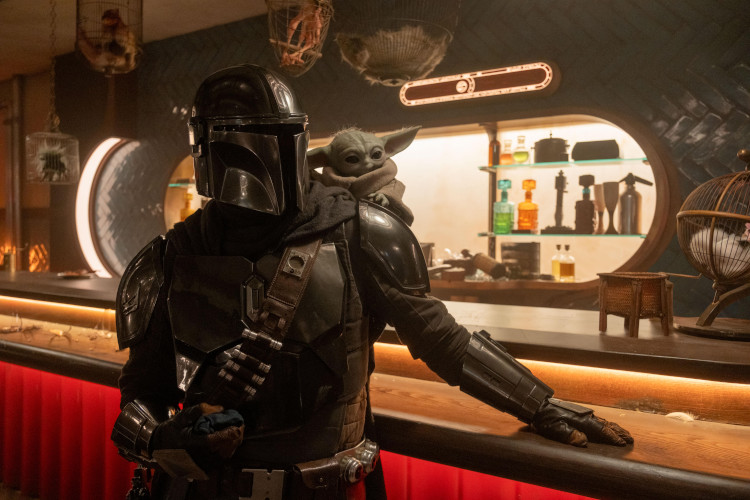
It won’t be opening night this time. Just a quiet Sunday afternoon. We might laugh; we might sigh; we might even argue over whether that scene really makes sense. And when we walk out, it will feel different, but familiar.
To dreaming of distant galaxies. To collecting (and sometimes stealing) Star Wars LEGO minifigures. To opening nights packed with crowds cheering at the Lucasfilm logo. To staying up until 3 a.m., raging at The Book of Boba Fett. To quoting, in my best Ewan McGregor impression, “Anakin, my allegiance is to the Republic! To democracy!” until my friends begged me to stop. To cosplaying as Anakin and Padmé with my girlfriend at Disneyland.
All of it, orbits, traces, echoes, things that move with you, fade, return, and sometimes settle into shapes you barely recognize. Long after leaving Tatooine, long after the sunset you once stared at wondering what was out there, you find yourself carrying pieces of it anyway, quietly, without noticing. In their final shared moment on screen in The Last Jedi, Luke tells Leia, “No one’s ever really gone.” We move on, we grow and evolve, but the stories, the people, the ones we lost, and the galaxies that shaped us never fully leave. They remain with us.
Author Bio:
Ben Friedman is a contributing writer and film critic at Highbrow Magazine.
For Highbrow Magazine