


(Photo Credit: Depositphotos.com)
Venetian Vespers: A Novel
By John Banville
Knopf
320 pages
John Banville is a vastly gifted (and almost ridiculously prolific) author. With 23 novels to his credit—not including at least 10 so-called “Quirke” mystery novels—perhaps the most remarkable aspect of his work is the ease with which beautiful prose flows from his pen (or computer).
To choose one random example from his newest novel, Venetian Vespers, the narrator describes his first encounter with the woman who eventually becomes his bride:
(Photo Credit: Depositphotos.com)
“I had the sense, disconcerting yet obscurely flattering, of being carefully appraised, as if at any moment she might give a brisk nod and I would be taken under the elbows by a pair of deferential fellows in striped waistcoats and linen gloves, and borne off to a cavernous warehouse at the back of the auction rooms, there to be wrapped in lengths of sacking and packed into a crate of bran for immediate dispatch.”
Banville’s first-person narrative voice is unmistakable—that of a witty, pompous, vain man (they are all men), both insufferable and endearing at the same time. The aged philosopher in Shroud, the jailed killer in Book of Evidence, the troubled actor in Eclipse—all these narrators address the reader directly. They allude to lurid crimes or episodes in their past, in a voice that might charitably be called “unreliable” (and always conveyed in florid prose). Lengthy digressions and abrupt changes in time and tense aren’t uncommon.

Banville’s masterpiece, The Untouchable, loosely hews to the life and times of Anthony Blunt, one of the infamous Cambridge spies who worked undercover for Russia during and after the Second World War. The protagonist Victor Maskell—highly intelligent, highly misanthropic—finds his undercover life further complicated by his being gay.
Though there’s more of a plot in The Untouchable than elsewhere, Banville’s many fans understand plot is never the primary reason for reading his novels. Rather, it’s the language he creates in all its arch, sensual, and self-mocking glory.
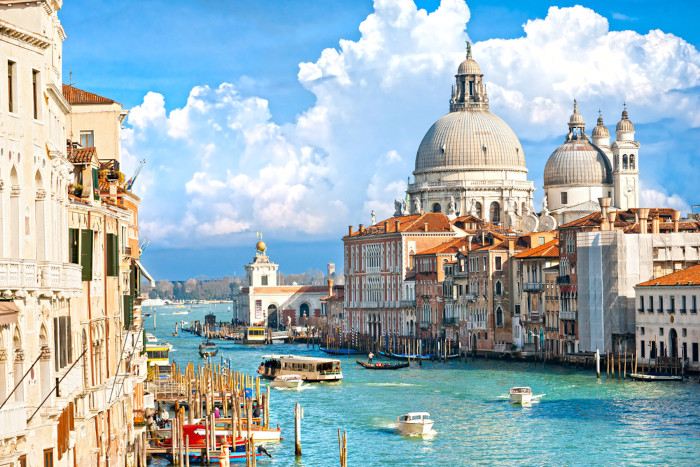
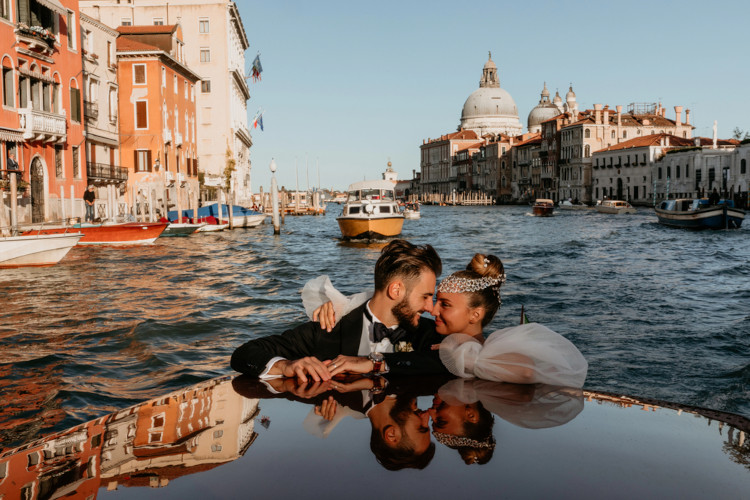
In Venetian Vespers, a pair of newlyweds descend on Venice in 1899. The husband, Evelyn Dolman, is a self-described “literary hack,” and his bride Laura is, in his words, “a sort of statue, cold, pale, and inert.” After a disastrous honeymoon night, Evelyn wakes up to find Laura has disappeared. Soon thereafter, he meets Freddie FitzHerbert and Freddie’s beautiful sister, Francesa. The brother and sister move into Evelyn’s palazzo and things continue to take a dark turn from there.

(Photo Credit: Depositphotos.com)
However, Banville’s unique narrative style bumps up against a distressing tendency to over-explain what’s going on, which sometimes slows the pace down to a dead stop:
“In fact, I was never to lose, in my time in Venice, the sense of having been picked out from the groundlings and led onto a kind of moving stage and drawn irresistibly into the midst of a steadily darkening drama, in which everyone had learned off his or her part to perfection and played it with the utmost expertise, fluidity, and panache—everyone, that is to say, except myself, poor clod, who had not been given so much as a glance at the play-script.”
A little of this goes a long way, yet Venetian Vespers is heavily laden with ruminations of this sort. It’s another familiar Banville trope—the narrator who feels desperately out of place, yet comes equipped to couch his disorientation in the most elevated language.
(Photo Credit: Depositphotos.com)
Still, one gets impatient with Evelyn Dolman’s circumlocutions and endless self-questioning. There seems to be more of that here than elsewhere in his work, resulting in a plot that creeps forward at a glacial pace.
For Banville loyalists, Venetian Vespers is proof yet again that he is a wizard with the English language. For those new to his fiction, it might be best to seek out The Untouchable or his Booker Prize-winning novel, The Sea. In these novels, and many others, you can see the Irish author’s genius at work.
Author Bio:
Lee Polevoi, Highbrow Magazine’s chief book critic, is the author of The Confessions of Gabriel Ash, a novel.
For Highbrow Magazine