

(Photo Credit: FreeJarvis.org)
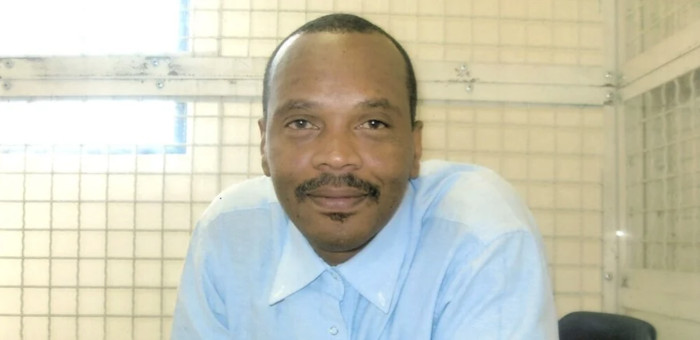
For Jarvis Masters, resilience has been the key to survival. The story of his life has become an inspiration to people around the world. At the age of 5, he was removed from his home due to his parents’ neglect, drug use, and violence, and grew up in a series of foster homes and institutions where he often experienced more violence. As with so many other young people in these situations, he was shuffled through the cradle-to-prison pipeline with little opportunity or guidance to find a different life. When Jarvis was 19 years old, he was convicted of several armed robberies and sentenced to 20 years in prison. Four years into his sentence, a prison guard was stabbed to death two tiers away from Jarvis’s cell.
Despite proclaiming his innocence, Jarvis was implicated in the murder, accused of sharpening the weapon used in the killing. In stunning and arbitrary decisions, the man who actually stabbed the officer and the one who ordered the killing were sentenced to life in prison without parole, while Jarvis was sentenced to death. Years later, the prosecution witnesses who originally testified against Jarvis would recant their testimony, saying they had lied out of fear of retaliation. Despite decades of appeals, Jarvis still remains in prison.
Throughout those years of confinement and dehumanizing conditions, Jarvis has chosen a life of growth and service. He keeps finding how to contribute, how to be true to himself, and how to give what he can in the midst of the challenging conditions of his life. As he writes on his website: “When I think about the fact that society, a nation, has sentenced me to death, all I can do is turn inside myself, to the place in my heart that wants so desperately to feel human, still connected to this world, as if I have a purpose.”

(Photo Credit: Depositphotos.com)
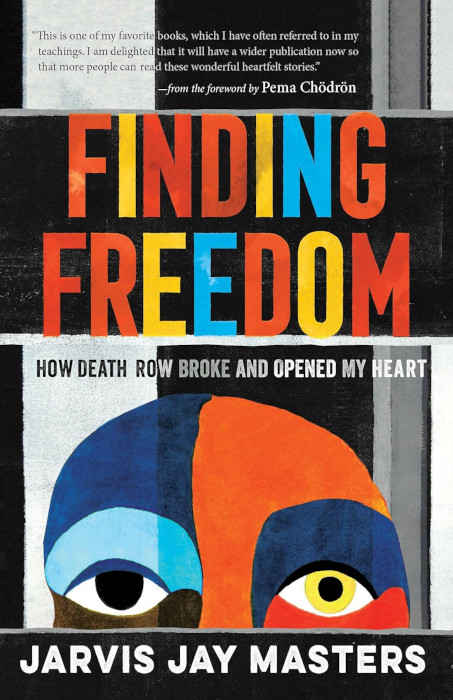
During Jarvis’s years in solitary confinement, he wrote two books, using the filler of a pen, the only instrument he was allowed to write with. The first one, Finding Freedom, vividly depicts Jarvis’s life in the violent, tumultuous world of prison and his skillful and surprising journey to embody compassion and healing. The second, That Bird Has My Wings, is about how he summoned the courage to face the traumas of his childhood.
I first met Jarvis through reading Finding Freedom, while I was participating in a Sensory Awareness workshop in Mexico. My father had died two months before and I was still immersed in the intense journey of grieving. It was a primal time and there was an open rawness in me that resonated deeply with the primal, open rawness in this book. Jarvis was writing about “how to deal with pain and suffering, how to keep [his] mind at rest, to take everything in, not to run from the pain, but to sit with it, confront it, give it the companion it had never had.” He described how he learned to meditate and practice Buddhism in the midst of the violence and turbulence of San Quentin, how to open his heart and cultivate compassion for his fellow inmates.
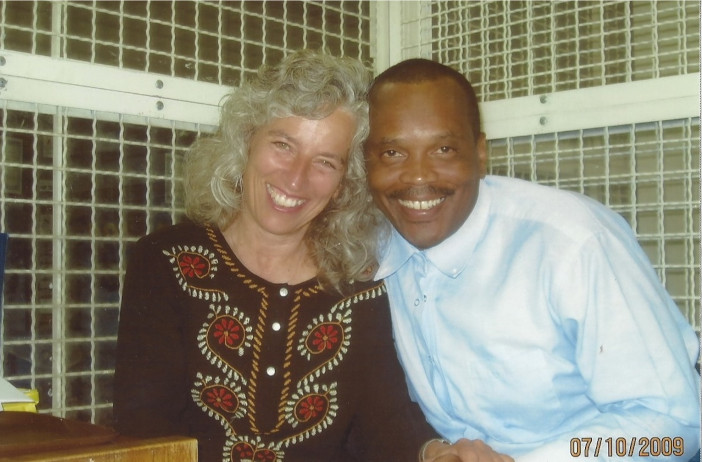
For the first time in my life, I wrote to an author to share how deeply the book had touched me and how much his stories meant to me in the midst of my own grief and loss. Jarvis and I began corresponding, and one year later, I made my first visit to San Quentin. The prison was only a 15-minute drive from my house, yet worlds apart.
(Photo Credit: Freejarvis.org)
In the midst of that intimidating and chilling world of San Quentin, where so many people were living lives shaped by violence, poverty, racism, dehumanization, and systemic injustice, there was Jarvis with his vital, welcoming, and radiant presence.
Although our worlds are very different, we both rely on practice as a fundamental ground for being present and meeting the challenges and opportunities of our lives. We came to meditation and Buddhist teachings in different ways, yet they are essential elements of the resilience that sustain us both. It was while Jarvis was preparing for his first trial that the private investigator assigned to his case introduced him to meditation, and Jarvis began sitting every day.
Then shortly after receiving his death sentence, he read an article, “Life in Relation to Death,” by Chagdud Tulku Rinpoche, a Tibetan Buddhist lama. Jarvis began writing to him, and Rinpoche eventually came to visit Jarvis at San Quentin and became his teacher. “Rinpoche encouraged me to use my intelligence toward ‘harmlessness, helpfulness, and purity,’” Jarvis wrote on his website, Freejarvis.org.
(Photo Credit: Depositphotos.com)
For years, often late at night or very early in the morning, when other men were asleep, Jarvis would roll up a blanket and sit in meditation on the floor of his cell. Sometimes he would even meditate during the day, in the midst of the cacophony of sound—shouting, calling out, laughing, cursing—from the over 600 men in the five tiers of cells piled on top of one another.
Even in the face of the demeaning conditions of prison, this meditation practice, returning to breath, finding connection to aliveness in the moment, has not only helped him find resilience but also opened his heart. Despite the extreme disappointment of an innocent man denied appeal after appeal; despite the heartbreak of the suicides, murders, and executions of imprisoned friends; despite all that he cannot control in his life—despite it all, he has found freedom, humor, and openheartedness. Over and over again, Jarvis has watered the seeds of resilience rather than bitterness.
In one of our many conversations, I asked Jarvis how he was able to open his heart, to conjure up love rather than hate in the midst of the injustice and inhumanity of the prison system. He said, “I had to. I had to in order to survive. When I was filled with hate, it was as though I was tethered outside of my body. All the focus of my energy was flowing in a tight stream away from me. When I conjured up love, it was as though I was coming home, back inside my body to who I am.”
When he first entered San Quentin State Prison as a frightened and angry 19-year-old, Jarvis could never have envisioned the lessons of freedom he would one day offer to others, and he would never have imagined that 40 years later, he would be sharing his life experience and wisdom in his first Dharma talk, given online to over 200 people around the world. This situation had a painful and poignant irony in it—a talk by a Black man deprived of his own freedom was being presented on June 19, 2021, the very first national commemoration of Juneteenth, the day in 1865 when all slaves in this country were finally freed.
Due to the COVID pandemic at the time, all of us attending this weekly Dharma talk from the San Francisco Zen Center were online. And because a prisoner can’t appear on camera, a photo of Jarvis was posted on the screen. Jarvis called me collect from the prison phone, and I held my phone up to the computer microphone so he could be heard. Every 15 minutes, the call would be automatically disconnected by the prison system, and we would have to wait for a call back. I would continue the Dharma talk or invite us to be present with Jarvis in silence, and then two to five minutes later, my phone would ring and the recorded message would announce that a collect call was coming in from an inmate at San Quentin State Prison. Despite—and maybe partly because of—these onerous conditions, the vitality and freedom of Jarvis’s spirit greatly inspired those hearing his words. There he was, from death row, delivering a key to the freedom so many of those listening were seeking through their meditation practice.

(Photo Credit: Depositphotos.com)
Over that prison phone, Jarvis offered us his hard-won wisdom: “When I met Rinpoche, I was not in a good place…. When I spoke to him, he said, ‘You’ll never be able to beat the walls down, and you’ll never be able to cut through the bars. So if you can’t do that, all you have to do, Jarvis, is move them out of the way.’
When he said that, I understood exactly what he meant. You don’t have to see the bars if you don’t need to. You can focus on your practice. Everything you thought was restraining you or keeping you from being the person you are, all you have to do is move all those negativities out of the way.
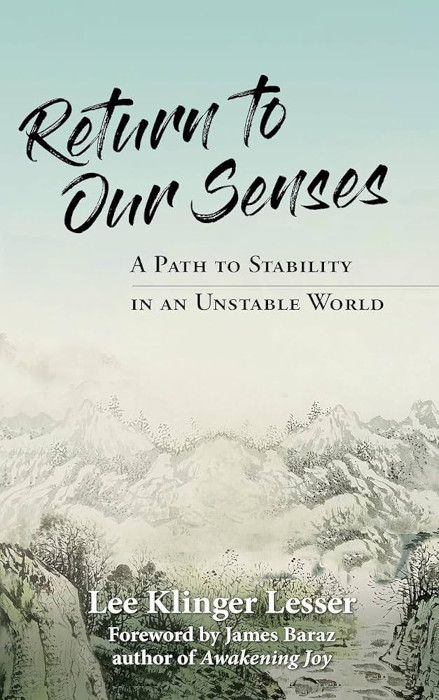
Adapted with permission from Return to Our Senses: Finding Stability in an Unstable World by Lee Klinger Lesser.
Author Bio:
Lee Klinger Lesser has devoted a lifetime to the study and practice of embodied awareness, education, and service. She leads workshops and retreats in the somatic, mindfulness practice of Sensory Awareness. Her work is based on a deep respect for our inherent connection with nature, the resilience of the human spirit, and the power of community. She is the author of Return to Our Senses: Finding Stability in an Unstable World (Bell Ringer Press, April 2026).