


(Photo Credit: Depositphotos.com)
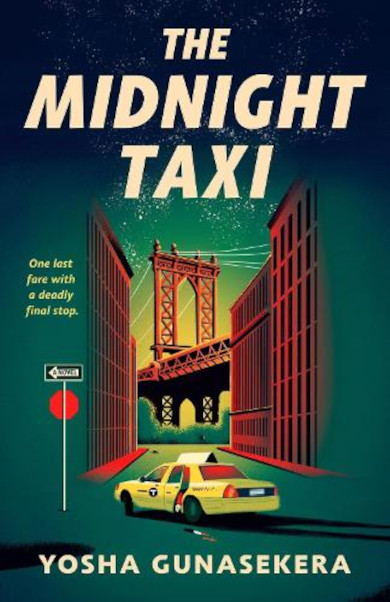
The Midnight Taxi
By Yosha Gunasekera
Berkley Mystery (Penguin Random House)
288 pages
The Midnight Taxi, a debut thriller-mystery novel by Yosha Gunasekera, a Sri Lankan-American attorney, is a charming tale of a cab driver falsely accused of killing a fare in her own vehicle. There is little doubt throughout that the locked-room puzzle will be solved and the plucky, wisecracking, nice girl, first-person immigrant narrator will somehow survive and thrive, but the ride is a delicious one.
Part of why is because Siriwathi Perera (a.k.a. “Siri,” in a slight nod to the podcast theme of the story), our cabbie, is an insatiable foodie, and you can practically whiff the curry throughout. Because of the nature of her job, she knows where the best grub in New York City is to be had, be it the Bronx’s own version of Little Italy for pasta, the best slice in Brooklyn, a bacon-egg-and-cheese at a Manhattan bodega, or authentic Sri Lankan fare in Staten Island.

(Photo Credit: Depositphotos.com)
The meals, a couple of wise good friends, her parents, an appreciation of a good-looking “dude,” and her consistently humorous fortitude are the things that allow Siri to move bravely through her otherwise unlucky life, the daily racism and sexism she faces, and the unique loneliness of someone just scraping by in The Big Apple.
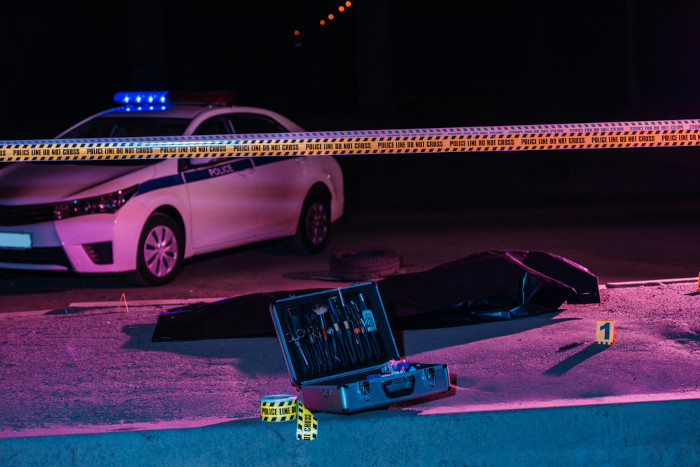
Her ill luck goes from bad to worse when she tries to wake up a customer she has taken to JFK Airport and is horrified to see that he has, somehow, been stabbed, and is in fact dead. Along the way, Siri had almost hit a pedestrian, and she exited her cab for a few moments to make sure the woman was alright. The thin silver lining? The previous fare was a fellow female Sri Lankan named Amaya Fernando, who happens to be a public defender who had given Siri her business card. A striking coincidence, sure, but it is New York. These things happen, and besides, the two together turn out to be a winning pair as they investigate the crime in the absence of a callous NYPD, who have promptly charged Siri with murder.
Siri’s city after dark is a confessional, a crossroads, and a quiet reckoning for lives in transit. Blending elements of literary fiction with the momentum of a character-driven mystery, the novel explores loneliness, chance encounters, and the fragile ways strangers shape one another’s lives. The result is an atmospheric, reflective story that lingers less for its plot twists than for its emotional resonance.
(Photo Credit: Depositphotos.com)
Gunasekera and her main character seem like people you’d like to know. The author, a former Manhattan public defender, teaches a course at Princeton University focused on wrongful convictions, and works with the Innocence Project.
As for the fictional Siri, she’s always got a jocular aside to go with her genuine warmth and seriousness of circumstance. She doesn’t just know the best places for a nosh—she knows the many and varied textures of New York City and will accompany you with an intrepid chutzpah from the unfamiliar precincts of Staten Island to the tiny Roosevelt Island to Rikers Island (which, for those visiting inmates, can only be accessed by a Department of Corrections bus, one detail among many illustrating the unfeeling criminal justice system).
The Midnight Taxi, despite the dry delight that consistently bubbles up, is a brisk meditation on isolation. Nearly every character is alone in some way—physically, emotionally, or existentially. Yet the novel is far from bleak. It suggests that fleeting connections, however small, may carry much weight. A conversation that lasts 10 minutes may alter a decision. A driver who listens without judgment may become, for a moment, the only witness to someone’s life, or in this case, an unknowing witness to someone’s death.
In the instances when you think the novel might be a touch predictable, Gunasekera often throws in some writerly self-deprecation in service to the story. These are moments that remind you of how much fun you are having, akin to a fast, bumpy cab ride from Times Square to the East Village after a few drinks. In this passage, it seems we’re learning about the motivations of Gunasekera the attorney and storyteller, as well as those of her determined narrator:
“The thought of being a lawyer, even just as a fantasy, makes me think of a seminal movie from my childhood, My Cousin Vinny. Sure, it’s not one of those hard-hitting legal thrillers, but it’s still a favorite. Wisecracking New Yorker goes down south to fight his cousin’s murder charge despite overwhelming evidence of guilt and a court system riddled with racism. I’d always related to Vinny and his unpolished yet determined ways. My being any sort of lawyer would make my parents much prouder of me than they are of my life now—but it’s more than the external achievements. I want to fight for the voiceless, the people the system uses and abuses—people like me. It’s more than my fear of public speaking that prevents me from achieving my dreams.”

(Photo Credit: Depositphotos.com)
The book is the first in a series for the character and her new lawyer pal Amaya, we are promised in the acknowledgements, where we also learn that Gunasekera married into a family of taxi drivers. A throughline of the tale is that Siri, in assisting with her own case (and late in the story, someone else’s), is finding a new career as an investigator. Who better than a cabbie to tease out the human condition and bring hard truths into the clean light of day?
As the reader of this fine introductory effort, here’s hoping Siri doesn’t quit her night job.

Author Bio:
Thomas J. Walsh, a Highbrow Magazine contributor, is a Cleveland-area writer, editor and communications manager. A Navy veteran, he sits on the board of the VA’s Center for Healthcare Evaluation, Research & Promotion. He has been a staffer for The Philadelphia Inquirer, Philadelphia Business Journal, the Reno Gazette-Journal and various other publications.
For Highbrow Magazine