

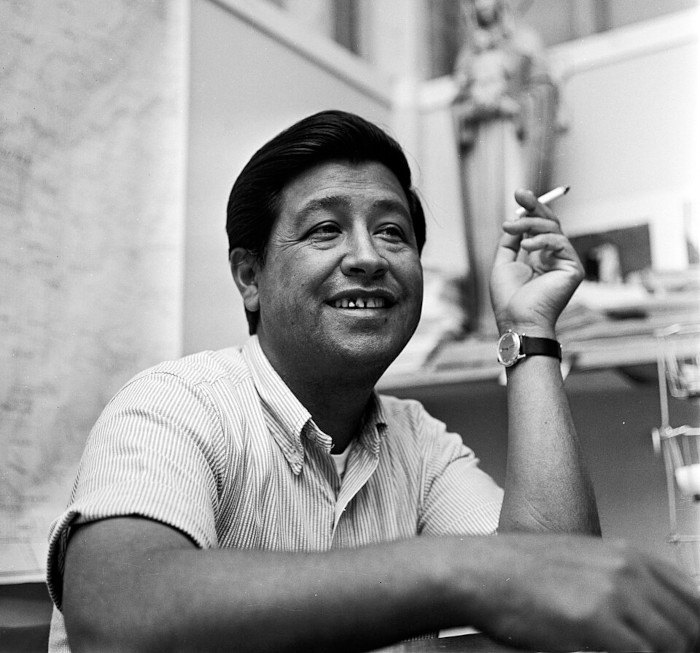
(UCLA Library, Wikimedia Commons)

In liberal circles, it has become popular to argue that Trumpism (the MAGA movement if one prefers) is a cult. While there are deeply problematic elements surrounding Trump’s ascension from reality-show host to leader of the United States, I assert that they reach beyond MAGA. Human beings, it seems, are drawn to idolatry, particularly the form focused on individuals. Nothing makes this clearer than the current scandal surrounding deceased civil rights and labor leader Cesar Chavez.
As Cesar Chavez Day approaches with increasingly dark allegations in tow, nonprofits, government agencies, and politicians are racing to reassess his legacy. Central to the discussion is a point made frequently in my university course on media history: Human beings are complicated. This is not an original thought because we can all agree that even the kindest and most well-meaning individuals have made mistakes, sometimes significant ones.
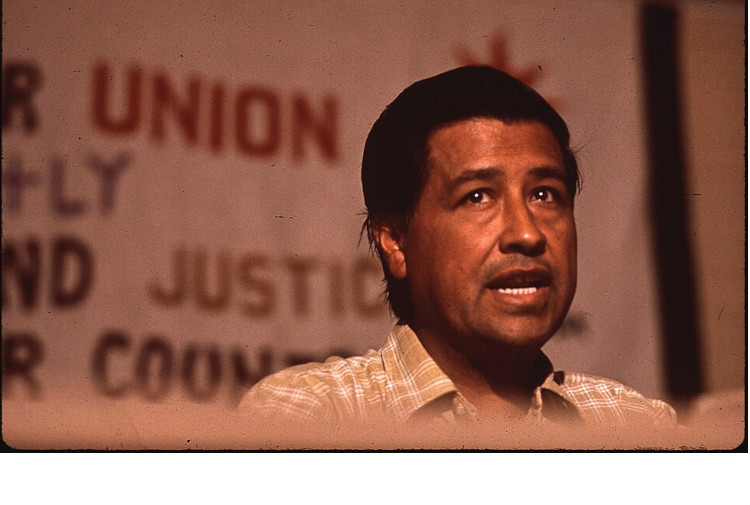
(National Archives at College Park--Wikipedia Commons)

I am not asserting that the horrifying allegations against Chavez should be written off as “mistakes.” Indeed, they extend into territory most right-thinking people never trod, but this doesn’t change the fact that any elevation of an individual can be viewed as a celebration of both their accomplishments and flaws. Because of this, and because glorification of individual achievement has become central to our society, we are now in the business of refining fuel for ongoing culture wars.
It would be difficult to quantify how many Chavez-like incidents have surfaced in recent years. Is it acceptable to celebrate the American Founding Fathers who held slaves? Does the fact that they had the courage to break from British rule outweigh their subjugation of other humans? Questions like this are impossible, yet they present themselves in discussions about countless historic events.
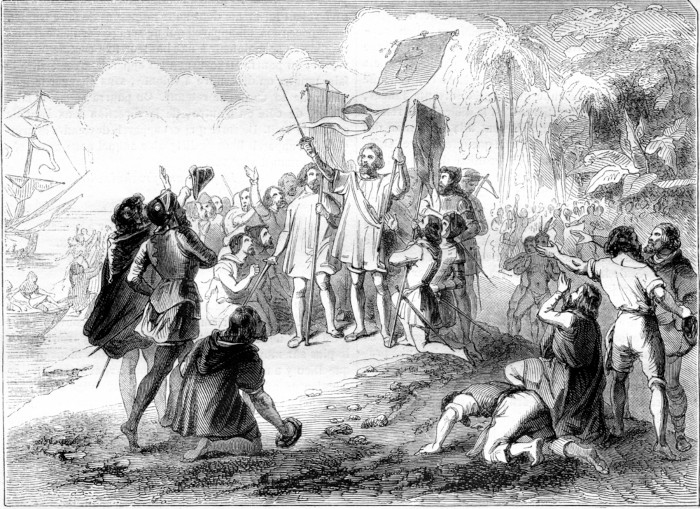
Consider the European discovery of the Americas. One can discuss whether Christopher Columbus was an intrepid explorer or a man who drifted off course and into a pattern of ruthless colonization.
(Photo Credit: Depositphotos.com)
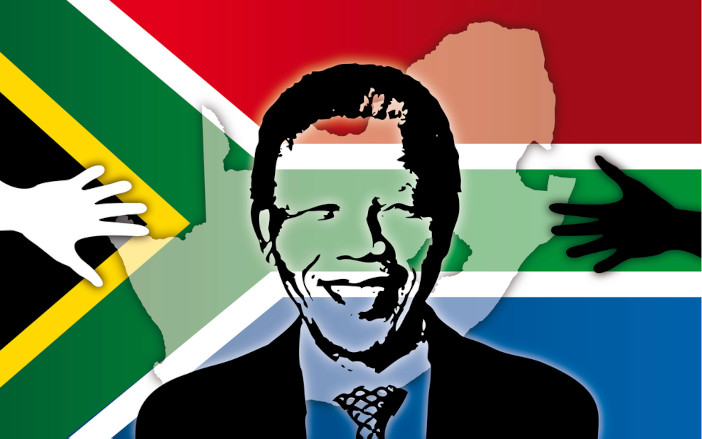
Likewise, Che Guevara has been portrayed as both courageous revolutionary and ruthless murderer. Even largely lionized men like Nelson Mandela had what some consider a dark side, having used violent tactics to battle apartheid oppression.
The reality is complicated, and it is fair to point out that none of the above figures are defined by either/or options. One can, after all, be an intrepid explorer and a colonizer. There is no doubt Mandela helped transition South Africa to a less-oppressive political system. Nor is there doubt that terrorism was a tool in his kit. Whether the ends justified the means cannot be measured objectively.
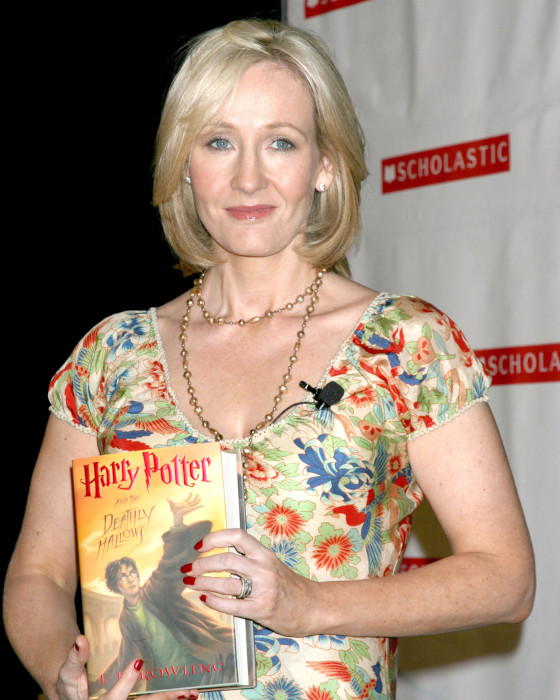
Our propensity for idolatry bleeds into most aspects of our lives, including pop culture. For instance, J.K. Rowling was once a pop hero, having birthed Harry Potter and a host of stories arguing for progressive values that include freedom from bigotry and resistance to fascism. It became complicated when Rowling made statements that many consider transphobic. Suddenly, Rowling (and her work) became untouchable in some circles – the author became another victim of cancel culture. But what about the positive ideals contained within? Aren’t these values still present with or without the individual who crafted them? Complicated, indeed.
(Photo Credit: Depositphotos.com)
Many understandably groused when President Trump decided the Kennedy Center needed the luster that only his name could provide. Suddenly, the Trump-Kennedy Center was subject to boycott. But why so little outrage over the 1964 decision to make the John F. Kennedy Center for the Performing Arts a tribute to the fallen president? As one who has long believed that death does not erase misdeeds, it is worth noting that Kennedy was also complicated.
Kennedy’s relative popularity and the idealization that follows an assassination made him untouchable in popular culture, but we must remember that Kennedy secretly expanded American involvement in Vietnam, pushing the nation ever closer to a war that would end the lives of more than 58,000 Americans. It has also been widely alleged that Kennedy was a philanderer, so much so that many (fairly or otherwise) treat the allegations as fact. Is it better that a national cultural center carry the name of one flawed American president or two? One’s answer likely stems from political allegiance, but I submit a better solution.
(Photo Credit: Depositphotos.com)
Might there, instead, be a National Center for the Performing Arts? Why allow imperfect humans and political affiliation to tarnish the reputation of a facility designed to celebrate culture? Instead, we could allow the artists whose work populates the facility to comment on the gray areas of human nature.
While individuals (even those most deserving of celebration) are flawed, it is more difficult to attack broad concepts. Historians and biographers can argue whether Ida B. Wells, Martin Luther King Jr., Malcolm X, or Rosa Parks are most deserving of a national holiday celebrating the Civil Rights movement, but one can hope a Civil Rights Day would never be controversial.

(Photo Credit: Depositphotos.com)
As our current naming scandal unfolds, I’ve seen calls to celebrate labor leader Dolores Huerta (who alleges that Cesar Chavez raped her), rather than Chavez himself. As more information about Chavez surfaces, this seems an appealing plan, but why walk further down a path that has repeatedly ended in frustration?
No matter how worthy Huerta may be, I believe we should consider a broad celebration of her ideals, rather than one more stab at individualized reverence.
Author Bio:
Forrest Hartman is the chief film critic for Highbrow Magazine and a university professor.
For Highbrow Magazine