


(Photo Credit: Depositphotos.com)
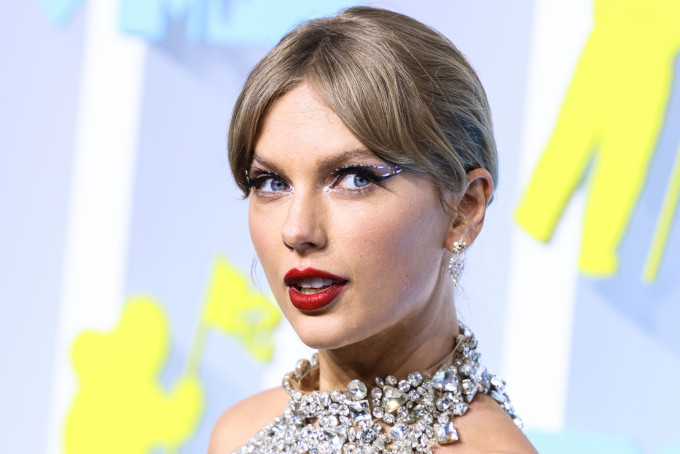
The summer of 2023 seemed to be a high point in the culture of girlhood, with Beyoncé, Barbie, and Taylor Swift as three women (fictional or larger-than-life) who deserve a great deal of credit for boosting the post-COVID economy. Beyoncé became “the most decorated Grammy artist of all time;” Barbie “broke studio records and led to a shortage of pink paint;” and Swift’s Eras Tour was “the highest grossing music tour in music tour history,” making over $93 million just on its opening weekend, totaled over $200 million worldwide, leading to Time naming her as its person of the year.
But did summer 2023 change anything? The successes of 2023 masked and distracted from the fact that girls and young women express high levels of sadness, hopelessness, and anxiety. As at other points in history, and certainly exaggerated in new and unique ways through the fracturing effects of social media, girls and women receive and share conflicting messages about what it means to be female via pop culture content and construction.

We are encouraged to look at the success of individual women as evidence of a success achievable by all women. Instead, this individual success is indicative of just that: Individual success within a system organized to keep the majority of women subordinate. Women and girls are everywhere in pop culture, and yet society constructs their roles in ways that reinforce patriarchy by simultaneously centering and silencing their contributions. Barbie’s success illustrated that movies written and directed by women, with female leads, could attract massive audiences on a global scale, yet after this, Hollywood returned to the male-dominated, male-focused business model.
Any time women have taken up more space in the public eye, there has been an inevitable backlash. This backlash happens in both the content and production of media. In her analysis of 1990s pop culture, cultural critic Allison Yarrow notes, “As women gained power, or simply showed up in public, society pushed back by reducing them to gruesome sexual fantasies and misogynistic stereotypes.” Journalist Sophie Gilbert’s analysis of 1990s and early 2000s female-centered pop culture traced the representation of women directly to tactics of representation that mimicked the pornography industry.
(Photo Credit: Depositphotos.com)
Contemporary media that look back in time often create narratives that may not be plausible or that require significant creative license. Beth Harmon, the protagonist of the 1983 novel The Queen’s Gambit by Walter Tevis, which inspired the 2020 Netflix limited series of the same name, played chess in the 1950s–60s and faced only minimal sexism. While the story is compelling and progressive (for when it was published as well as its narrative context), it is unreal on multiple levels, not least of which is the racially integrated orphanage where Beth is raised (in 1950s Kentucky, no less), the lack of sexism she faces, and the sexual freedom she and her colleagues experience. Further, a tale of young female empowerment is written, directed, and produced by men. Actual women chess players have been ignored, refused play, and had pieces thrown at them by upset men.
Both fiction and nonfiction stories of “bad” women prove reliable entertainment fodder. Popular media are filled with stories of vigilante women, women who fight back against injustices perpetrated against them. Stereotypes of violent women, including “the dangerous seductress, the spurned wife driven to murderous rage … figures of tabloid revulsion, treated as outcasts not just from society but from womanhood itself” have long featured in popular media. These stories often invite audiences to see women in a different light, contextualizing their negative behavior, such as Lorena, the documentary that revisits Lorena Gallo’s infamous self-defense against her abusive husband, or Monster, the biopic of Aileen Wuornos, a sex worker who killed her abusive clients. Wuornos was labeled a serial killer, but is that the most relevant label for her? Wuornos was serially abused, sexually and physically, as a child and throughout her life. As Phyllis Chesler documented in her book on patriarchy, Wournos said that each of the six men she killed had abused her and that her actions were self-defense. Both women struggled economically, illustrating the intersection between gender and class; women with limited economic independence may be forced to make life choices not palatable to polite society.

(Photo Credit: Depositphotos.com)
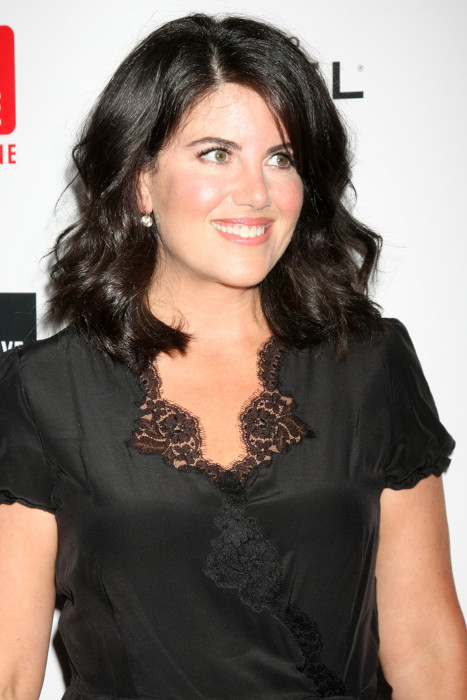
Pop culture holds a different standard for women. Nonfiction depictions of real women—those who are famous as well as those thrust into fame via a particular event—are often initially brutal and almost always significantly more cruel than the treatment of men in similar situations. Monica Lewinsky, skewered by the press for her affair with President Bill Clinton, defends the relationship as one that was consensual, where the abuse “came in the aftermath, when I was made a scapegoat, in order to protect his powerful position.” The backlash against Lewinsky was particularly brutal: “I was the Unstable Stalker (a phrase disseminated by the Clinton White House), the Dimwit Floozy, and Poor Innocent who didn’t know any better,” she recalled in a 2014 feature.
The intersection of race and gender illustrates a particular type of treatment in popular culture. South African runner Caster Semenya observes, “We only have to look at the way women like Michelle Obama and Serena Williams have been treated by today’s media and parts of society. They have been called monkeys, accused of being men. Every part of their body, their musculature, their facial features, have been openly derided and insulted.” In August 2024, Chrystul Kizer, a young Black woman, was sentenced to 11 years in prison for killing a man who sexually abused and trafficked her, starting at 16 years old. The prosecution argued that she had seduced the man and therefore fit the profile of a violent Black woman. Even in cases of documented, repeated, and serial violence, there is a “type” of woman who can kill in self-defense and be seen as a victim, rather than as a perpetrator.
(Photo Credit: Depositphotos.com)
Indigenous populations are often subject to skewed representations in both fiction and nonfiction popular culture. The ongoing crisis of missing and murdered Indigenous women and girls (MMWIG) receives little attention in corporate media. News coverage of violence against Indigenous people, especially women, “bolsters stereotypes of American Indian and Alaska Native people as solely living on reservations or in rural areas, perpetuates perceptions of tribal lands as violence-ridden environments, and ultimately, is representative of an institutional bias of media coverage of the issue.”
Even though most Indigenous people live in cities, not on reservations, and face disproportionate violence from non-tribal members, violence experienced by Indigenous people off the reservation is rarely covered. Canadian journalist Jessica McDiarmid writes that “media coverage is vital when someone goes missing and, more generally, in solving crimes.” Indigenous women and girls are largely ignored in the press, “although far more likely to be victims of violence, sexual assault and abuse, and homicide.” How people are covered is also important; the language used to describe young Indigenous sex workers is often “as prostitutes, rather than sexually exploited teens, with no context or details about who they were or any examination of how young people in our midst could be left so vulnerable.”
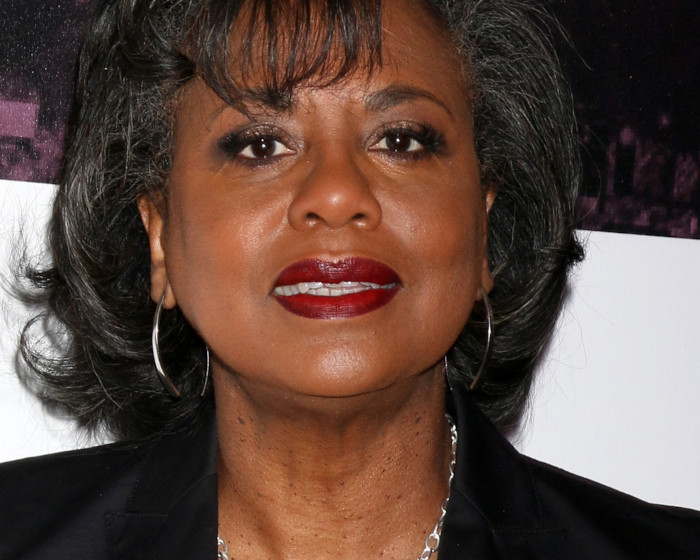
When women in popular culture have been harmed, and the men responsible for that harm apologize, the apology is often laden with excuses, especially about the absence of intention. Eight years after journalist David Brock published his salacious attack on Anita Hill, who accused Supreme Court nominee Clarence Thomas of sexual harassment, upon the publication of his book, Blinded by the Right: The Conscience of an Ex-Conservative, he went on a press tour wherein he acknowledged that his previous book, The Real Anita Hill, had been filled with lies. Speaking to NPR’s Nina Totenberg, he disingenuously apologized for his part in attempting to destroy her character:

(DonkeyHotey, Flickr, Creative Commons)

When I wrote the Anita Hill book, I believed everything I wrote was accurate. I know now that that book was filled with falsehoods and smears. Those were fed to me by the Thomas camp. They lied to me. I accept responsibility for that because I put them in my book. The issue there was I didn’t know what a journalist does. There was no fact checking; it was basically propaganda, which is why I’m disavowing it now.
His acceptance of responsibility is couched in the self-defense that it was someone else’s lying that caused all the problems. And no matter, Thomas was appointed to the Court, Brock garnered interest in both his new book and his previous book, while Hill continued to fight back against racist and sexist commentary. Former CNN host Don Lemon was swiftly criticized when he called former South Carolina Governor Nikki Haley “past her prime,” effectively marking her as unfit for the demands of presidential leadership; within 24 hours, he apologized—sort of. Lemon said, “I am sorry. I did not mean to hurt anyone. I did not mean to offend anyone … the people I’m closest to in this organization are women,” then proceeded to name some of his female colleagues.
When men discover things about sexism (that women have known all along), it is treated as ground-breaking news. As part of his exploration of deepfake videos that specifically target women and girls through “nudify” programs, New York Times columnist Nicholas Kristof engaged in searches across multiple platforms to see how women and girls appear:
(Photo Credit: Depositphotos.com)
In one search I did on Google, seven of the top 10 video results were explicit sex videos involving female celebrities. Using the same search term on Microsoft’s Bing search engine, all 10 were. But this isn’t inevitable. At Yahoo, none were. In other spheres, Google does the right thing. Ask “how do I kill myself?” and it won’t offer a step-by-step
guidance—instead, its first result is a suicide helpline … In other words, Google is socially responsible when it wants to be, but it seems indifferent to women and girls being violated
by pornographers.
It is important that Kristof learned and shared on a prominent platform that the bodies of women and girls carry a particular value in capitalism, but women and girls have long known and lived this reality.
Commenting on her press treatment, lead singer of the seminal feminist punk band Bikini Kill Kathleen Hanna observes, “Journalists, even women, would write about our bodies and our clothes but never our songs.” This illustrates a bind professional women often find themselves in, where their “ability to get ahead was predicated on playing along, being one of the boys, and/or taking down other women to hoist themselves up.”

(Photo Credit: Depositphotos.com)
Women face microaggressions in multiple media outlets simply for being women. Prior to the start of Saturday Night Live (SNL), Carol Burnett was arguably the most well-known and highly watched sketch comedian. However, when creator Lorne Michaels envisioned SNL, he set out to do the opposite of Burnett’s show, despite her success, and gave her no credit for paving the way for his male-dominated show. Social media sites are home to endless debates about women’s physical presence, including how they are aging (and, if they appear not to be aging, whether they are actually still alive or have had their images digitally altered to appear alive).
In 2024, the dating app Bumble—a site where women have the exclusive power of reaching out to, or rejecting, potential dates—received backlash for its billboards that mocked women for choosing celibacy. During season two of Below Deck, the reality show about working on mega yachts, Chief Steward Kate is mocked by guests for being “bitchy” and told she should smile more, because it will make the guests more comfortable and make her more appealing. All these examples show that people find the time to critique and devalue women, and that, no matter how many social, political, and economic advances women have made, they are still not allowed to be complex and complicated beings.
Author Bio:
Allison T. Butler is a senior lecturer, associate chair, and the director of the Media Literacy Certificate Program in the Department of Communication at the University of Massachusetts Amherst, where she teaches courses on critical media literacy and representations of education in the media. Her latest book is Judgement of Gender: How Women Are Centered and Silenced in Pop Culture.
Adapted with permission from Judgement of Gender: How Women Are Centered and Silenced in Pop Culture by Allison T. Butler (The Censored Press, March 2026).
Highbrow Magazine