

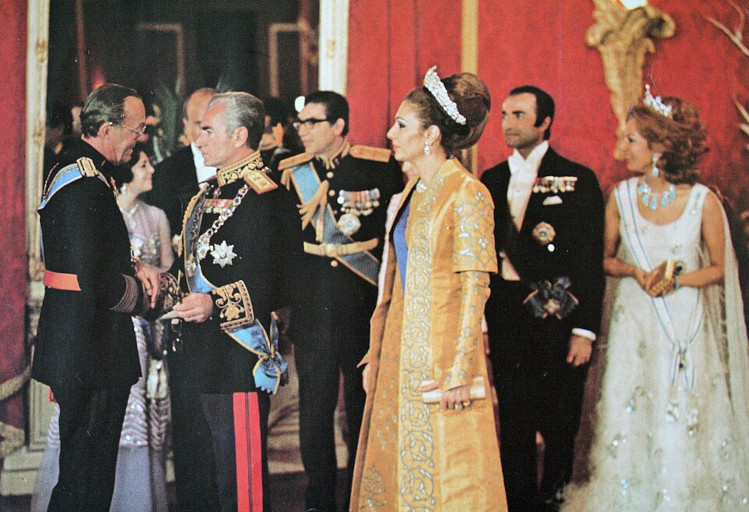
(Persian Dutch Network—Wikimedia Commons)

King of Kings
The Iranian Revolution: A Story of Hubris, Delusion and Catastrophic Miscalculation
By Scott Anderson
Random House
481 pages
In January 1979, Mohammed Reza Pahlavi, the Shah of Iran, fled the country following decades of ruling its citizens with an iron fist. After years of institutionalized oppression, as well as terror wrought by SAVAK, the shah’s secret police, he was forced into exile and replaced soon thereafter by the Islamic cleric Ayatollah Ruhollah Khomeini.
In his new book, King of Kings, foreign correspondent Scott Anderson contends that “if one were to make a list of that small handful of revolutions that spurred change on a truly global scale in the modern era, that caused a paradigm shift in the way the world works, to the American, French and Russian Revolutions might be added the Iranian.”

(Bellavista—Wikipedia Commons)

It’s not an outlandish claim. Consider the longevity and influence of the Islamic Republic’s quasi-despotic regime. Political unrest has once again erupted in the country, and lest anyone forget, only a few months ago, American bombers did their best to knock out Iran’s underground nuclear facilities—an unprecedented measure against the threat posed by this rogue, theocratic government.
The subtitle of Anderson’s account of this tumultuous time, The Iranian Revolution: A Story of Hubris, Delusion and Catastrophic Miscalculation, suggests a broader scope than what’s presented here. King of Kings is primarily a devastating account of US policy missteps towards Iran, and its willful disregard for the repression and corruption taking place under the shah’s regime; it’s not an all-encompassing account of other factors leading to revolution.
But the story is no less important for that.
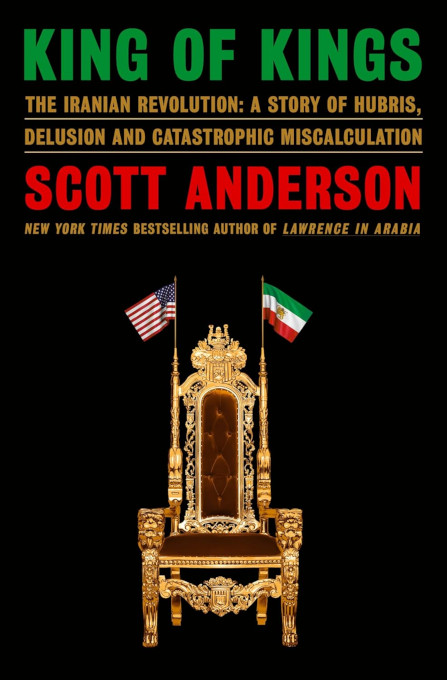
King of Kings describes, in sometimes painstaking detail, the disastrous US foreign policy that, in 1953, led to the overthrow of a democratically elected leftist leader, Mohammad Mosaddegh. From then on, the U.S. treated his successor, the shah, as a close ally in the Middle East. The uneasy relationships between the shah and a series of American presidents are also laid out here. In hindsight, it’s yet another jarring example of betting on the wrong horse, and for all the wrong reasons.
Those who sought to keep the shah in power ignored the warning signs—in particular, the CIA, whose Tehran station was among the largest in the world. At the same time, the mercurial occupant of the Peacock Throne gained a reputation as a difficult man to deal with. As Anderson reports, his pettiness and arrogance were often on full display:
“He went into a fury upon receiving a letter from Lord Mountbatten, Queen Elizabeth’s cousin and a longtime acquaintance, in which the Briton had the audacity to sign off as ‘your friend’ rather than ‘your obedient servant.’”
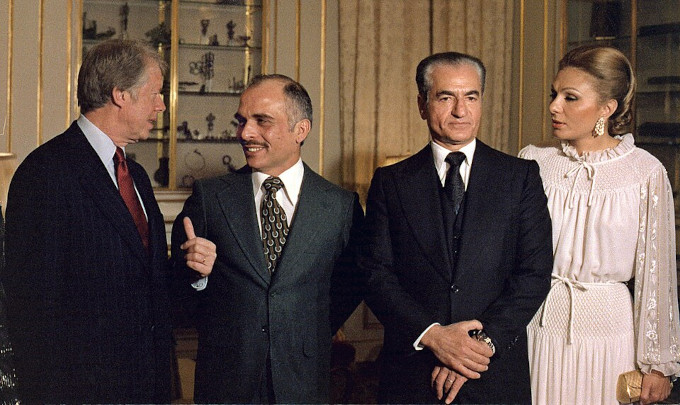
By the mid-1970s, American diplomats and intelligence agents (except for a handful of individuals whom Anderson depicts as prescient and fearful of the future) still couldn’t fathom the shah’s unpopularity within his own country. Despite mass anti-government protests that brought thousands of Iranians into the streets—along with the rising number of dead left by the police and SAVAK—President Jimmy Carter visited the shah only weeks before the revolution, toasting his regime for making Iran “an island of stability in one of the more troubled areas of the world.”
It was, as Anderson writes, “the last time an American president ever set foot on Iranian soil.”
Like The Quiet Americans, his previous book about the Middle East and the early days of the CIA, King of Kings is an exhaustive (and occasionally exhausting) dive into a multifaceted, world-shaking event.
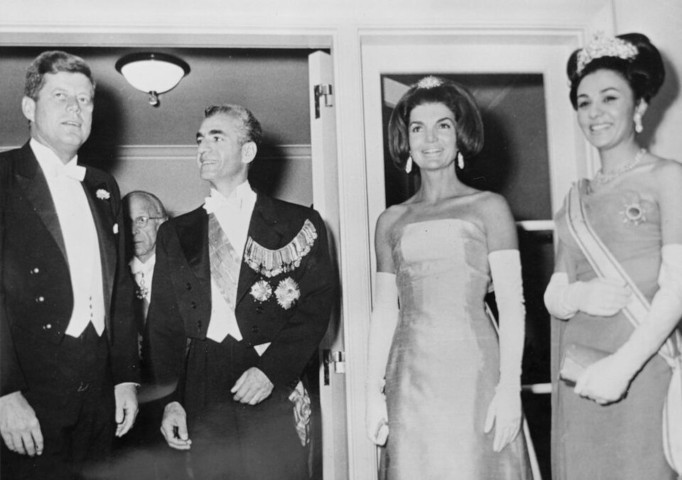
(Cecil W. Staughton, Wikimedia Commons)
Anderson makes good on his claim that the shah’s loss of power “cannot be attributable to the actions of one king or even one royal couple alone,” but rather to “the determined incompetence or cowardice of a great many actors.”
We live with the consequences of that incompetence and cowardice to this day.
Author Bio:
Lee Polevoi, Highbrow Magazine’s chief book critic, is the author of two novels, The Moon in Deep Winter and The Confessions of Gabriel Ash.
For Highbrow Magazine