

(Gerald R. Ford Library—Wikimedia Commons)

We have always liked to think that comedy is secretly noble. Even when the jokes are crude or petty or plain bad, we cling to the idea that somewhere underneath the punchline is a tiny act of resistance. Laughter as a pressure valve, or as protest, or as civic duty. For as long as people in charge have worn crowns—literal or metaphorical—someone on the sidelines has been cracking jokes about how crooked they look. Even now, the jokes work because the comic onstage is not beholden to anyone except the audience buying drinks at the two-item minimum, and they could mock the powerful because no one suspected they’d ever be invited to brunch together. Satire thrives in that gap, in that distance between the podium and the throne where truth can slip through in the form of a joke.
But that distance has been shrinking. Modern comedy keeps inching closer to the machinery of influence, sometimes out of ambition or ego, and sometimes because the castle doors are unexpectedly ajar and, well, who doesn’t love a warm fire and a catered spread? The result is a strange tension. Comedians insist they’re the outsiders telling it like it is, but the ecosystem around them increasingly treats them like part of the décor. Politics has learned to behave like entertainment; entertainment has learned to behave like politics; and comedy, long the scrappy outsider, is caught in the crossfire with no sense of where to aim.
(Photo Credit: Depositphotos.com)
The question, then, isn’t whether comedy can challenge power. It can. It has and still does, in certain rooms, on certain nights, in certain corners of the internet of which the legal department isn’t yet aware. The question is whether it still wants to, now that the path to the throne room has such plush carpeting. What does “speaking truth to power” look like when the speaker is also enjoying the suckling pig at the monarch’s table?
Now, to be clear, we as audiences don’t demand moral sainthood, nor should we. Laughter for laughter’s sake is a perfectly respectable goal. But when comics keep announcing their devotion to “punching up,” we have to pause and check which direction they’re actually swinging and from which side of the moat.
Comedy never really had illusions of grandeur. It began as a practical survival strategy: The jester’s job was to tell the truth without losing his head, which required equal parts bravery and plausible deniability. A good joke could puncture royal vanity and point out the absurdities of a monarch’s whims. What made the jester powerful wasn’t just his proximity to (and, for that matter, distance from) the throne, but his exemption from the social contract that governed everyone else. He was the lone figure allowed—expected, even—to call out the king’s nonsense with a wink and a somersault, maybe a song thrown in for good measure.
That outsider function never really went away. Modern comedy inherited the jester’s DNA even as it swapped the velvet cap for studio cameras and streaming deals. Comedians like late-night hosts became the unofficial narrators of American political life, summarizing the day’s chaos with punchlines that doubled as public therapy. Stand-up comics sharpened their microphones into tiny spears, poking at cultural hypocrisies the way their medieval predecessors poked at royal delusions. Satire became one of the few mass-market spaces where mocking authority wasn’t just tolerated but also expected.
(Slgckgc, Flickr, Creative Commons)
Along the way, audiences began romanticizing this expectation into a kind of civic mythmaking. We started treating comedians as rebels-by-default, truth-tellers whose heroism was baked in simply because they stood on a stage with a joke about Congress. It didn’t matter whether the material was groundbreaking or toothless; the aura of dissent clung to them anyway. We loved the idea that a punchline could topple a tyrant, even if history suggests tyrants tend not to be undone by tight-five monologues.
Still, that romanticism reveals something important: Comedy earns its cultural influence not by being powerful, but by being outside power. A comic in the cheap seats can see things the people on the dais can’t or won’t. They can translate political absurdity into everyday language, smuggle critique inside humor, and slip in uncomfortable truths because everyone agrees they’re supposed to. It’s a delicate balance that’s part theater and part rebellion, but it works because the audience believes the person holding the mic is not beholden to anyone but them.
That distance, that freedom to jab without consequence, is what made comedy such an effective witness to authority. And it’s precisely why the shrinking of that gap feels so culturally disorienting, when comics inch closer to the very institutions they were once meant to scrutinize. The power of the outsider’s mic just can’t be fully replicated from inside the castle walls no matter how good the acoustics are.
You can see this tension most clearly in the moments when comedians find themselves rubbing elbows with the powerful, whether socially, professionally, or geopolitically. The optics alone are enough to distort the punchline. When a comic sits down to dine with a political figure who commands, inflames, or threatens large swaths of the country, the dynamic inevitably changes. The joke no longer floats upward toward authority; it now hovers, rather awkwardly, between peers. Critique becomes gentler and edges get sanded down.
(Photo Credit: Depositphotos.com)
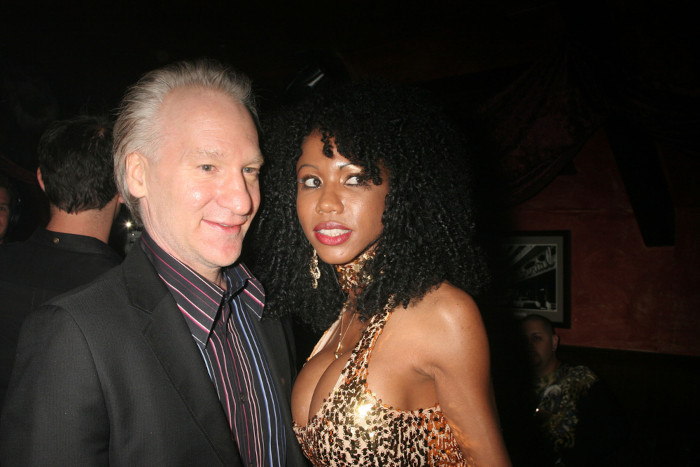
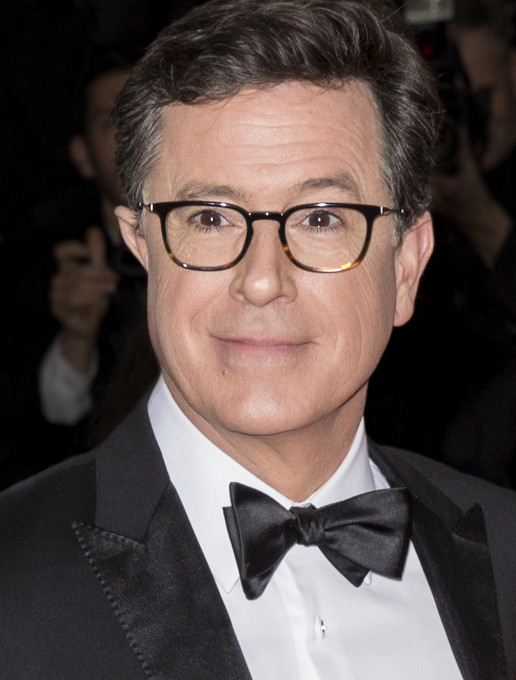
Comedy doesn’t lose its bite all at once. It softens incrementally, each brush with power sanding just a little more off its claws. Take Bill Maher’s private dinner with Donald Trump, which he later recounted with the kind of bemused detachment usually reserved for describing a mildly eccentric uncle. While calling Trump “gracious” and “measured” was uninspiringly predictable for the likes of Maher, it at least demonstrated how proximity to power can warp a comedian’s frame of reference. Maher didn’t suddenly become an apologist, of course, but the encounter blurred the carefully maintained distinction between satirist and subject. It suggested that even a self-styled gadfly can find the throne room oddly comfortable once he’s seated at the table.
A similar ambiguity hangs over the Western comedians who traveled to Saudi Arabia to perform at a state-backed festival, an event staged in a place where free expression remains tightly constrained and dissent can have life-altering consequences. No one expects stand-up comedy to topple regimes or for comedians to be beacons of principles (a comedian with unmarred ethics? Har-har). But there’s an undeniable dissonance in exporting “edgy” humor to a venue where entire topics are simply off limits. The festival wasn’t a symbol of liberalization or a no-holds-barred truth-telling session; it was a carefully curated spectacle, one that lent the appearance of openness without any of the substance. And yet the lure of an international stage or the prestige of global visibility proved reason enough for several comics to participate. They literally said that the promise of a generous paycheck was the reason they agreed to be part of it. Power didn’t have to threaten, it simply extended an invitation and was rewarded with laughter on its terms.
None of these moments make comedians villains (except the ones that kind of already were), nor do they negate the skill or insight their work could still offer. What they illustrate, instead, is the creeping erosion of the outsider advantage, that subtle shift where the jester is no longer shouting from beyond the moat but enjoying hors d’oeuvres inside the palace. And once you’ve stepped over that threshold, intentionally or not, the jokes you tell carry a different weight. Audiences pick up on that, even if the performers don’t always acknowledge it.
(Photo Credit: Depositphotos.com)
Meanwhile, if proximity to power can blur comedy’s edge, the disappearance (or deliberate silencing) of platforms that once held power accountable poses its own kind of risk. For years, late-night television functioned as a predictable nightly pressure valve: a place where politicians are parodied, hypocrisies are exposed, the day’s political theater gets reframed through a lens of absurdity, there’s a jazz band playing, a movie star tells anecdotes. It’s all great fun. It was never radical activism, but it was a consistent reminder that authority deserved scrutiny. Even that modest tradition is now starting to wobble.
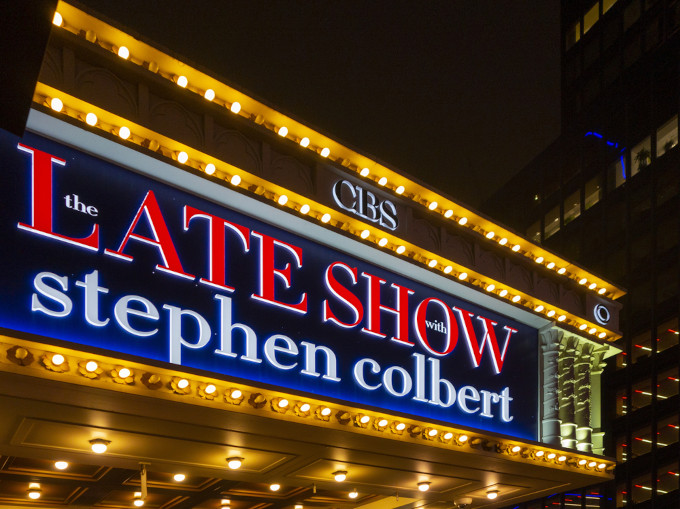
It was always clear that the cancellation of Stephen Colbert’s show was a deliberate capitulation to state and corporate interests and not just a programming decision. We will witness the loss of one of the last major hosts whose political satire wasn’t allergic to drawing blood. Colbert—whose entire Comedy Central era was one massive, magnificent act of political satirical dissent—for all the conventions of network television, still treated his platform as a civic tool, a way to poke, prod, and oftentimes eviscerate the day’s most powerful figures. When that voice disappears, audiences lose not just a comedian but a familiar vantage point from which to view the country’s power plays. Sure, Colbert will be fine in the long run; he’s too good a talent for him not to land squarely on his feet. But he will still leave a vacuum that entertainment executives will happily fill with lighter, safer fare while, culturally, something with sharp teeth goes missing.
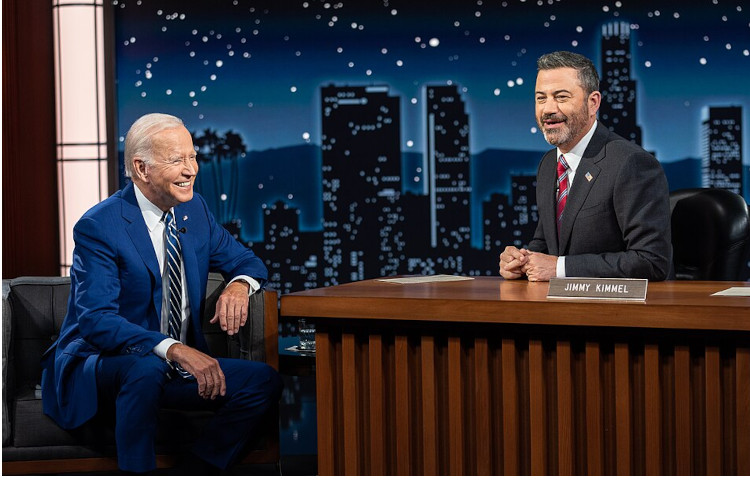
Jimmy Kimmel’s situation is perhaps even more telling. His show wasn’t just paused for creative reevaluation or budget trimming but effectively placed in timeout because he said things the government and government-aligned corporations didn’t like. That should make anyone who cares about comedy’s dissenting roots sit up a little straighter. When a late-night host can be sidelined not for bad ratings but for politically inconvenient jokes (kind ones, at that), it signals the far more concerning issue of the state’s current willingness to tug on the leash when comedy strays outside the approved narrative.
(Photo Credit: Depositphotos.com)
This is exactly the danger comedy was designed to confront. The jester’s power rested on his ability to speak freely precisely because everyone understood that authority would look absurd if it punished a joke. But when modern governments, directly or obliquely, punish a comedian for needling them, it collapses the illusion that satire operates independently from the systems it critiques.
And in a media landscape already shrinking under corporate consolidation, along with the gravitational pull of the algorithm, these removals matter. They narrow the number of places where political humor can exist without being neutered. They send a message to performers about the risks of stepping too far outside the invisible guidelines. And they reinforce the idea that comedy is welcomed—celebrated, even—as long as it doesn’t make the wrong people uncomfortable. When comedians lose this space to critique power freely, we as a culture lose something important. Not righteous moral leadership (I don’t know that any comic would even want or needs that mantle), but a basic mechanism for reframing what the powerful would prefer we see without commentary. Without those voices, the jokes that remain risk becoming less and less like the resistance they were meant to be.
All of this raises another question that now lurks beneath debates about modern comedy and politics. Do comedians actually owe us anything beyond a chuckle? The instinct is to imagine some noble responsibility rooted in the jester’s lineage, that comics are meant to be our cultural conscience, our late-night ombudsmen for democratic decay. It’s a flattering narrative, and sometimes a useful one, but it mistakes the job description for a vow. Comedians are not required to stand at the ramparts and shout jokes at the oncoming authoritarian storm.
The truth is simpler. They don’t owe us moral bravery, and they certainly don’t owe us a dissertation on the proper targets of satire. They can be silly, acerbic, apolitical, self-indulgent, experimental, derivative—whatever form their art takes is theirs to shape. But if some of them want to claim the honored mantle of cultural truth-teller, then they owe us at least one thing: honesty about the role they’re actually playing.
(Photo Credit: Depositphotos.com)
If you’re going to punch up, punch up. If you’re going to punch down, admit it instead of dressing it in faux subversion, so we can all dispense with the pretend outrage of misunderstanding a comic’s “edginess.” If you want to cozy up to power, that’s a choice. But don’t insist you’re still the unruly kid in the back of the class throwing spitballs at authority. Audiences aren’t obligated to pretend not to notice when a comedian’s brand of rebellion starts looking suspiciously like flattery disguised as edgy commentary belied by a laugh track (yes, this is about Maher again).
None of this turns comedy into a moral contract, it simply clarifies the terms of our relationship with it. Comedians are free to mock, to flatter, to ignore, to provoke. And we, in turn, are free to take note of what their choices reveal: about their values, their ambition, their fears, and the shape of the culture they’re helping to construct. Satire was never meant to be a sacred duty, but calling something “speaking truth to power” only works if the truth being hurtled actually points upward.
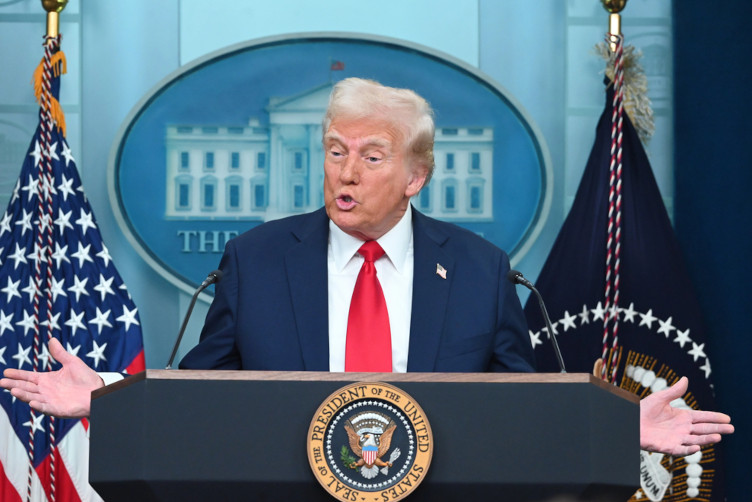
Thankfully, comedy has always been adaptable. It has and will continue to outlive monarchies, fascist regimes, moral panics, religious censors, emerging technologies, the Hays Code, and vertical video recording. It morphs with the culture because it has to; humor lands differently depending on who’s listening and what the world outside the punchline looks like. In that sense, it’s not surprising that modern comedy is adjusting once again, this time to a political climate where every White House press conference feels like an SNL cold open and every political figure behaves like they’re auditioning for the next season of Vanderpump Rules.
(Photo Credit: Depositphotos.com)
When politics starts absorbing the rhythms of entertainment, comedy loses some of its reflexive distance. You can’t parody something that already parodies itself without breaking into a sweat. The theatrics of modern power—with the spectacle, branding, its dependence on our attention and our distraction—blur the line between who is governing and who is simply performing. (As Bill Maher put it, Trump only performs at being a crazy person when he’s in public. Which is… good, apparently?). In such an environment, the traditional “outsider” stance becomes trickier to inhabit.
This is the real existential question for comedy today. Not whether it has a duty to challenge power, but whether it even wants to. The incentives have shifted. The costs of dissent can be high—professional backlash, political pressure, discomfort of the corporate overlords who approve your streaming deals—while the rewards of playing it cozy with the powerbrokers are increasingly attractive. When a comedian can gain more visibility, more brand partnerships, more international bookings by avoiding sharp edges, the notion of speaking truth to power risks becoming less of a foundational principle.
Yet the path forward doesn’t require comedians to become moral crusaders. It simply demands clarity. If some choose to lean into softness, that’s their prerogative. If others embrace provocation, that’s theirs too. But the future of comedic dissent will be determined not by platforms, networks, or streaming algorithms, but by individual performers deciding whether they care enough to maintain the outsider’s vantage point, and by the audiences who choose to listen to them or not.
This is where the audience’s own responsibility comes in. We may not hold the mic, but we can still read the room. We can distinguish between jokes that challenge power and jokes that merely orbit it, nudging its elbow like an amiable dinner companion.
Comedy’s relationship to power has always been a negotiation of how far outside the gates a performer is willing to stand, and how loudly they’re willing to shout from there. Today, that boundary is fuzzier than ever. Some comedians drift toward the warmth of access; others recoil from it; many insist nothing has changed even as the ground beneath them shifts. But the core tension remains the same as it was in the king’s court: satire works best when the person telling the joke isn’t also protecting the throne.
(Photo Credit: Depositphotos.com)
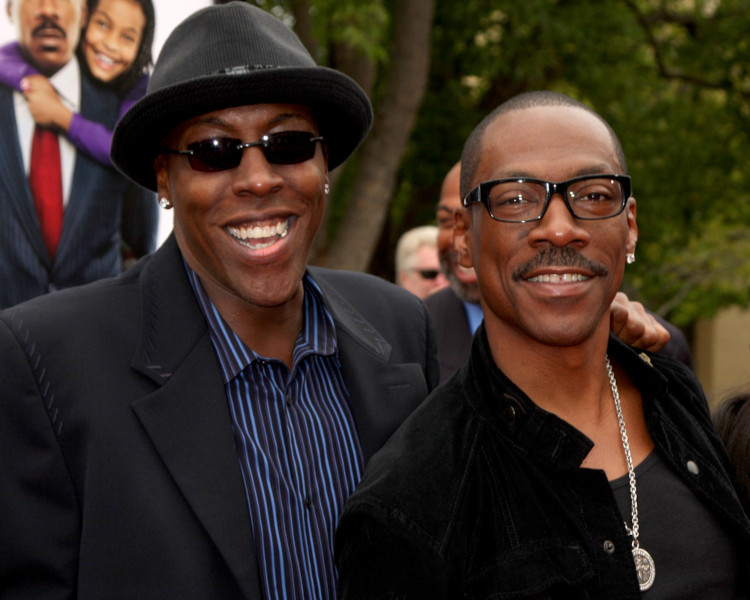
Modern comedians don’t have to resurrect the jester’s sacred charge. They don’t have to be dissidents, watchdogs, or late-night paladins defending democracy with monologue cards. What they do owe—if they want the authority their job traditionally carried—is honesty about which direction their jokes are pointing. Comedy doesn’t lose its cultural power when performers choose safer targets, but when they pretend those targets are dangerous. Dave Chappelle will likely get another $20 million to make jokes about trans women, and Matt Rife will almost certainly keep getting Netflix specials to make fun of domestic violence and fat people. But what’s it all for? Is it worth it for us? Can we really call all that “edgy”?
Meanwhile, politics will continue to produce absurdities at a breakneck pace. Power will continue to inflate itself into balloon-animal shapes begging to be popped and comedians will continue to decide whether to wield the pin. As audiences, we have the power to lend them our eyeballs or not. We can be more discerning about who’s willing to poke the emperor and who prefers to compliment his robe. The jester’s bells may be quieter now, but the choice to challenge, to flatter, or to abstain remains entirely in the comic’s hands. The rest of us can listen, waiting to hear which side of the gate the laughter is coming from.
Author Bio:
Angelo Franco-DeWitt is the chief features writer at Highbrow Magazine.
For Highbrow Magazine