

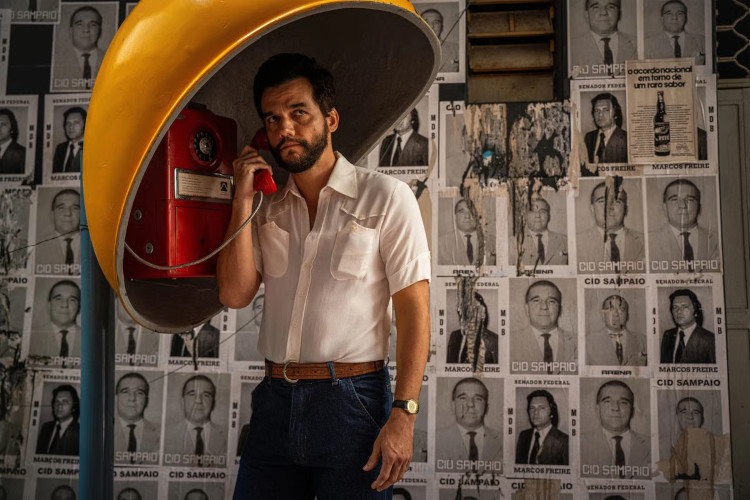
Directed by Brazilian filmmaker Kleber Mendonça Filho, The Secret Agent explores life under the watchful eyes of dictatorship. The film follows Armando Serranado (Wagner Moura), a former professor forced to flee his home because of his political ideology, who attempts to build a temporary life in Recife.
Set against the backdrop of Carnival celebrations, Armando hopes to wait out the regime’s slow collapse while evading corrupt law enforcement, all in the fragile hope of one day returning home to his son. Taking place during the final five years of Brazil’s military dictatorship, The Secret Agent captures the visible fractures of authoritarianism as its grip begins to loosen. In response, those who cling to power grow increasingly volatile and desperate, creating an atmosphere perpetually on the brink of eruption.
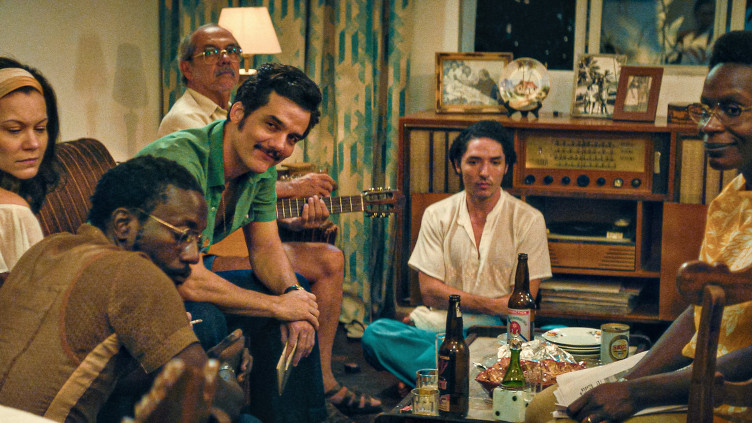
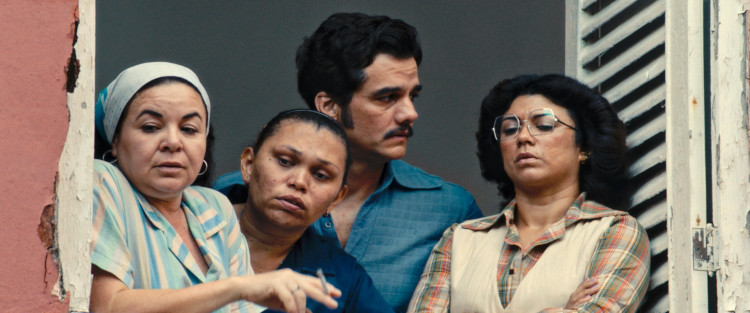
What Filho achieves through his direction is a sustained sense of distrust and tension. Everywhere Armando turns, danger emerges not only from institutions, but from ordinary citizens emboldened by proximity to power. Policemen conceal evidence of their own brutality, soldiers operate with itchy trigger fingers, and neighbors exist in an uneasy gray area between ally and informant. Armando navigates this terrain with cautious optimism, or perhaps self-delusion, that the violence is temporary and history is nearing its end.
What makes the film so compelling is its attention to the textures of everyday life. Political revolutionary cinema often gravitates towards spectacle, such as the cafe bombings of The Battle of the Algiers, or more recently, Paul Thomas Anderson’s One Battle After Another, which opens with the liberation of an ICE detention center on the California-Mexico border. The Secret Agent contains moments of grandeur, but they are rare. Instead, the film dwells in the suffocating sensation of constant surveillance, and in the quiet rituals through which people attempt to construct normalcy under occupation.
One of the film’s most resonant ideas emerges through its use of pop culture, particularly the shared ritual of moviegoing. No matter the country or political moment, art persists as a cultural anchor. In June 1975, Americans, reeling from economic recession and the fallout of Watergate, found collective obsession in Jaws. Just a few years later, under Brazil’s military dictatorship, that same film electrified audiences in Recife. The Secret Agent moves between past and present, using this shared cinematic memory to reflect on how history is recalled.
The film’s finale reframes pop culture not as a historical footnote, but as a vessel through which memory survives. Under authoritarianism, the specifics of life inevitably erode. Dates slip away, faces blur, and even the contours of fear become difficult to trace, yet seeing Jaws remains fixed and oddly indelible.

Filho suggests that shared cultural experiences often become the scaffolding of personal memory, especially when history interrupts intimacy -- a film seen too young, fear felt at a safe distance, and a parent’s quiet authority in deciding what a child is ready to face. In this way, pop culture does not distract from lived experience, but becomes inseparable from it, carrying forward emotional truths long after the people and politics that shaped them have faded.
Author Bio:
Ben Friedman is a contributing writer and film critic at Highbrow Magazine.
For Highbrow Magazine