


(Photo Credit: Depositphotos.com)
A couple years ago on NPR’s “Fresh Air,” host Terry Gross talked with musician David Byrne about some of his favorite Christmas music. Naturally, his picks were eclectic, intellectually curious, and down-to-earth. Byrne loves “Fairytale Of New York,” the modern-day fable by the Pogues, featuring the late Kirsty MacColl in a duet with the late Shane MacGowan. He digs “Christmas Will Break Your Heart,” by LCD Soundsystem.
But Gross took the liberty of picking a song herself, one that Byrne had not heard. It was a sublime and recent version of “O Holy Night,” by the jazz singer Samara Joy, with Joy’s father and other family members accompanying her.
“It’s just a beautiful song,” Gross said. “It's a beautiful melody. And the part that goes, ‘Fall on your knees,’ there's some chord behind that part that is just ... it’s kind of gripping.”
Oh, hear the angels’ voices.

(Photo Credit: Depositphotos.com)
For the 10,000th time in my life, I thanked the universe for Fresh Air. I knew what Gross was saying, not because I know melodies or song structure so well, but because I’ve long had a little pet theory about the best Christmas songs (which is to say, songs about the holidays). And that is that the best of them might kill you in a down mood, but lift you to chills and goosebumps in a car traveling to a mid-December party, or at midnight mass, or at 2 a.m. as you assemble a dollhouse.
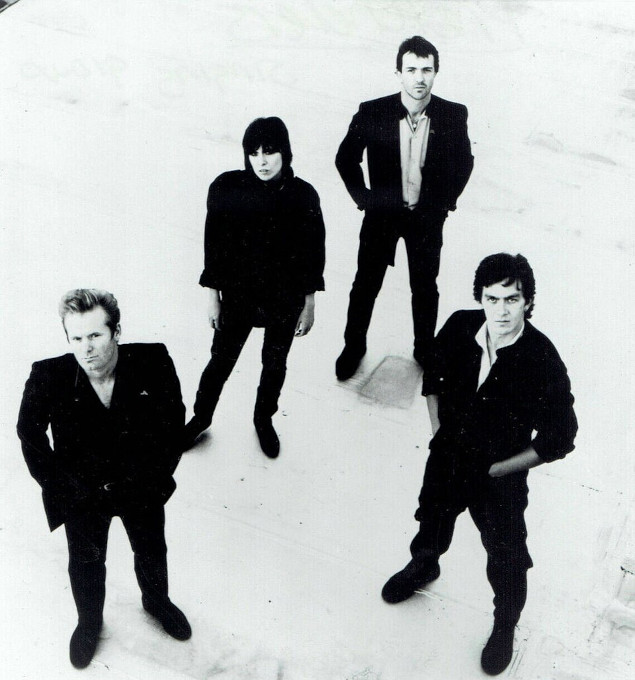
Take “Have Yourself a Merry Little Christmas.” It is, start to finish, a melancholy reflection of the singer’s desires for a loved one not present to be happy. A cherished loved one. She (in this case, I’m referring to the Pretenders’ version, with Chrissy Hynde in my mind’s eye sauntering out from behind a snowdrift) is practically begging the subject of her love to let their heart be light, to “make the Yuletide gay.”
I’m tempted to say that “Next year, all our troubles will be out of sight” is the song’s most wrenching line, but that would rule out:
Someday soon, we all will be together, if the fates allow Until then, we'll have to muddle through somehow

I mean, Jesus. We’ll have to muddle through somehow? That’s not a song lyric. That’s a line from a phone call to a former lover a continent away over a crackly long-distance connection, in the days before email. “Next year all our troubles will be out of sight” is the sentiment of someone midway through a fourth glass of pinot noir in front of a dying fire.
The best Christmas songs, like the best comedies, are the ones tinged—or even brimming—with sadness. They gut the tinsel and the gift wrapping, even as they indulge in sleigh bells.
“Silent Night” is practically a sigh, these days interpreted as the at-long-last respite of Christmas Eve, when all is calm, where only shepherds quake. There are alleluias and redeeming grace, but isn’t it nice to finally sleep in heavenly peace?
“We Three Kings” could’ve been written by the Moody Blues, it is so lyrically dense. Like a chapter of The Lord of the Rings, it plods over field and fountain, moor and mountain, following yonder star to its multiple mini-crescendo cliffs, bringing the chorus around to prayer and praising, voices raising, before:
Myrrh is mine; its bitter perfume
Breathes a life of gathering gloom;
Sorrowing, sighing, bleeding, dying,
Sealed in the stone-cold tomb.
OK, Justin Hayward.
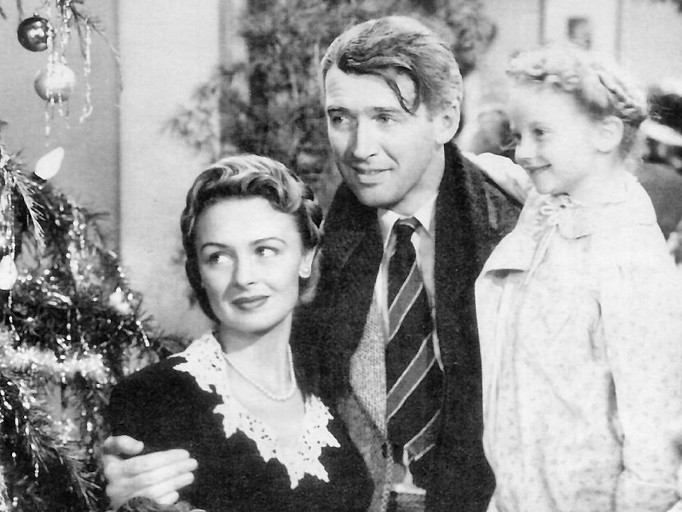
That the blues are part of Christmas is not a groundbreaking discovery, as any Elvis fan knows, and as seen in any number of holiday movies. In fact, “O Holy Night” plays the part of still waters running deep in the otherwise slapstick Home Alone. “Auld Lang Syne” brings the cathartic waterworks in It's a Wonderful Life. And in Love Actually, the filmmakers use the Christmas setting but no holiday music in two emotionally wrought scenes with the Beach Boys’ “God Only Knows” and Joni Mitchell’s “Both Sides Now.” (No matter your opinion of that film—and mine is that it has not aged well—I defy you to not weep at Emma Thompson’s non-verbal scene set to Joni’s crooning.) Director Richard Curtis knows that the holidays are just teeing you up for the heartbreak that’s just hanging around in the ether.
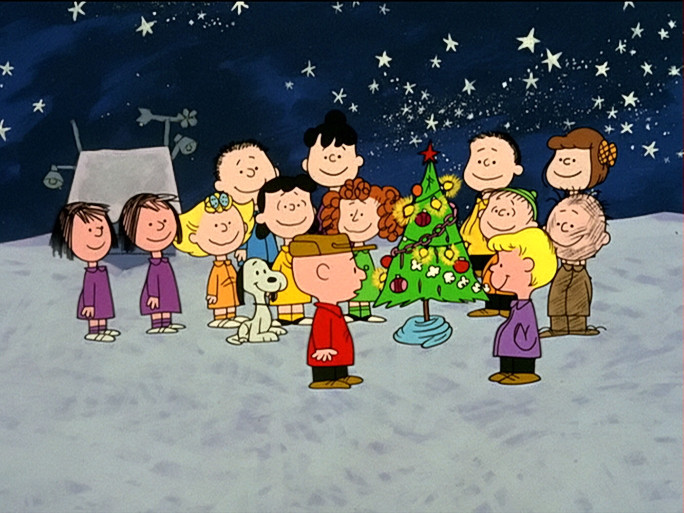
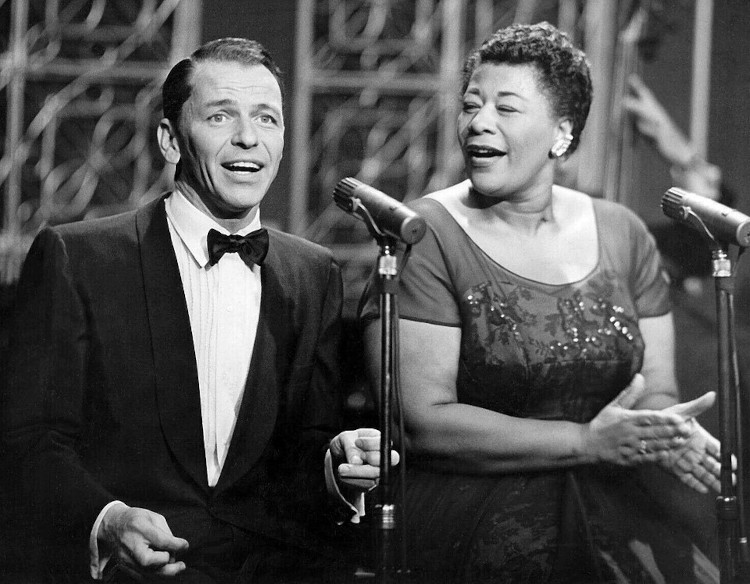
Jazz versions of holiday classics can bring up these feelings even with no singer, though perhaps start with Ella Fitzgerald’s classic album “Ella Wishes You a Swinging Christmas.” Other sweet as candy-cane jazz issues include “A Charlie Brown Christmas” by the Vince Guaraldi Trio, “A Dave Brubeck Christmas,” “Crescent City Christmas Card” by Wynton Marsalis, “An Oscar Peterson Christmas,” and “Sound of Christmas” by the Ramsey Lewis Trio.
Ella is Ella, but there is something about hearing instrumental jazz versions of classics that can strip away the predictability of your feelings for something that’s overly familiar. “Oh, Christmas Tree” by W.G. “Snuffy” Walden, Bill Evans’ “Santa Claus is Coming to Town,” Vincent Herring’s “O Come, All Ye Faithful,” and guitarist Steve Erquiaga’s “God Rest You Merry Gentlemen” are good examples among many.
Recently, Gen Z darling Laufey has blended jazz with pop and folk, as she is wont to do, on a number of Christmas offerings, including Alexander 23’s 2022 song, “Ain’t Christmas.” (“I bought you a present, but you’ll never get it ... ’Cause me and you said our goodbyes this December ... The most wonderful time of the year is breakin’ my heart...”)

The Icelandic musician has put out a lot of Christmas music for a 26-year-old. But she has an unerring ear, and gives the somewhat upbeat classic “Christmas Waltz” a throaty treatment (“It's that time of year, when the world falls in love…”).
The aforementioned “Christmas Will Break Your Heart” by LCD Soundsystem is almost a lilting folk song, although it employs the rhythmic lyrical and percussive repetitions that the group is known for. Also typical of an LCD tune: it’s hilarious. To wit:
Yeah, Christmas will break your heart
Like the armies of the unrelenting dark
Once the peace talks fall apart
But still I’m coming home to you
And then there’s “The Little Drummer Boy,” which I include not because I started playing drums this year, but because it is supposedly the story of a kid with nothing but a stick and a skin stretched tight -- a simple story with a simple structure and basic chords, A-B, individually meditative yet choral, too. I’m partial to the hopelessly old-fashioned midcentury versions by Roy Conniff (1962) and the Harry Simeone Chorale (1958). If you think it corny, let it pa-rum-pum-pum its way into your holiday iTunes playlist for a couple seasons.
(Photo Credit: Depositphotos.com)
I’ve also winced a few times over the years at “I’ll Be Home for Christmas,” notably when I have not been home, or worse, not felt at home. Happily, I have been home for the holidays in recent years, but the “If only in my dreams” line still draws an appreciative lump in the throat. Look for Ingrid Michaelson’s rendition with Will Chase, which sounds like two reunited people about to make out in a dive bar in Janesville, Wisconsin, on December 23rd.
A recent discovery of mine is an Ohio folk band called Over the Rhine. They’ve put out at least three albums of holiday-related original music, including one you should get: 2014’s “Blood Oranges In The Snow.” On their website, the band touts these records as nothing less than a “new genre of music: Reality Christmas.”
“If you’ve buried a loved one, or lost a job, or battled a chronic illness, that stuff doesn’t go away during the holidays,” the band writes. “It can be a complicated season for many of us.”
If you think that’s a downer, consider some of the original lyrics to “Have Yourself”:
Have yourself a merry little Christmas // It may be your last // Next year we may all be living in the past
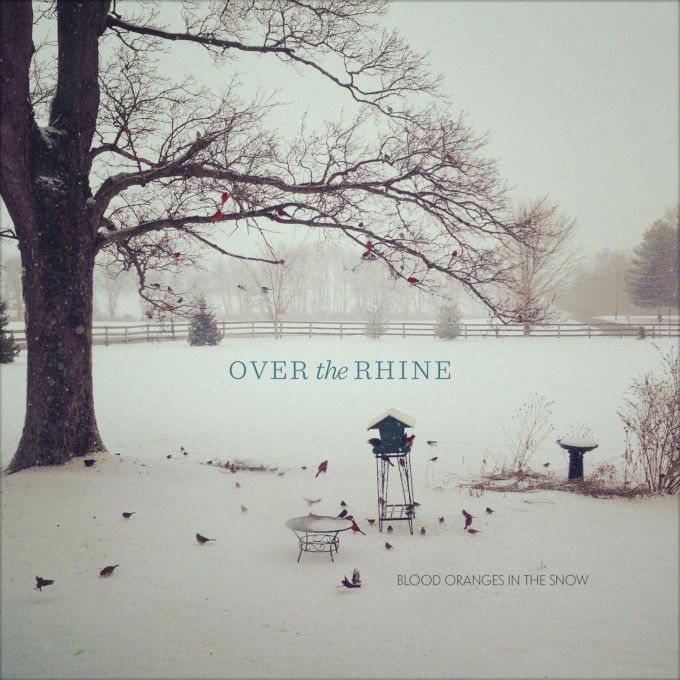
Over the Rhine offers new music to accompany our old standbys, while being honest about the genuine emotions flowing forth. And while the album’s finest song, “Let It Fall,” might not be obviously a Christmas song, it is teeming with end-of-year sentiment via ruminative piano, steel guitar and plaintive vocals imploring you to “Look around ... Breathe in.”
’Cause rain and leaves
And snow and tears and stars
And that’s not all my friend
They all fall with confidence and grace
So let it fall, let it fall
The big bonus on the record is your new favorite New Year’s song (called “New Year’s Song”). It’s hopeful and impossibly romantic, and “just a bit of New Year's cheer / To say I'm glad you’re here,” with dogs dreaming in their beds and a toast to “the ghost of another year past.” There’s even a hint of the lovers of the story engaging in some New Year’s frolicking.
And then the song mentions “loved ones who’ve gone on before” with a little keyboard interlude—just 30 seconds or so—of “Auld Lang Syne” before seamlessly blending back into the melody. It’s a perfect track to play when the clock strikes midnight on January 1st, and one that might surprise any guests you may have over. It’s also a pretty nice way of introducing the thought of “Get home safely, now!”
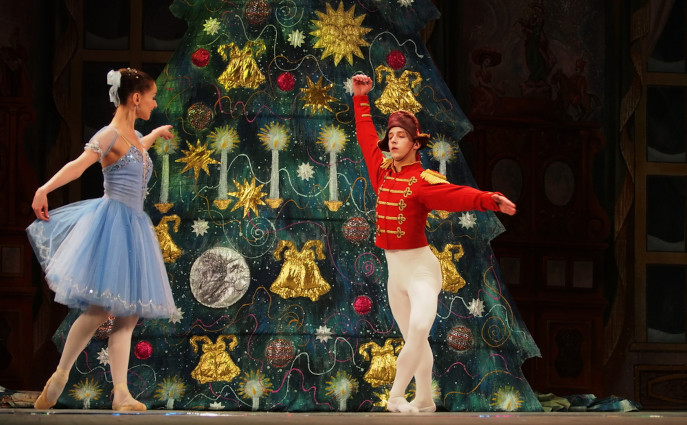
Finally, though, the alternative to all this popular music from decades gone by, and one that is tough to beat on the emotional spectrum, is perhaps the ultimate palate cleanser: a full-orchestra version of The Nutcracker. The No. 8 (The Pine Forest) or No. 12b (Divertissement) scenes, so contemplative and calming, could be played at the start of oral surgery. No. 14 (Pas de Deux) will make you want to close your eyes and slowly inhale the cinnamon. Other parts are triumphs of soaring horns and strings, crashing cymbals, castanets, a harp plucking away at the margins. Tchaikovsky’s masterpiece drives Arabian, Russian, and Chinese dances and mouse king dreams with ingenious movements in service to a children’s storybook about a winter’s night.
It's hopeful and busy and noisy and colorful and sometimes awfully sad, a profound joy amid the chaos.
(Photo Credit: Depositphotos.com)
Author Bio:
Thomas J. Walsh, a Highbrow Magazine contributor, is a Cleveland-area writer, editor, and communications manager. A Navy veteran, he sits on the board of the VA’s Center for Healthcare Evaluation, Research & Promotion. He has been a staffer for The Philadelphia Inquirer, Philadelphia Business Journal, the Reno Gazette-Journal and various other publications.
For Highbrow Magazine