


Brendan Fraser’s defining quality as a leading man is his disarming sincerity, a trait that allows him to move effortlessly between genres with credibility. He can play the swashbuckling hero of The Mummy as convincingly as the affable buffoon in Encino Man or Airheads, always signaling that he’s fully in on the joke. Across his filmography runs a consistent thread: the lovable everyman whose good heart is matched only by his imperfect luck. That quality, paired with his obvious joy for the craft, helps explain why his recent comeback has been embraced so warmly.
Both on screen and in his public persona, Fraser embodies a blend of optimism and vulnerability despite life’s unfairness. No film better encompasses the lovability of Fraser than his recent outing, Rental Family.
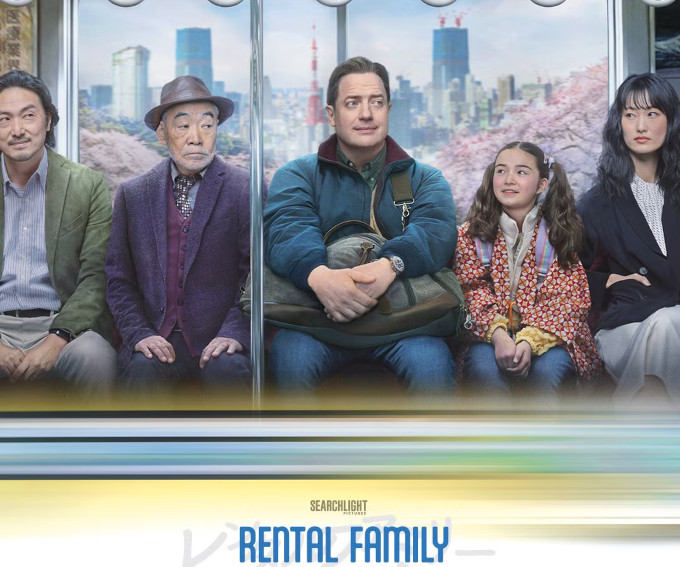
Directed by Japanese filmmaker Hikari, the film follows Phillip, an American actor who moved to Japan for work and finds himself down on his luck in his career, and unfilled in his personal life. Out of options, he accepts a job with a rental-family agency, performing stand-in roles for strangers who need someone to fill emotional or social gaps in their lives.
Sometimes he’s hired to pose as a fiancé for a young woman desperate to escape her parents’ expectations and live more authentically. In other cases, he’s hired to portray the long-absent father of a five-year-old girl who believes he truly is her dad, while her mother attempts to get her into a private school that discriminates against single moms. Once Phillip realizes the impact his work has on people’s lives, he cannot help but become emotionally attached, threatening to cross professional boundaries and blur the realities of his existence.
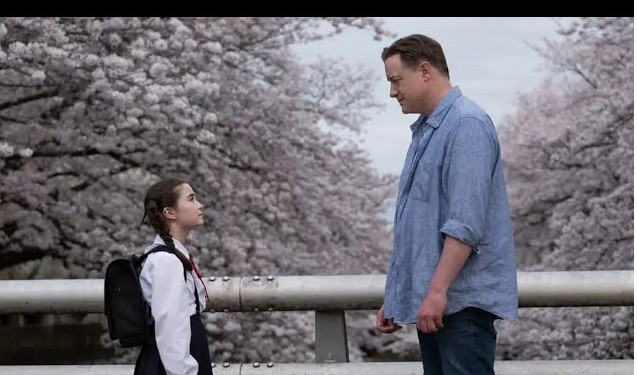
Effortlessly, Hikari achieves an environment of empathy in her storytelling. Despite the psychological confusion and ethical concerns of this line of work, she refuses to cast judgment on people utilizing this service and those who work within it. Instead, Rental Family explores one’s natural desire to not feel alone in this world. Sometimes connection comes from playing videogames with a stranger you pay to be your friend, or in Phillip’s case, it is hiring a sex worker to feel intimacy. The service itself may be a facade, but the feeling of escape is authentic. Delivering a career-best performance, Fraser renders Phillip’s quiet evolution with remarkable tenderness, charting his journey from isolation towards a place of genuine belonging.
Rental Family is most striking in its exploration of spirituality as it relates to the human condition. By centering the narrative on Phillip, Hikari frames the story through the eyes of a cultural outsider - someone adrift in her homeland yet gradually learning to love it, and in doing so, discovering a profound connection to the land itself. Phillip’s journey becomes one of awakening to a higher power, shaped by the Japanese belief in the presence of 8 million gods permeating all things. It is not framed as a doctrine to accept, but as an intrinsic truth of the natural world -- something that simply is, and to which Phillip slowly realizes he belongs.
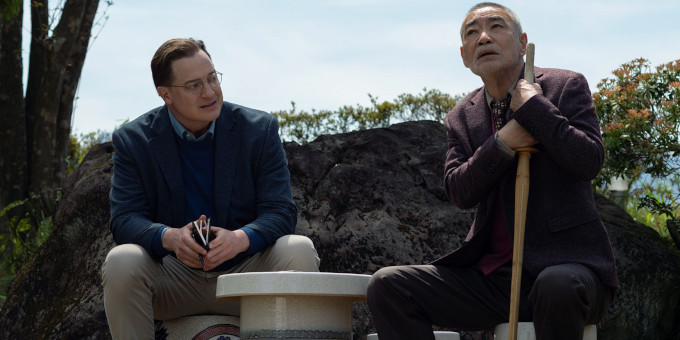
By the time the film reaches its understated, deeply human final moments, Rental Family has transformed into a meditation on belonging, on the spaces we inhabit, and on the spiritual threads that bind us to one another even when we feel most untethered. Hikari and Fraser together craft a film that is tender, sincere, and quietly transformative - exploring what it truly means to belong in a world that rarely makes that easy.
Author Bio:
Ben Friedman is a contributing writer and film critic at Highbrow Magazine.
For Highbrow Magazine