


(Alan Govenar. Photograph by Alex Govenar.)
It’s hard to put a label on Alan Govenar. He’s a writer, filmmaker, photographer, and folklorist for starters. He’s also the founder of Documentary Arts, a nonprofit arts organization, which, since 1985, has been creating a broad range of media to initiate social change in diverse cultures. He’s shone a light on the extraordinary in ordinary people and made us see them anew – Alonzo Jordan, a photographer and the barber in East Texas whose work appears in his new film, Quiet Voices in a Noisy World: The Struggle for Change in Jasper, TX; Stoney St. Clair, a tattoo artist and sideshow performer who energized the young Govenar’s first documentary efforts; and Osceola Mays, a storyteller and singer whose voice inspired numerous creative projects, giving magic to his books, videos and musical productions. These are just a few among hundreds of individuals who continue to shape his vision.
It's not surprising then that the man who has looked for the human spirit in all of us should find himself the focus of our attention.
Everyday Culture: Seven Projects by Documentary Arts opened at the Center for Photography at Woodstock (CPW) in late September (and runs through January 11, 2026). Located in Kingston, New York, CPW is a gathering place for critical dialogue and creative discovery in photography and related media, with the mission to effect social change through innovative and inspiring programs that explore photography as an adept medium for understanding ourselves, our communities, and our society.
In the current exhibition, curated by Brian Wallis, tattooing, Texas blues, Black cowboys, and community photography are among the subjects Govenar has focused on for more than four decades. Also on view is the exhibition Kinship and Community, curated by Nicole R. Fleetwood. Weddings, high school graduations, family reunions, and other civic moments are just some of the historical highlights of a rich, often undervalued Black culture that is part of the Texas African American Photography Archive that Govenar founded with his wife, artist Kaleta Doolin, in 1995. It’s a show that raises the question of whether revitalized documentary approaches to traditional cultures can restore the truth behind the image.
On November 14th, Quiet Voices in a Noisy World: The Struggle for Change in Jasper, TX opened at Cinema Village in New York City, along with retrospective showings of several of Govenar’s iconic and socially relevant films. Quiet Voices is a tribute to the indomitable spirit of a group of African American volunteers in Jasper, Texas, to overcome adversity. Plagued by a long history of virulent racial violence, these volunteers have spearheaded projects to reclaim the dignity of their community and to advance social justice.
The lynching of James Byrd Jr. in 1998 revealed the deep division between the African American community and its white counterparts. The legacy of slavery runs deep in Jasper, and many have suffered from the ravaging effects of Jim Crow racism. Jasper is a place where Blacks represent most of the population but lack representation in government. The film could not be more relevant at a time when attempts to rectify the injustices of history are being undermined by the politics of erasure. The African American volunteers in Jasper demonstrate a path forward against all odds.
It was high time to sit down with the man behind such an ambitious mission of restoring an essential humanity to ourselves. Following is the edited transcript of my interview with Alan Govenar at Manhattan’s 23rd Street Chelsea Diner in October.
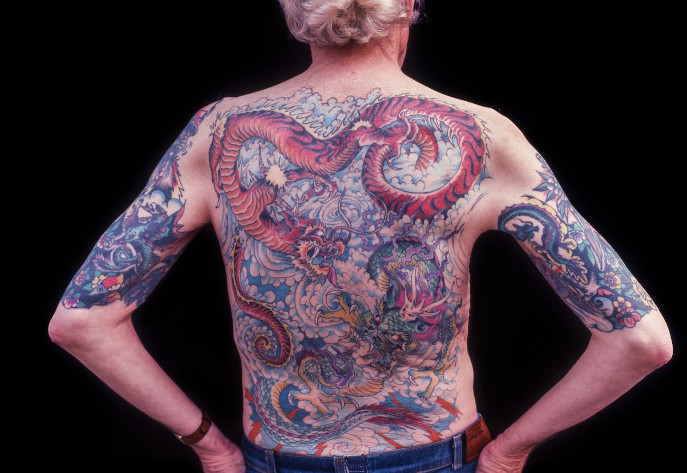
(Tattoo by Ed Hardy. From the film Tattoo Uprising (2019). Photograph by Alan Govenar.)
Highbrow Magazine: One of the things that always fascinates me is the seeds of creativity and how it all starts, how we all plant seeds in different aspects of ourselves. Do you remember what was the initial inspiration for you?
Alan Govenar: As a child, my father inspired me. He aspired to be a writer as a teenager but never became one as an adult. His college education was interrupted by World War II, and after the war, he ended up doing a lot of jobs that he did well, but were not his passion. He liked telling me stories about what he was doing as a teenager, writing and working with juvenile offenders, wanting to be a volunteer, a voice for advocacy and social change. My mother would say, “Joe, don’t talk so much about all that. Alan’s going to want to do that.” And she was right.
Was that in Texas where Documentary Arts started?
Oh, no, I grew up in the city of Boston, in Dorchester, where racial tensions intensified over the years of my childhood in the 1950s. My grandmother, who was an immigrant from Belarus, bought a triple-decker in Dorchester around 1920. It was where my mother grew up and where years later my parents lived on the ground floor. My grandmother lived in one of the bedrooms. By then, she was dying of cancer, and my parents took care of her. And on the upper floors were aunts and uncles and cousins.
So, you were growing up in a communal atmosphere where different ages, different personalities were melding together in a young head.
Fortunately, my parents were socially progressive; it was a very difficult time because racism and anti-Semitism were rampant. People who had lived in Dorchester for decades were moving away, and a new wave of immigrants were moving in. In 1959, my family moved to Marblehead after a teenager in our neighborhood was knifed for pocket change. While geographically beautiful, I had a tough time adjusting to the suburban life of Marblehead. I longed to be in the city where I was born. I liked that life, the mix of people and cultures. The novel I’m currently working on looks back at those early years and juxtaposes my life as a child with who I’ve become as an adult.

(Novelist Jake Lamar, Paris, 2006. From the film Myth of a Colorblind France (2020). Photograph by Alan Govenar.)
So much of your work has been grounded in various peoples who are struggling. It’s like a real-life story that keeps replaying itself.
When I founded Documentary Arts in 1985, the aspirational mission was to broaden public knowledge and appreciation of the arts of different cultures in all media. I never wanted to be a full-time executive director. Documentary Arts is a loosely connected network of likeminded people in the United States and other countries. I think the root of my creativity is in the sense of inner peace I carry with me every day. I respond to what’s around me, some of which is horrible, but I feel centered when I’m doing it. I don’t write out of anger; I write out of passion. First of all, for a better world, for gender and cultural equity. For social justice.
Which is something I think so many of us see as being in danger -- because of the current state of affairs. We look for its presence in the past. In the WPA programs, when photographers like Walker Evans were working or the New York Photo Alliance in the ‘30s and ‘40s, many of them were Jewish, many were urban, but those photographers were constantly getting their inspiration from the street, from what was around them, and they didn’t lose contact with that. And it seems to me the kind of work you’ve been doing for the last several decades has been focused on those kinds of social interactions.
Those social interactions are important to me. I’ve always tried to strike a balance between my personal work and my public mission. In my personal work, I often reflect on aspects of my public mission, but also my inner life, my feelings, my dreams, my response to the world around me. I’ve been writing poetry since I was 17 just about every day. Poetry centers me.
A number of your books, plays, documentaries, and recordings have to do with music and the music in Texas (Lonesome Blues, Texas in Paris) that is rooted in the land and the people. How did that start for you? It seems like a kind of paradox, since you come from Boston.
When I was four years old, my father bought a portable record player and brought home four LPs – and the two that I listened to the most were R&B and jazz — Dizzy Gillespie, Charlie Parker, Sarah Vaughan. And those sounds stayed with me. But I was also drawn to other styles of music – the cultures of the world excited me. And when I got to Texas, I was drawn to the distinctive style of blues and jazz that was performed there, but was also introduced to other kinds of roots music — Cajun, Creole, Mexican American, Native American – everything from Conjunto norteño to gospel and polka.
There was an emotional connection for you in these musical forms.
Roots music evokes a visceral response deep within me. And I can’t get enough of it. In the mid-1980s, I began researching and recording radio shows, short features, focused on everyday music, music that people, not necessarily professional musicians, performed for their families and communities. Between 1984 and 1988, I produced three 13-part radio series called Traditional Music in Texas. I traveled 35,000 miles around Texas. It was a mix of driving and flying, rental cars…a lot of wandering around.
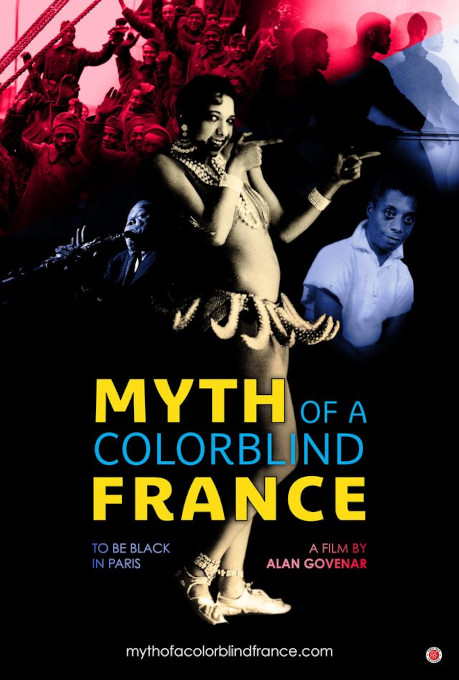
(Poster for Myth of a Colorblind France (2020))
And you were also observing.
Sure. I was looking. But I was also documenting my experiences through recordings, and later in films and videos. And as I went deeper into the everyday culture of people in these little towns or inner-city neighborhoods, I saw the importance that music had in people’s lives, and it didn’t have to be perfect.
Music was something that satisfied a deep inner need for the people you were meeting.
I marveled at the integral role music had in their lives, giving them agency to express their innermost feelings and to better understand themselves and their relationships with their families, their communities.
So it became, in its own way, a conversation.
Twenty-five years later, I wanted to do a book about these radio shows, called Everyday Music, and I revisited about 11 of the places that I’d gone through earlier. Most of the people were deceased but some were not, and I wanted to explore the extent that these musical traditions had endured within their families and communities. And I learned a lot of different things about human nature, about culture.
In my book, I write about a man, Miguel Pedraza, who was Tigua, a Native American tribe in Texas living on a reservation near El Paso. Miguel was the hereditary chief, and when I recorded him, he performed songs that were the most special to him. And when I went back there 25 years later, I met with the person who was his successor and told him about my recordings. He looked at me, a little shocked, and said, “Well, this is sacred music. It should not have been recorded. But had you not recorded it, it would have been lost.” So, I gave the Tigua all my recordings.
At that time in the ’80s, I was organizing folk festivals while going to graduate school, getting a PhD in arts and humanities.
And that was happening in Texas?
In Texas. My doctoral dissertation was titled Issues in the Documentation of Tattooing in the Western World, and was an outgrowth of a college paper I wrote. When I was 21, I got my first 35-millimeter camera from my parents. I was in Columbus, Ohio, at Ohio State. I wandered off campus, it was late at night, and I saw this sign that said, “As Ancient as Time, as Modern as Tomorrow.”
(Poster for 40 Years of Documentary Arts (2025)).
That’s memorable.
And then there was another sign that said, “Tattooing by the teacher of the arts since 1928.” I had never thought about tattoos in my life. In the window of this shop, I could see this silhouette of a man in a wheelchair with his basset hound howling at his side. So, I went back the next day and started photographing this man from the front of his shop and he chased me away.
I had my new camera when I came back and he said, “You can come in now. The reason I told you to leave was because you didn’t ask permission to take my picture.” And I realized I was in the wrong. So, he beckoned me to come in. He had a hunched back, was severely disabled, and could barely open his hands flat. But he could draw and paint. He was denied an education because he was considered too grotesque to go to school. He learned to read and write from his grandparents. He started as a sword swallower in a sideshow because his uncle had a cookhouse in the circus. Then he met a tattoo artist who said, “Get rid of them swords and make a living out of this.” And he learned to tattoo.
I wrote a college paper about Stoney, which was later published in the Journal of Ohio Folklore. And after finishing my undergraduate degree, I went to Texas to get a master’s in folklore, and toward the end of that, I couldn’t stop thinking about Stoney. I really wanted to do a book about him So, I ended up leaving graduate school. My parents by then were living in Ohio and we had this hard conversation. My father looked at me and said, “Well, I’m gonna have to meet this person. But you’re not coming with me.”
And he went and met Stoney St. Clair, came home and said, “Yes, you should do a book about him.” And that’s what I did, and after two more years of work and 18 rejections, the book, Stoney Knows How: Life as a Sideshow Tattoo Artist, was finally published in 1981 (and in 2022, it was published in an elaborate 40th anniversary edition).
So that turned into a project that has been ongoing?
For more than 50 years, and is still part of me. I have three new books on tattooing that have been published in the last year and a half: Gus Wagner: Globe Trotter and Hand Tattooist, Maud Stevens Wagner: The Mona Lisa of American Tattoo, and Lotteva Wagner Davis: Hand Tattooist and Artist of the American West.
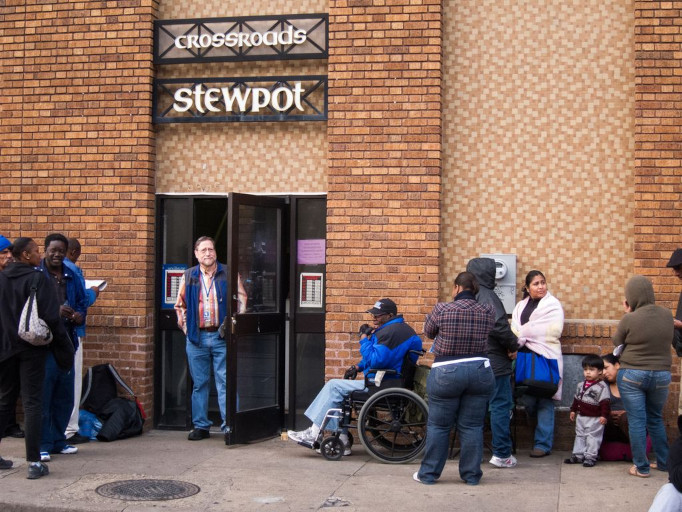
(Reverend Bruce Buchanan stands in the doorway of The Stewpot, Dallas, Texas, 2012. From the film Serving Second Chances (2015). Photograph by Alan Govenar.)
Even if it’s not an obsession, it’s such a part of your innate curiosity that has just stayed with you.
The fact is Stoney was a very important person in my life. My grandparents died when I was very young. And he was a grandfather figure in my life. On a personal level, he talked to me about everything from condoms to anything else you can imagine.
Stoney Knows How is an oral autobiography about this incredible human being who lived the life of the circus sideshow. His only request to me was: “When I die, I want you to promise me that when you write my obituary that I’ll be described as an actor on the outdoor stage. Not only a tattoo artist.”
Amazing. You must be very proud of that book.
I’m very proud of having known him because I learned so much about how to survive, how to live a good life. Stoney lived in the back of his shop. He hired homeless people to help him. He ultimately ended up with a young girlfriend who helped take care of him. In the middle of doing this book, I got the idea to make a movie. I got my first NEA grant in ‘78 or ’79 to do the film Stoney Knows How.
So that was your introduction into documentary filmmaking?
Correct. I had made one video when I was in graduate school of a tattoo shop with one of these Sony Portapak units that weighed about 50 pounds that I was able to lug around. But that wasn’t exactly a movie; it was a cinema verité single-angle video of a someone getting a tattoo in San Antonio. To make the film Stoney Knows How, I had trouble finding the right film crew. The film was controversial to some extent. By then I was teaching part-time at an art college in Columbus, and they agreed to be the fiscal agent for my grant on the condition that they would never receive a credit in the final version.
Because they didn’t want to be associated with it?
Correct. Tattooing at that time was taboo. I was the first faculty member to get an NEA grant, and I ended up hiring two people, Pacho Lane and Les Blank, who became my mentor. Les shot the film, and he helped bring it out into the world. He premiered Stoney Knows How at Film Forum, in 1981, with two of his films. And Vincent Canby wrote this incredible paragraph about the film in The New York Times [in] November 1981.
I see why you remember that date.
I was borrowing money to finish the movie from my collaborators. I was a young parent, so the post-production and editing was taking a big chunk of time and costing more than I could afford. After 10 years of distribution, I was finally able to buy back half interest in my own movie.
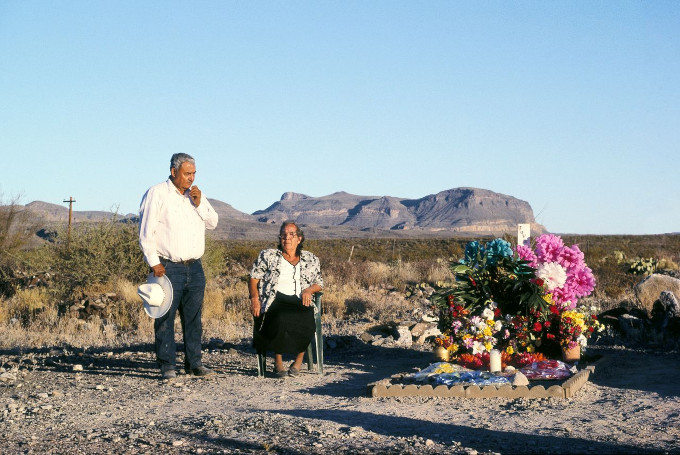
(The grandparents of Esequiel Hernández Jr. at his gravesite, Redford, Texas, 1997. From the film The Devil’s Swing (2005). Photograph by Alan Govenar.)
Wow. Ten years later.
But the critical notice that this film got made me a filmmaker.
It must have helped enormously.
Oh, it did. The acclaim of Stoney Knows How helped me to get funding for other projects. To my getting a commission from the Dallas Museum of Art to do a project called Living Texas Blues. So, it’s all, for me, very interconnected. Concurrent with my documentary work has always been my poems, plays, and novels. And this last spring, my second novel was published, in many ways, my first. A book I started when I was 18 years old.
And then it comes around to now.
Come Round Right is the title of the novel after the Shaker song “Simple Gifts.” And it took 52 years to complete. It’s based on true events; it’s a novel about the end of the ‘60s. A coming-of-age story. About something very traumatic that happened to me. It’s a novel about hitchhiking. It’s set in the fictional past of 1970 in a fictional present of 1971.
When FirstRunFeatures asked me to write a piece about you, I remembered that I had written a review of your documentary about the Beat Hotel in Paris. About Ginsberg and all the rest.
At that time, I was working with the Musée Franco-Américain du Château de Blérancourt and was making a series of short videos on the ever-evolving relationship between France and the United States. The film focuses on the period between roughly 1957 and 1961, largely through the photographs of Harold Chapman, who lived in this 50-cents-a-night hotel, where Allen Ginsberg and Peter Orlovsky had taken up residence, fleeing the obscenity trial in the US, and where William Burroughs and the European beat movement converged.
This film led to other features, including Master Qi and the Monkey King about Chinese opera in New York City, and Tattoo Uprising about the influx of tattooing into the Western world and a pivotal moment in 1981-82 when tattooing began to be more widely accepted and recognized as an art form. One of the people I focused on is Ed Hardy. He was a graduate of the San Francisco Art Institute in ’67. He got a fellowship to go to Yale for graduate school, but instead he became a tattoo artist. And during the height of his career, he was likely the most well-known tattoo artist in the world, with studios in San Francisco and Tokyo.
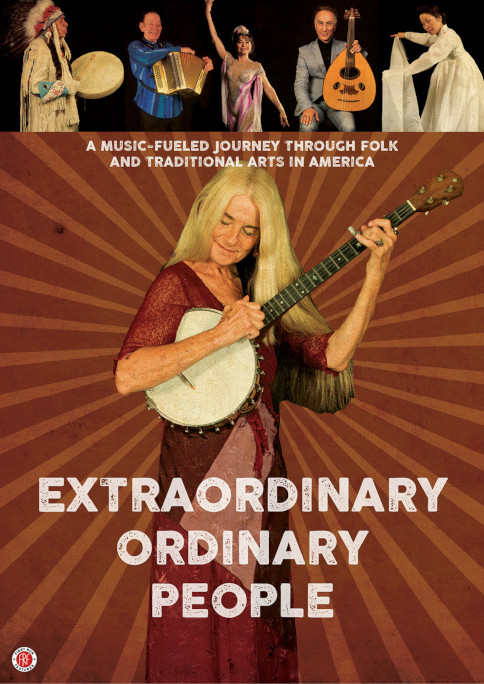
(Poster for Extraordinary Ordinary People (2025), a film by Alan Govenar.)
Did you ever think that with your own interest in tattooing, you could see it becoming so much a part of the culture today?
None of us really ever saw that happening. How tattooing, just in the course of my documenting the subject, went from being one of the most forbidden art forms in the Western world to being one of the most common. I think it relates to the deeper fabric of cultural changes in the United States and global thinking. The pursuit for individuality in an impersonal world.
Over the years, I’ve worked a lot in France. It was really the French acceptance and embrace of my work that really propelled things here. In terms of everyday music and other subjects that I focus on, which are more marginalized, the French, in particularhad a great influence on me.
Did you live there for a while?
I was, as my French friends remind me, invited. But in the 1980s when I was doing that radio series I mentioned, I began documenting a woman by the name of Osceola Mays, who sang a cappella spirituals. There was a theatre in Paris, the Maison des Cultures du Monde, an Institute of World Culture, and they bought some of my cassettes and early films. I got a letter at the beginning of 1989 asking me if I was interested in bringing some of the performers — Osceola Mays, Bill Neely, and John Burrus — to do a show in their theatre. They had never met each other before, and once in Paris, we developed a stage show, in which each took turns performing.
The setting was sparse, without microphones, and in my mind, I realized that it was a kind of musical theatre, in which every song was a deep expression of the lives of the performers. The show, which was called “Texas in Paris” ran for three weeks and was a huge success. It was reviewed by the major media in Paris. And I was invited to organize other shows – focusing on musical traditions as varied as Piedmont blues, gospel, and bluegrass.
Between 1989 and 2016, I organized six shows for the Maison des Cultures du Monde, and the last was a musical based on my first show in Paris. By then, all of the original performers had passed away, and I created a musical about the fictionalized relationship between Osceola Mays and John Burrus. The musical Texas in Paris was produced off-Broadway at the York Theatre in New York City, starring Lillias White, a Tony award winner, playing Osceola Mays. Lillias was well known on Broadway for her roles in Dream Girls, Chicago, and Hadestown.
Do you find yourself hopscotching back and forth between book and lyrics? Or did you concentrate mostly on the book? I’m sure you were involved with the whole process.
In Texas in Paris, there wasn’t a single song in that show that was composed later than 1905. It was largely traditional music. When I produced Texas in Paris with the real people, it was done in a 450-seat theatre in Paris with perfect acoustics. The setting was simple: three people who didn’t know each other, sitting in chairs center stage. The show ended with Osceola Mays marching off stage, singing a cappella “When the Saints Go Marching In.” People were on their feet.
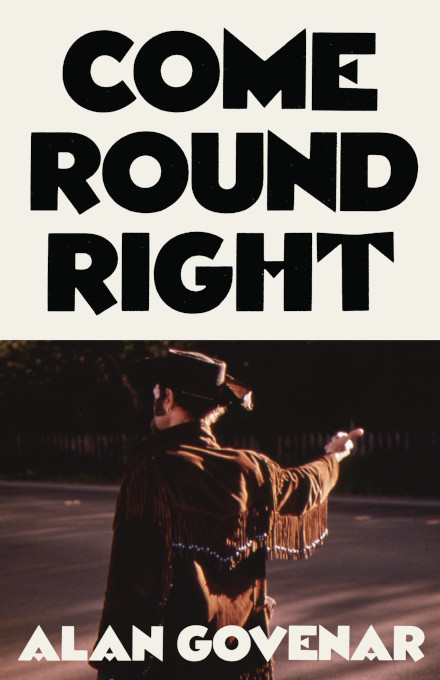
(Cover for the novel 'Come Round Right' (2025)).
The audience must have loved it.
It made me realize the potential of creating new forms of musical theatre and led to the development of Blind Lemon Blues with Akin Babatundé, a musical, commissioned by the Maison des Cultures du Monde, that was staged in Central Park’s Summerstage and in two full productions off-Broadway, before touring to a dozen cities in Europe.
The world premiere of my newest musical called Stompin’ at the Savoy was produced at the Delaware Theatre Company in April and May of this year. Based on my children’s book, it’s the story of Norma Miller, set in 1935 Harlem. A girl’s coming of age story.
And now, we’re planning the next production for 2026.
But we didn’t really talk about the exhibitions in Kingston at the Center for Photography at Woodstock, which are currently on view through January 11, 2026, and the premiere of your new feature film, Quiet Voices in a Noisy World: The Struggle for Change in Jasper, Texas, and the retrospective of your earlier films at Cinema Village.
The 40th anniversary of Documentary Arts began in January with a 50-year survey of my photographs at the University of Texas at Dallas, followed by the world premiere of my new musical, Stompin’ at the Savoy, with a book by Phaedra Michelle Scott and me in April, the publication of my novel Come Round Rightin May, and publication of two new nonfiction books on tattooing in June and September, the exhibitions at CPW, the premiere of Quiet Voices in a Noisy World, and the publication of the Aperture book Kinship and Community: Selections from the Texas African American Photography Archive.
The exhibitions at CPW establish the connection of seven projects undertaken by Documentary Arts between 1985 and 2025: Tattooing, Blues, Black Cowboys, Border Culture, Street Culture, Extraordinary Ordinary People, and Community Photography, and include my photographs and those made by others I have collaborated with, as well as pieces of folk art Documentary Arts has collected over the years and the extraordinary metal quilt by my wife Kaleta Doolin.
My newest feature film, Quiet Voices in a Noisy World, premiered at Cinema Village in New York City on November 14, alongside a retrospective of my earlier films, running through November 20.
Each of these films exemplify the methodologies and aesthetic approach of Documentary Arts that aims not only for theatrical distribution and online streaming, but hopefully catalyzes sustained interaction and community engagement.
This has been a watershed year for myself and Documentary Arts. I couldn’t be more grateful.
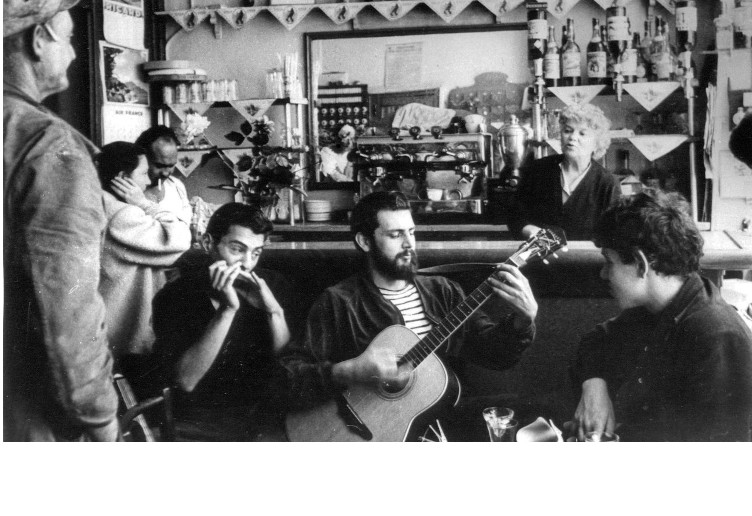
(Peter Golding (harmonica), Robin Page (guitar), and Madame Rachou (behind counter) at the Beat Hotel, Paris, 1950. From the film The Beat Hotel (2012). Photograph by Harold Chapman.)
For more information about Alan Govenar, visit FirstRunFeatures.
Author Bio:
Sandra Bertrand is the chief art critic for Highbrow Magazine.
For Highbrow Magazine