


Jay Kelly (Netflix)
3 stars (out of 4)
Director: Noah Baumbach
Starring: George Clooney, Adam Sandler, Laura Dern, Billy Crudup, Jim Broadbent, Stacy Keach, Isla Fisher, Patrick Wilson, and Emily Mortimer
Available: In theaters, November 14, 2025 (limited release); streaming on Netflix, December 5, 2025.
Remorse. Restlessness. Regrets.
Are they a natural consequence of aging, of intellectual maturity, or the results of an ill-spent life?

George Clooney, as internationally famous actor Jay Kelly, confronts this very issue in Jay Kelly, the latest film from director Noah Baumbach (The Squid and the Whale, Marriage Story). Jay, at 60, has become a leading man “of a certain age.” Film offers aren’t rolling in as they once did. He has alienated his two daughters, has a strained relationship with his emotionally distant father, and treats his only real friend—his manager—as a factotum.
Jay has international fame, wealth, servants, and a gorgeous house on a hilltop, but he’s a lonely man at the end of his rope. Despite his success in films, everything that should have been dear to him has withered away. The conundrum presented in Jay Kelly is whether it’s ever too late to change one’s behavior, mend the errors of the past, and claim a new future.
Early in the film, Jay acts a scene in which his character is lying in a puddle in a dark alley, debased, dejected, and dispirited. When the director says, “Cut,” Jay asks, “Can we go again? I’d like another one.” But unlike a movie set, there are no retakes in real life.
The scene is a clever introduction to the film’s theme—the overwhelming knowledge that one has screwed up his life and desperately wants an existential do-over.
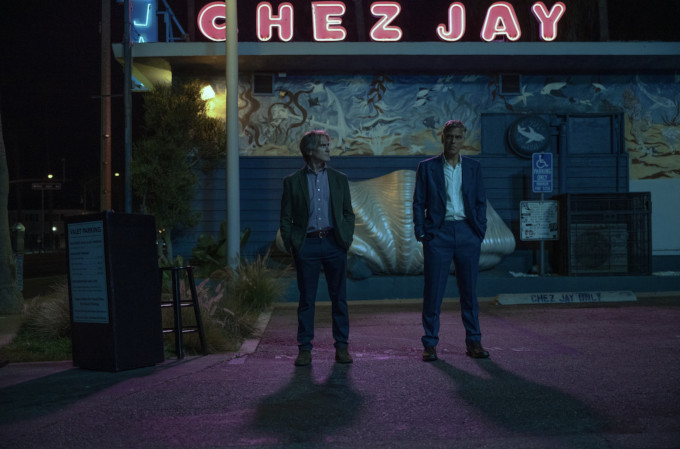
Jay Kelly is a “Hollywood movie” in the same vein as A Star Is Born, Once Upon a Time in Hollywood, and Sunset Boulevard. As film fans, we understand that there are actual human beings behind the characters they portray on the screen. They get arrested for drunk driving, they contribute anonymously to charity, they get divorced, and possibly even have halfway normal lives on their Montana ranch. But Jay is different: He’s a high-megawatt superstar adored by people around the globe. That can put a little pressure on a guy.
As the story unfolds, summer is coming. For once, Jay hopes to spend some quality time with his younger daughter, a budding college student. Her interest in some daddy-and-me interaction, though, is, at best, less than zero. In fact, she’s heading to France, then Italy, with some buddies for the season. Jay is dumbfounded. For once, he has a few weeks free before his next shoot, and his daughter decides to take off just as he’s suddenly feeling paternal. It’s not fair!
In a heart-to-heart conversation with his older child, Jay tries to justify his life. The serious roles. What he means to his fans. His entire career. “It’s got to have meant something,” he says.
“What if it didn’t?” she replies.
Then Jay has a meltdown. He’s going to cancel his next film. Instead, he’s going to accept a lifetime achievement award (which he’d earlier declined) in Tuscany. He’ll time it so that he can invite his entire family to join him there: his younger daughter romping through Europe, his older daughter now settled in San Diego, his cantankerous father. It’ll be a reunion, a chance to resurrect some form of family life.
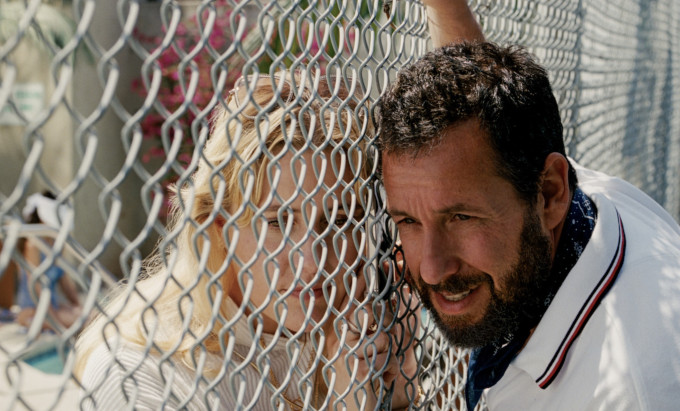
At this point, we have a strong sense of how this will turn out.
It’s also then that we begin to wonder why we should care. It’s the classic poor little rich boy story. Here’s a man who earned all the adulation he could ever desire, more money than he knows what to do with, and the respect of his professional peers, yet he’s spiritually empty.
This isn’t a new theme in film or literature. In fact, it’s so common that it’s almost a cliché. There have been memorable films and novels on this motif (The Great Gatsby, Citizen Kane, etc.), so why do we want another one?
The answer, in two words: George Clooney.

Some think Clooney, as an actor, is a handsome, capable lightweight. Hardly in the same league as Gielgud, Olivier, Hopkins, or even Sean Penn. But (not unlike Tom Hanks), he has become our modern-day Jimmy Stewart, the American everyman. Even while portraying the monstrously successful, self-absorbed actor Jay Kelly, Clooney maintains an appealing restraint, even bashfulness and self-deprecation. If there is anything hackneyed in the movie’s plot, it’s not of Clooney’s doing. Despite his angst—his deserved angst—Clooney’s Jay remains an appealing hero worthy of, if not our compassion, at least our understanding.
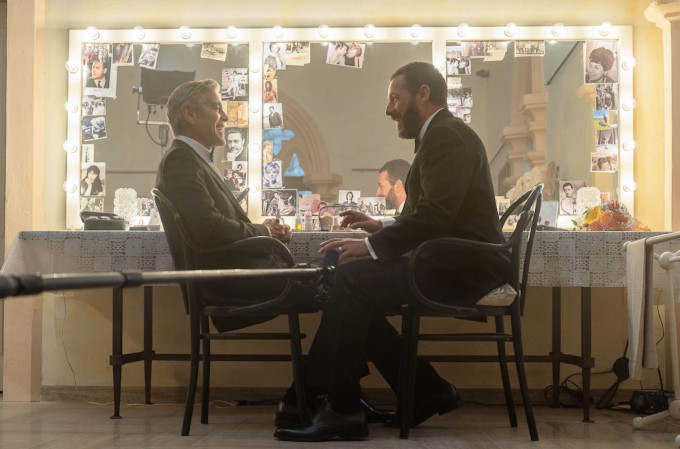
As his put-upon friend and manager Ron Sukenick (Adam Sandler), in a heartbreaking performance, fully realizes his goal of being taken seriously as a fine actor. The former SNL player and star of such goofball comedies as Happy Gilmore and The Waterboy plays it straight as an arrow in Jay Kelly, yet loses none of his natural charm.
Can an actor’s manager truly be friends with one of his clients? In one scene, reaching a new moral low blow, Jay turns to Ron and calls him, sneeringly, “a friend who takes 15 percent of my income.” It’s like a knife in the belly to Ron. Even we in the audience feel the sharp bite of a blade in the gut.
Because Jay had initially declined the award in Italy, up-and-coming actor Ben Alcock (Patrick Wilson) was named to replace him. When Jay decides to accept the award after all, in the hopes of reuniting his family, the ceremony will now present two awards, one to Ben and one to Jay. But after crushing any hopes of growing closer with his father, angering his daughters, and insulting his one and only friend, Ron, Jay finds himself running down a lonely Tuscan road in a stained and dirt-covered white suit (Baumbach being a bit heavyhanded there). As he runs (from his past?), Jay is stopped by a fleet of SUVs.
In the lead car is his fellow actor and award recipient Ben Alcock. The younger actor is glad to see Jay. He introduces him to the passengers in the other SUVs—his wife and his children, his parents and in-laws, his smiling assistants, a virtual village of friends and family. And Jay, one of the world’s most recognizable movie stars, stands alone, apart.
I won’t spoil the plot by describing how, or even if, Jay achieves redemption. The movie is more than good enough for you to see it and find the answer yourself.
Baumbach, Clooney, and Sandler are ably abetted by a cast of superb supporting players. Among them: Jim Broadbent as Jay’s mentor; Laura Dern, with not enough to do, as his publicist; the enormously talented Billy Crudup as his former friend from his early days in acting class; and in a surprising, delightful cameo, 84-year-old Stacy Keach as Jay’s father.
The script, co-written by Baumbach and Emily Mortimer, sometimes bangs the morality (and mortality) hammer too hard. The writers seem worried that we in the audience don’t get it. But give us some credit: We do understand, because we’ve all experienced the same preternatural unease: Did I do enough for my children? Was I kind to my friends? Have I been a supportive spouse? Is it too late to start over and live the life I wanted to lead?
In Jay Kelly, the responses to such questions come not in the form of answers, but demands for further introspection.
Author bio:
Mark Orwoll writes about travel, film, and culture for Highbrow Magazine.
For Highbrow Magazine