


(Photo Credit: Depositphotos.com)
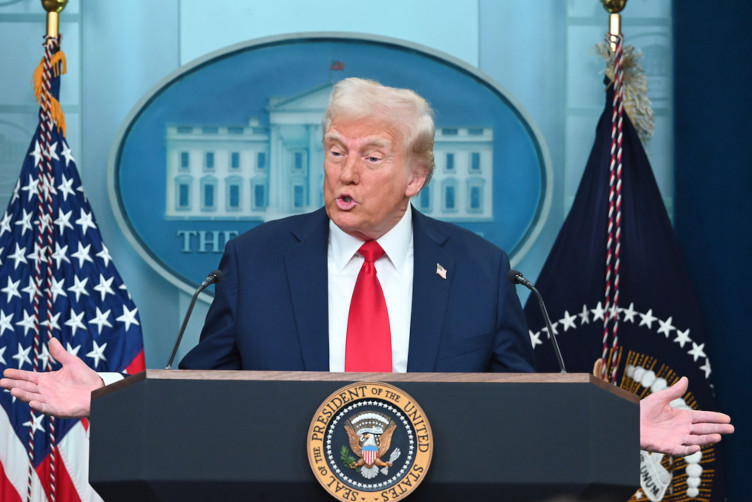
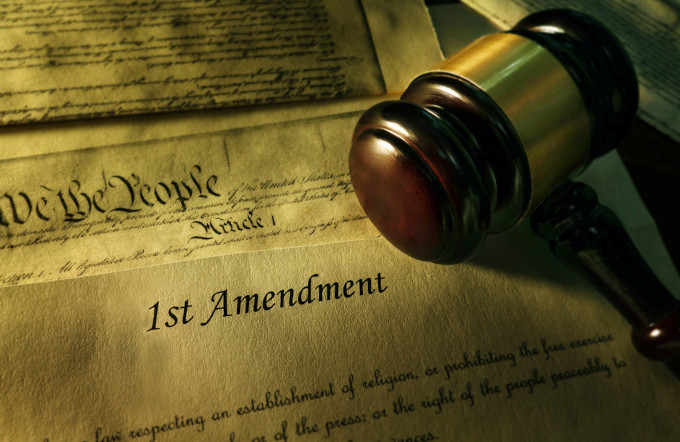
In the wake of the moral panic around “fake news” after the 2016 presidential election, Donald Trump and his administration sharply increased the frequency and scope of politicized attacks on the First Amendment and the rights it established and safeguards. On the premise that any kind of dissent is intolerable, Trump and his far-right allies commandeered federal agencies, emboldened state governments, and facilitated proxy attacks by Big Tech and the private sector, all in Orwellian efforts to redefine “free speech” and to recast peoples’ constitutionally protected rights to express themselves and practice their beliefs without government interference.
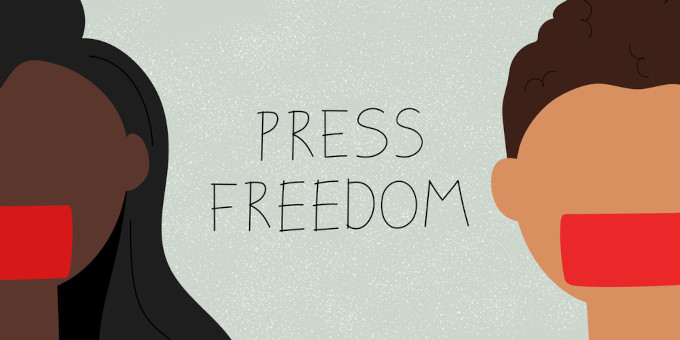
Their targets included nonprofit organizations, public and school libraries, newsrooms, and public broadcasting. But, more broadly, these institutional attacks threatened—and continue to threaten—the public’s right to be informed. Over the past decade, Project Censored has chronicled these antidemocratic developments in detail, warning that they presaged even more egregious attacks on press freedom and civil liberties.
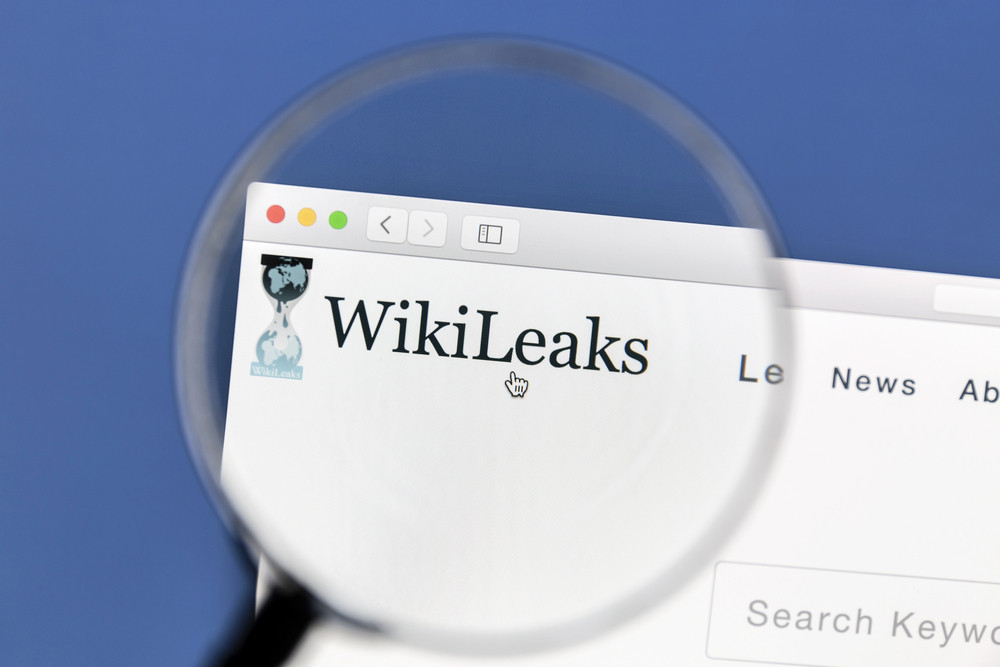
Make no mistake: Neither Trump nor the Republicans, MAGA or otherwise, hold a monopoly on executive efforts to control information or shape official narratives about US government policy. Trump’s predecessors, Democrats Barack Obama and Joe Biden, suppressed information during their administrations, including deceit about the extent of the militarized drone program under Obama, and efforts to criminalize journalism by indicting and extraditing WikiLeaks’ Julian Assange under Biden (each of which Project Censored has documented). Government secrecy—with its negative consequences for the national interest, public debate, and official accountability—has a long, bipartisan history in the United States.
(Photo Credit: Depositphotos.com)
Nevertheless, the extent to which the second Trump administration and its enablers have ratcheted up draconian attacks on the First Amendment is unprecedented. For example, congressional efforts to pass legislation that would gut nonprofits—by authorizing the Secretary of Treasury to unilaterally revoke, without due process, their 501(c)3 tax-exempt status if Treasury officials deem they are providing “material support” to terrorist organizations—have been like horror movie zombies that, despite being felled, rise up to continue stalking their desired victims. Given that many independent news outlets and media literacy organizations are nonprofits, the repeated revival of this fateful legislation continues to threaten press and academic freedoms, not to mention nonprofits that provide vital humanitarian aid in conflict zones around the world.
White House attacks by Trump early in his second term also included specious lawsuits against corporate media outlets including ABC and CBS, cases in which Disney and Paramount, the two networks’ respective parent companies, bent to Trump’s will by paying millions of dollars in pre-trial settlements, rather than confronting his administration in court in battles that media and legal scholars saw as winnable. By capitulating, ABC/Disney and CBS/Paramount set dangerous precedents that normalize even more information control.
In his first month back in the White House, Trump fired most of the staff of the Office of Personnel Management, which handles Freedom of Information Act (FOIA) requests, and he also forced out the leadership at the National Archives and Records Administration, prompting Lauren Harper from the Freedom of the Press Foundation to warn, “The gutting of the institutional knowledge at the National Archives is going to impact every agency across the federal government.”
(Photo Credit: Depositphotos.com)
In June 2025, Reporters Without Borders (RSF) documented a “wave of violence” against journalists covering protests in Los Angeles against Trump’s immigration policies. RSF verified at least 35 attacks on journalists—mostly by law enforcement, covering protests against what the American Civil Liberties Union described as an “oppressive and vile paramilitary operation” by federal agents on multiple workplaces—in which media workers were pepper-sprayed and shot with police pepper balls, rubber bullets, and tear gas canisters.
RSF’s report noted that the Los Angeles incidents were part of “an alarming uptick of press freedom violations” since Trump took office in January 2025. Later the same month, the Trump administration further escalated these attacks by accusing journalists of “inciting violence or lawlessness … by simply reporting the news,” the Freedom of the Press Foundation reported. The Trump administration claimed that CNN’s straightforward reporting about ICEBlock, an application that informs the public of ICE agents’ whereabouts, was akin to inciting “further violence against our ICE officers,” and threatened that the Department of Justice would consider prosecuting reporters from CNN and other outlets on the grounds that their reporting was, according to Secretary of Homeland Security Kristi Noem, “illegal.”
Public media, already woefully underfunded, is also in Trump’s sights as he moved to defund the Corporation for Public Broadcasting and threatened retribution against members of Congress if they did not heed his wishes.
In July, as State of the Free Press 2026 went to press, the Senate and the House of Representatives bowed to Trump’s agenda by agreeing to cut $1.1 billion from the previously approved federal budget for the Corporation for Public Broadcasting. “With this vote, Congress has abandoned local communities, abdicated its constitutional responsibilities and dealt a devastating blow to what’s left of our democracy,” Craig Aaron of the Free Press and Free Press Action observed. “This is a vote to evade public accountability and hide the Trump administration’s destructive actions from independent scrutiny.”
(Photo Credit: Depositphotos.com)
“With this vote, Congress has abandoned local communities, abdicated its constitutional responsibilities and dealt a devastating blow to what’s left of our democracy,” Craig Aaron of the Free Press and Free Press Action observed. Never mind that the term “woke” was historically a positive attribute, signaling liberating awareness of oppression, not an epithet. For free speech revisionists and opponents of the right to know, ignorance is apparently strength. Trump’s rollback of Diversity, Equity, and Inclusion (DEI) initiatives, which promote exclusivity rather than inclusivity as a form of patriotism, and his threats against higher education and academic freedom have been foul hallmarks of his early second term.
Even during Biden’s presidency, the Democratic Party appeared ill-prepared to counter MAGA-inspired attacks on libraries and school boards by groups like Moms for Liberty that accounted for a mass uptick in book challenges and bans, which public and school librarians, supported by numerous students and parents, joined forces to resist. Alongside book challenges and bans, the passage of more laws like Florida’s model “anti-woke” legislation (the “Stop WOKE Act”) enforce the teaching of “patriotic” and exceptionalist history, while historic sites managed by the National Park Service, such as Stonewall National Monument, are stripped of their historical significance, and inconvenient truths are cast down the memory hole.
These stark results of reactionary and authoritarian actions are indicative of a post-truth society, in which beliefs and feelings too often “trump” facts, evidence, and reason. Many Americans seem locked into what historian Richard Hofstadter referred to as the “paranoid style in American politics,” where political leaders and the public spend more time battling over perceived infractions and scapegoating imaginary enemies than addressing actual threats such as the climate crisis, lack of living wages and healthcare, rising homelessness, and the looming specter of nuclear winter associated with US involvement in the escalating wars of Israel, Iran, Russia, and Ukraine.
(Photo Credit: Depositphotos.com)
Hofstadter also argued that such behaviors represented a form of anti-intellectualism that made Americans prone to adopt conspiratorial beliefs, reject knowledge and expertise, and more susceptible to demagogic rule. Tangible examples of how this national ignorance and incompetence have risen to the top include several appointees to the current administration. A quick sampling of some key players shows that the dystopia imagined in Mike Judge and Etan Cohen’s Idiocracy (2006) has arrived.
Addressing Congress in May, Department of Homeland Security Secretary Kristi Noem revealed her ignorance of habeas corpus, which is foundational to the rule of law, but which she believes authorizes the president to remove people from the country without due process. Noem should study past Censored yearbooks to get up to speed on the significance of habeas, which dates back to the year 1215, as a bedrock of our legal system. Defense Secretary Pete Hegseth could use a primer on his Signal app’s privacy settings, as became clear after he (mistakenly?) shared top secret war intel with a prominent editor at The Atlantic.
Billionaire Secretary of Education and former professional wrestling promoter Linda McMahon might go back to school to learn why public education is a right, not a privilege, as she works, like a fox guarding the henhouse, to dismantle the Department of Education. FEMA’s acting director, David Richardson, who has no background in emergency management, didn’t know there was an Atlantic hurricane season and was AWOL in the aftermath of catastrophic floods that wiped out entire communities in Texas. And the sheer number of former Fox News personalities that have taken positions in the Trump administration, nearly two dozen as of this writing, should attract more scrutiny from the press itself.
(Photo Credit: Depositphotos.com)
Corporate news media have played a detrimental role in our civic decline. From their hyperbolic fixation on “breaking news” to their infatuation with celebrity and spectacle, the news industry has reveled in sensational distraction and helped fan the flames of partisan division.
Nevertheless, there’s an essential role for the media to play in addressing our fateful circumstances and reversing our shared fortunes—when reporting is conducted independently, transparently, and in the public interest. At its best, journalism spurs progress by challenging current conceptions, to paraphrase George Bernard Shaw’s 1902 statement on censorship and progress. Journalism that treats its audience as participants, not bystanders, can help us recognize how, as Rebecca Solnit puts it, “The future does not yet exist but is being made in the present.”
For Project Censored, this means now is the time to build a movement of independent journalists and newsrooms; now is the time to expand critical media literacy educational opportunities to students from K-12 through college and adulthood; and now is the time to fill the nation’s news deserts with local, publicly supported news outlets that model media democracy as a human right.
(Photo Credit: Depositphotos.com)
Adapted with permission from Project Censored’s State of the Free Press 2026 (The Censored Press, 2025).
Highbrow Magazine