


Standing in the midmorning line with my timed-entry ticket to the Frick Collection, I was struck by a certain buzz -- a frisson of anticipation was palpable. It couldn’t simply be the chance to view the Vermeers and Rembrandts, or the Gainsboroughs and Fragonards awaiting inspection. After all, these masterpieces had found a temporary home at the former Whitney Museum’s Madison Avenue galleries during the Frick’s five-year renovation.

No, we assembly of voyeurs could now at last amble through the first-floor rooms and hallways of the Beaux-Arts mansion and climb for the first time the Grand Staircase to the second floor where the famed steel magnate Henry Clay Frick (1849-1919) and family enjoyed their private moments. Little matter that the refurbishment has eliminated the usual symbols of domesticity – this is, above all, a hallowed monument to art since its conversion to a museum in 1935. But the atmosphere of beauty and timelessness remains. And visitors can forgive themselves for a precious hour or two for feeling downright giddy.

Upon entering the East 70th Street entrance, a reception hall, coat check and café have been added, along with a Special Exhibition space. A tasteful but utilitarian area, the main reason for lingering is a current exhibition, until March 9, 2026, by Flora Yukhnovich. Her 8-foot-tall installation is a response to the 18th-century painter Francois Boucher’s inhouse works, “The Four Seasons.” She admits to being obsessed with Boucher’s rococo images and has a transcendent contemporary touch obviously inspired by him.
Xavier F. Salomon, the Frick’s chief curator says, “Part of our mission is to show how the past has an impact on the present and the future.”
Now it was time for the real exploration. The former Dining Room explodes upon the viewer’s eyes with an impressive collection of Gainsborough portraits. These larger-than-life depictions of the likes of Mrs. Peter William Baker, the Hon. Frances Duncombe, and others seem to float above us. They were Gilded Age wannabe goddesses whose elegant silken contours belie the fact that they were only mortals, albeit wealthy ones.
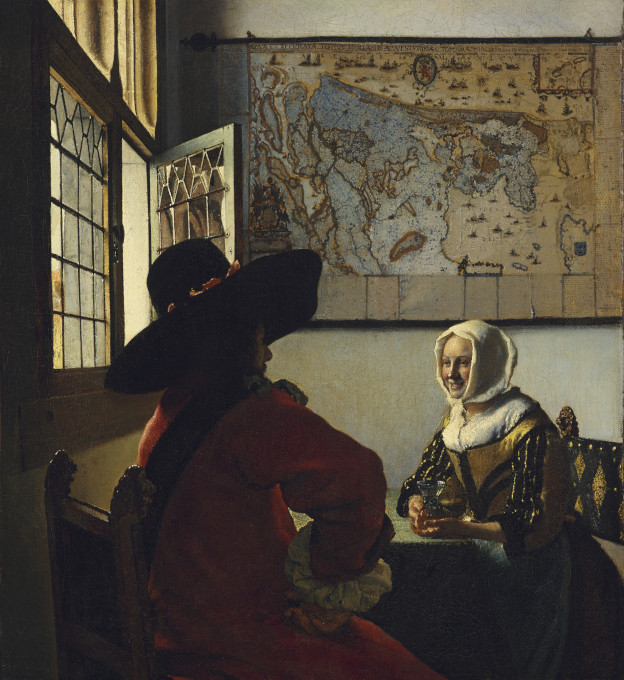
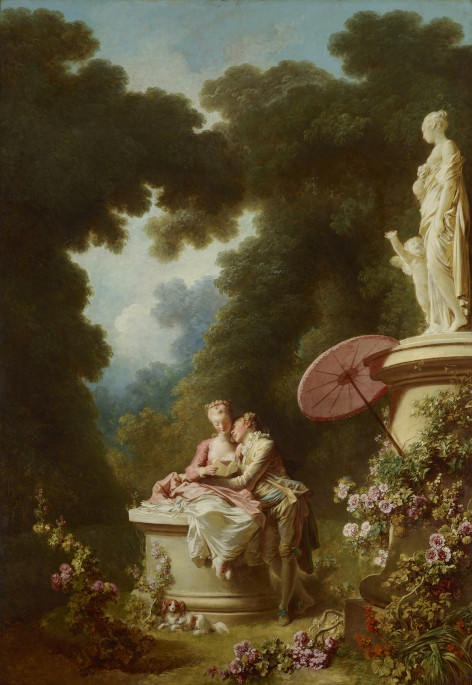
The Fragonard or Drawing Room displays “The Progress of Love,” a suite of 14 paintings by the artist, originally commissioned by Madame du Barry, lover of Louis XV. When the images were rejected by the king, 20 years later in retreat from the revolution, Fragonard added 10 more. Frick eventually bought the set from the J.P. Morgan estate, along with Italian Renaissance bronzes, Chinese porcelain, and French enamels as well. This room remains a public favorite, a frothy opulence, if it’s your cup of tea.
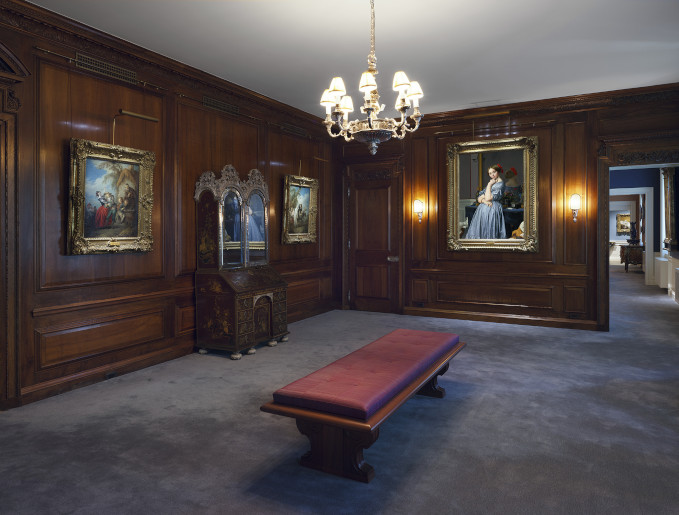
In the Living Hall, the collection seems to get down to serious business. Over an imposing mantel, this darkly paneled room gives pause with a commanding portrait of El Greco’s Saint Jerome. Directly left, Sir Thomas More comes blazingly alive in Hans Holbein’s the younger’s brushstrokes. To the right, a formidable but less riveting likeness by the artist of Thomas Cromwell greets us. A favorite painting of Frick’s, Giovanni Bellini’s St. Francis in the Desert (circa 1475-80) takes special precedence here. The simply robed saint, contemplating the vastness of his natural surroundings strikes a sobering chord. It’s interesting to note that Frick’s daughter Helen had a special affinity for early Renaissance painting, which can be seen in her former bedroom on the second floor.
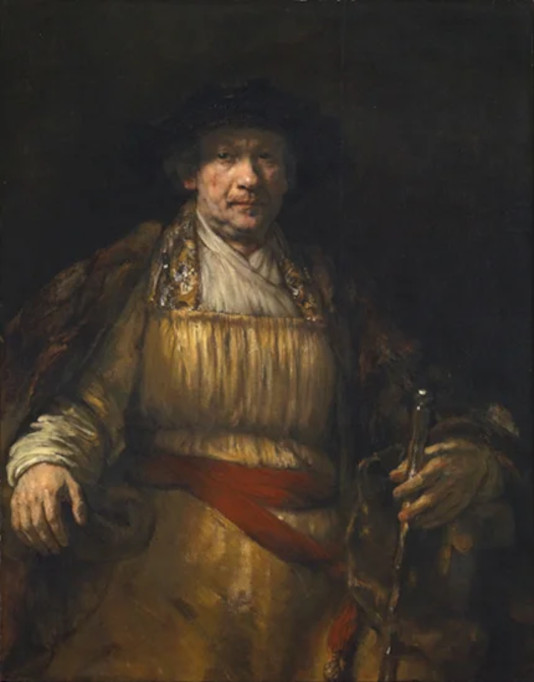
The West Gallery, which New York Times critic Holland Carter defined as “being as long and wide as an airport runway,” was, in 1915, the largest such space in New York City. Happily, the quality of its holdings lives up to the quantity of its space. Portraiture reigns supreme. Rembrandt’s self-portrait from 1658 delivers all we could hope for. He manages to give us a glimpse into the inner man, with the intricate play of light over his aging features. Another example, straight out of an Art 101 course, is Velasquez’s 1644 portrait of King Philip IV of Spain.
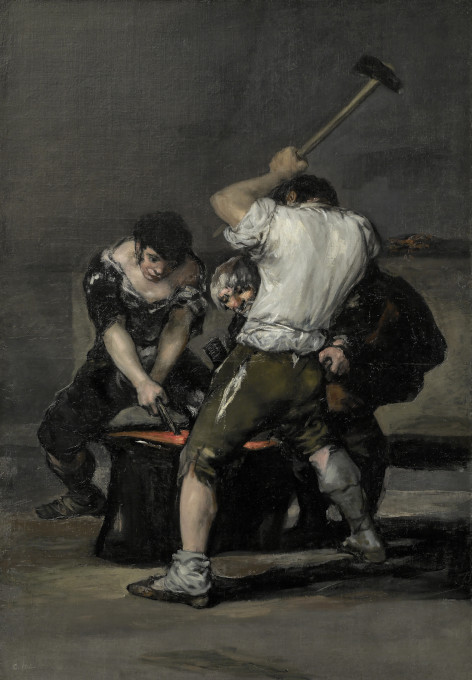
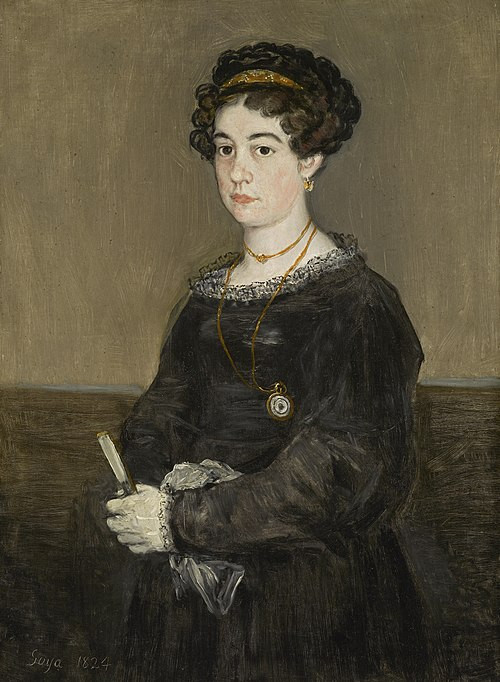
Spanish offerings are not without note. For sheer power in female portraiture, “Portrait of a Lady (Maria Martinez de Puga?,” 1824) by Goya draws the eye from across the room. The darks and lights, commonplace for this painter, are used to optimum effect. “The Forge,” a Goya painting of three laborers, which seems almost out of place in its royal surroundings, commands attention as well.
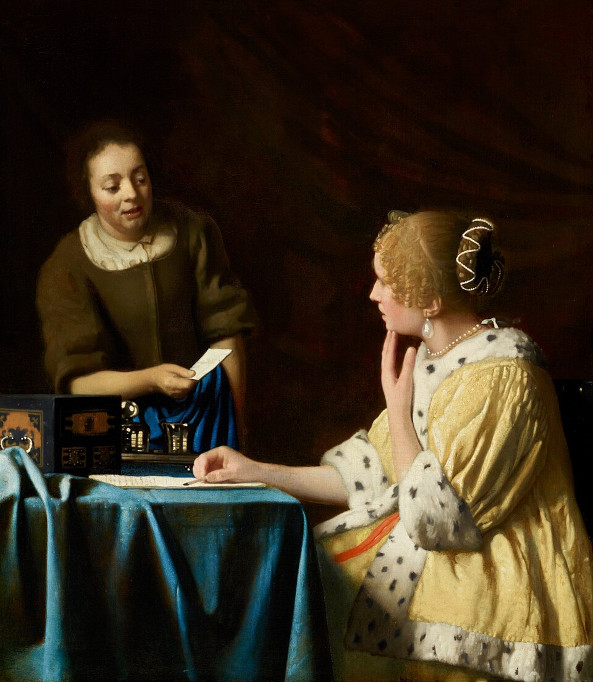
The last painting that Frick purchased was “The Mistress and Maid” (1666-67) by Vermeer. This Golden Age Dutch painter was a great scene painter, and the mistress’s sudden awareness of the delivery of an unknown message from her maid creates a suspense for the viewer that is as magnetic as the composition of the figures themselves.
Satiation of great art is the purpose here, but the second floor’s treasures loom above us. Once converted to staff offices in 1931 after Frick’s widow Adelaide died, 10 of the rooms – bedrooms, sitting rooms, and guest rooms – are now galleries. Boucher’s allegorical paintings mentioned earlier are set in Adelaide’s private sitting room with her Sevres porcelains (an obvious hint of her own preferences). A former breakfast room holds a series of small landscapes, Corot’s among them, and close by, another room exhibits Manet’s “The Bullfight,” an example of Frick’s brief brush with modernism. In another nook, a collection of ornate clocks is a real treat, a bejeweled rhinoceros my favorite.
In Frick’s austere bedroom, also called the Walnut Room, there are two memorable paintings. The first is Ingres’ 1845 portrait of Louise de Broglie, known as the Comtesse de Haussonville. It’s a coy pose, her finger resting under her chin as she regards us. One of her arms, wrapped around her waist, is an anatomically incorrect conundrum, but manages to achieve what Ingres intended.
The more lingering image resides in the portrait “Emma Hart, (later Lady Hamilton as “Nature” (1782) by George Romney. This young woman with her beatific smile, and a small dog resting in her embrace, is set over the fireplace facing Frick’s bed. As the story goes, she may have been the last glimpse the dying man had.
If you ascend by the Grand Staircase, you will be greeted at the top by Renoir’s full-length “Promenade,” a radiant portrait of a young woman with her little sisters, identically dressed for the cold in velvet jackets with red fox trimming in the fashion of the day.
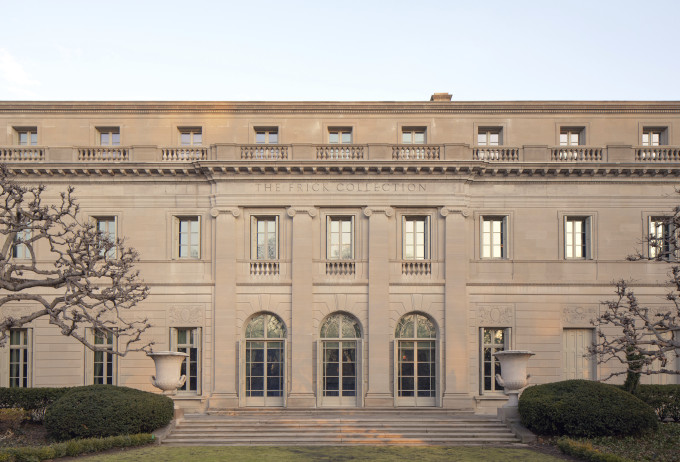
Before exiting, take an extra moment to enjoy the Garden Court with its sunken pool and fountain. It’s a sumptuous and serene setting.
One thing’s for certain. By visiting the beautifully renovated Frick Collection, the Gilded Age will not fade into the grey recesses of history but come gorgeously alive once again.
Author Bio:
Sandra Bertrand is the chief art critic at Highbrow Magazine.
For Highbrow Magazine
--Photos courtesy of the Frick Collection and Wikipedia Commons.