


(Photo Credit: Depositphotos.com)
Hans Christian Andersen was speaking about his fairytales, in perfect Danish, on a street corner in Odense, Denmark. The small crowd that had gathered was enrapt, laughing and applauding. Then, tipping his tall hat, he strolled down the cobblestone lane. Unfortunately, I couldn't understand a word. This wouldn’t be my first encounter with the author—whether through a local Dutch entertainer impersonating him or the many places on Funen Island where he once lived and wandered, leaving traces of his imagination everywhere.
As a boy, I knew Andersen’s fairytales and even saw myself in “The Ugly Duckling”—small, shy, and teased, though not as harshly as the cygnet. But it was years before I gained self-worth and saw that there was an ugly duckling in all of us.
When the 150th anniversary of Andersen’s death coincided with the August H.C. Andersen Festivals, it offered a perfect opportunity to revisit my boyhood author. I took a 90-minute express train from Copenhagen to Odense, on Funen (or Fyn in Danish and pronounced like “Foon”), Denmark’s third largest island. This was Andersen’s birthplace, and like his stories, visiting Funen often felt like a journey between reality and imagination, including fairytale castles and traces of a medieval Nordic world.
The Hotel Odeon, where I had checked in, was just a few minutes’ stroll from the station. Styled in Danish minimalism, it was surrounded by shops, restaurants, and museums in the heart of the Hans Christian Andersen district. Indeed, the central area seemed like a small village within the city. It was happily car-free; underneath the streets lay a parking garage that held about 1,000 vehicles. Being Denmark, cyclists whizz by, so be warned.
Later, I went to Storms Pakhus, a former warehouse turned food hall with 17 vendors dishing everything from Indian curries to Vietnamese pho. I grabbed a lamb gyro, a Midtfyns Imperial Stout, and joined the lively crowd outside.

Going To Storyland
Hans Christian Andersen once wrote, “My life is a beautiful fairytale.” I stepped into that world at H.C. Andersens Hus, a modern, immersive museum that opened in 2021. Designed by Japanese architect Kengo Kuma, the 18,000-square-foot-museum blended glass and timber, with seasonal green roofs and wooden columns arranged like trees in a forest. Surrounding it were lush gardens reflecting Andersen’s lifelong love of flowers.
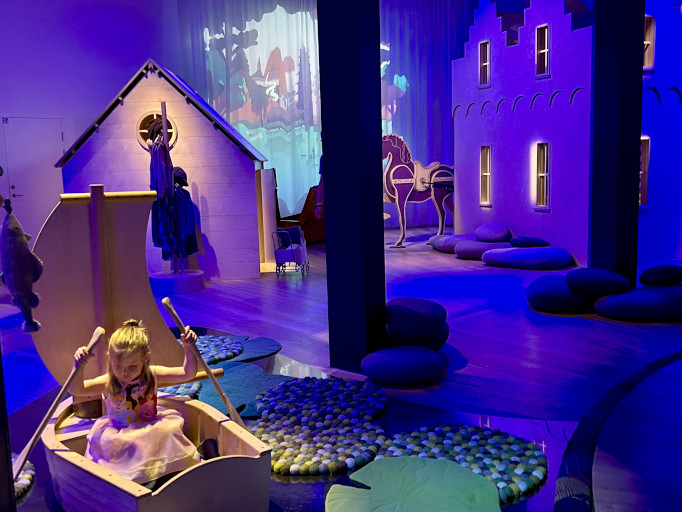
Andersen’s world came alive—letters, diaries, and artifacts transformed art, film, sculpture, and puppetry into an immersive experience. The exhibition traced his life (1805–1875) through letters, diaries, and artifacts. Beyond the 158 fairytales, Andersen wrote novels, plays, travelogues, and hundreds of poems. Twelve tales came to life in interactive installations. I laughed at my mirrored costumes in The Emperor’s New Clothes, then watched mermaids and drowned sailors drift in The Little Mermaid video. Downstairs, Fairy Tale Land let parents join kids in costumes, play with puppets, and explore miniature palaces.
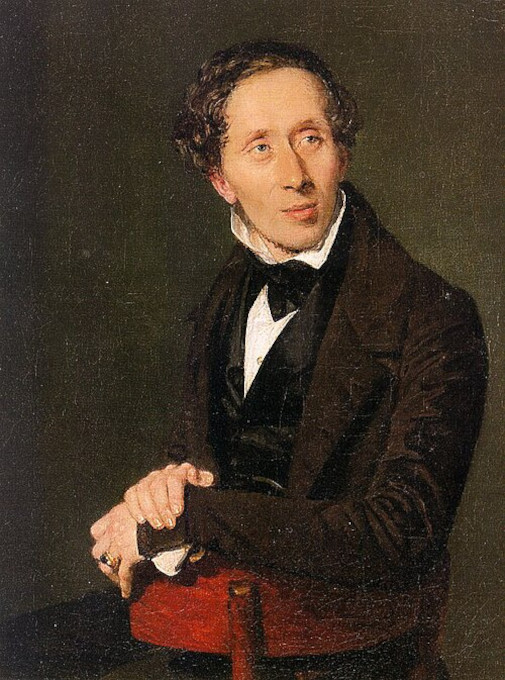
While Andersen’s tales continued to enchant readers worldwide, his personal life was marked by unrequited love and solitude. He found commercial success, but never lasting companionship. Biographers largely regard him as gay, though his passions seemed to have gone unfulfilled. In his diary dated 1837, “I am alone—alone! As I always will be…Day by day, I become more of a confirmed bachelor!”
Andersen remained unmarried, calling his stories “his children.” His struggles echoed the darker strains of his work—suffering, loneliness, social cruelty—such as the tragic fates of “The Little Mermaid” and “The Little Match Girl.”
In Andersen’s Footsteps
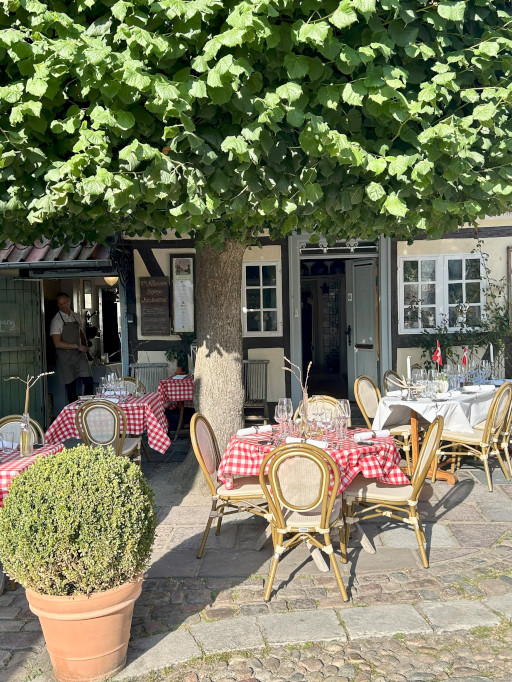
Staying longer was tempting, but hunger won. On one of Odense’s oldest streets, across from Andersen’s birthplace, I lunched at Restaurant Under Lindetræet (Under the Linden Tree). The restaurant occupies a well-preserved 18th-century building, with red-and-white checkered tablecloths shaded under the tree that gives the place its name. I enjoyed a four-course lunch: potato croquettes wrapped in bacon; lobster bisque; confit pork belly with green parsley sauce; and a strawberry porridge mixed with basil and cream.
Crossing the lane to the home where Andersen lived from age 2 to 14, I stepped into the small, half-timbered, three-room house open to the public. Carefully restored, it reflects the poverty he grew up in as the son of a cobbler and a washerwoman.
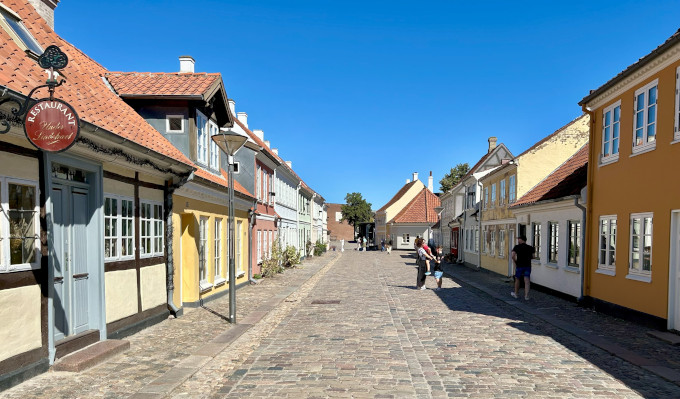
Then, with a guide, I took the 1.5-mile route called In The Footsteps of Hans Christian Andersen. This begun at Hans Jensen’s Stræde, the street where Andersen was born, once the poorest corner of the city. Narrow cobblestone lanes wound past 18th-century houses that looked much as they did when Andersen was a boy; painted pastel reds and yellows, their red-tiled roofs slanting like bonnets. The path dipped down to a river where his mother used to wash clothes, then crossed a wooden bridge to the Fairy Tale Garden, which featured a bronze statue of Andersen and sculptures based on his characters.
The Vikings
The next day, I journeyed back to the Viking Age with no abler docent than Kirstine Haase, head of research in archaeology, history, and conservation at Museum Odense. Odense, one of Denmark’s oldest cities, was named after the Norse god Odin. A bustling center for trade, farming, and exploration, it was a society of harsh extremes: savage in battle, yet a powerful kingdom for spreading ideas, technologies, and beliefs across Scandinavia, the British Isles, Europe, and even Iceland, Greenland, and Russia.
In the museum, Haase pointed out some of the artifacts discovered: a 9th-century iron sword hilt decorated with threads of copper; intricate silver brooches and bracelets, some ornamented with animal motifs; and iron axes and a wooden shovel likely used in the construction of the mighty ringed fortress, Nonnebakken, which once encircled the settlement of Odense.
On the way to Nonnebakken, Haase noted the square where Odense’s first wooden church, St. Alban, once stood. Here, King Canute (1042–1086) was killed before the altar. Nearby, in the 11th-century St. Canute’s Cathedral, his skeletal remains (and his brother’s) are laid in glass crypts. Pretty creepy to look at; I was more enthralled at a three-panel altarpiece depicting biblical scenes in intricate detail, a hallmark of Renaissance art. Commissioned in 1520 by Queen Christina, she appears at the base with her family.
Standing in front of a grassy slope, only a circular rampart and faint traces remained of the once massive Viking fortress. “Nonnebakken is unique,” said Haase, “because this is one of the very few remnants from the Viking Age.”
This was no ordinary settlement. Historical records showed that St. Alban flourished alongside the fortress, placing Odense at the crossroads of royal authority and the church—two forces that would shape the medieval world. The Viking Age ended in 1066 with the Norman Conquest, and the echoes of the swords and shields of fierce Viking warriors, now farmers and traders, faded into history.
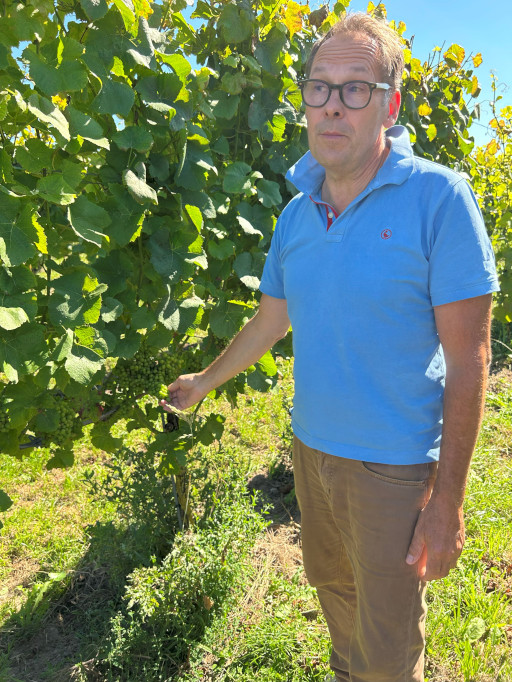
By Stokkebye, an award-winning leader in organic wines, sat a half-hour east of Odense, past rural villages and rolling green hills. “It’s always been my dream to produce my own wine,” said Jacob Stokkebye, co-founder with his wife, Helle.
It wasn’t easy. Walking in the 18.5-acre vineyard, Stokkebye recounted years of failure. “I started in 2009. For the first three years, we poured the wine down the sink—the grapes were picked too early.’’ Today, the winery produces up to 20,000 bottles of sparkling and white wines annually, many served in Michelin-starred restaurants across Europe.
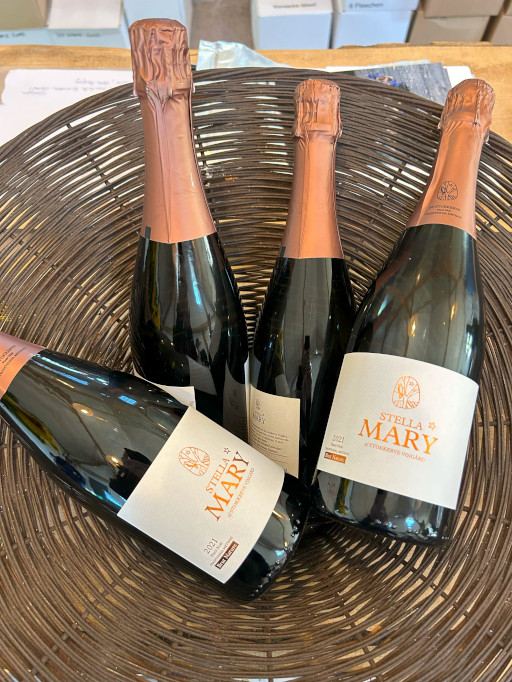
In the tasting room, Stokkebye poured Liva 2023, a crisp white, paired with sturgeon caviar they produce from Schleswig-Holstein. A bump of Beluga landed on the back of my hand. “The warmth of the skin gently releases and accentuates the flavors,” he said. It beat licking salt before tequila shots.
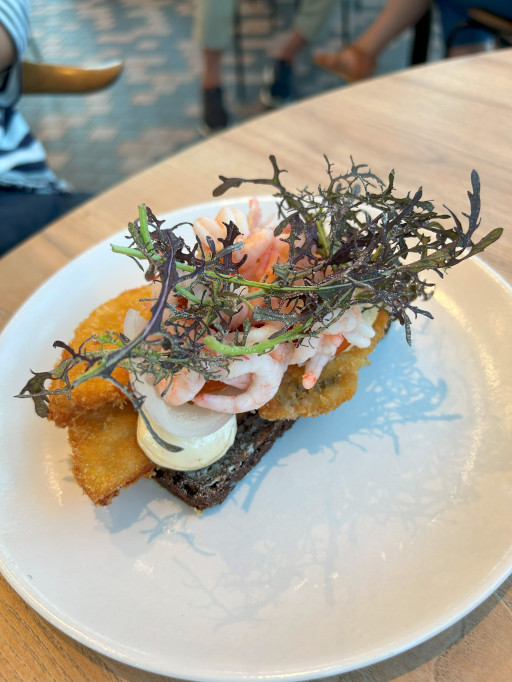
Back in Odense, I sat at an outdoor café for people-watching and ordered the classic smørrebrød—an open-faced sandwich of buttered rye topped with herring, salmon, shrimp, roast beef, eggs, or pickles, eaten with a knife and fork. The rest of the day was spent exploring more of the city, then a seafood dinner at the Restaurant Nordatlanten, with panoramic views of the harbor.
The Castle Circuit
Funen has 123 castles and manors, and I was ready to mingle with royalty. First stop was Egeskov, Europe’s oldest and best-preserved Renaissance water castle. Built in 1554, its moats and lake once served as defenses—today, they created a fairytale setting straight out of history. I was met at the drawbridge by the owners, Count Michael Preben Ahlefeldt-Laurvig-Bille and his wife Princess Alexandra of Sayn-Wittgenstein-Berleburg.
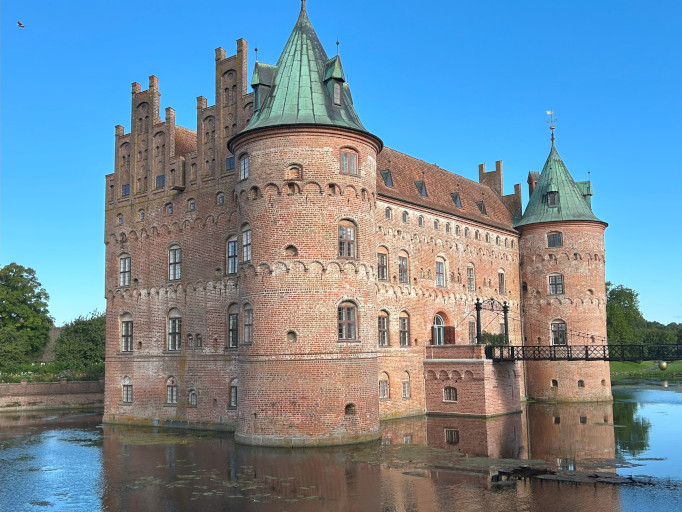
While shaking hands, Count Michael quipped, “It depends who you’re born into,” noticing the impressive look on my face at their red-brick residence in the middle of the lake. This is what you’d expect a castle to be: a fortified stronghold and a noble residence out of the 16th century when civil wars lasted for years, kings ruled, rural peasantry grumbled about taxes, knights in shining armor roamed, and Lutheranism was muscling its way to become the state religion.
Count Michael, 9th generation at Egeskov, has run the estate since 1992, developing it as a cultural and tourism site, with his wife, Princess Alexandra, cousin of King Frederik of Denmark.
Over coffee and a gooey Danish pastry called brunsviger in the main living room—adorned with antiques, artwork, and objects collected over centuries—Count Michael explained that Egeskov was not just the family’s home, “but also a place we love to share with visitors from around the world.”
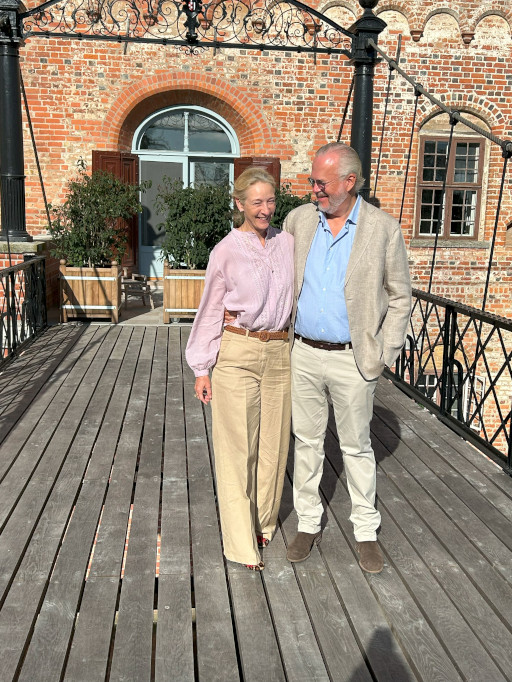
Parts of the castle are open to the public, including a large playpark for kids, hundreds of collected vintage cars and motorcycles, and the 50-acre gardens that once enchanted Andersen.
The castle circuit continued with a drive over Svendborgsund Bridge, spanning part of the Baltic Sea, to the southern island of Tåsinge and Valdemar’s Castle. I’m greeted by Baroness Louise Iuel-Brockdorff Albinus, the 11th generation to live here. As royalty goes, she couldn’t have been more approachable.
Taking my arm, she told me to call her Louise, and talked about her art history studies at the University of Virginia. We discovered a shared interest in midcentury Manhattan painters, and she went on to speak enthusiastically about transforming her passion for art into an international center for contemporary artists.
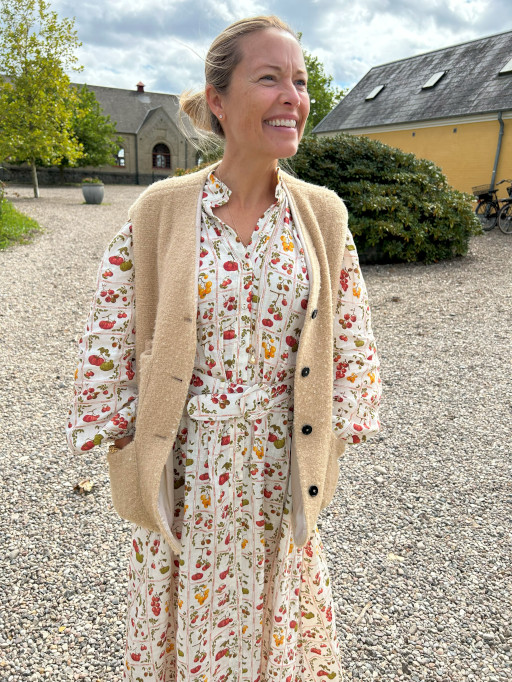
As we walked through large empty rooms, some with walls adorned with tapestries and historic paintings, she explained that following a family dispute, her older sister removed and sold all the furniture. But she and her husband saw this as a great opportunity.
“I knew that the castle and the outer buildings could be used for something extraordinary. The hope is this will be an inspiring living campus, where all artists—painters, sculptures, writers, musicians, photographers, filmmakers—can grow and indulge in their creativity, while being nurtured and housed in a historical setting.”
There’s already one artist-in-residence -- plus paintings, sculpture, and artworks by Jiří Georg Dokoupil, Rong Bao, and Pernille With Madsen.
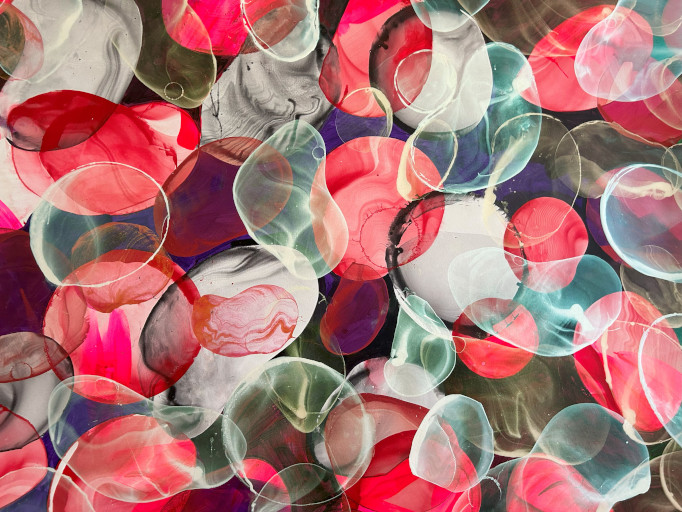
Upon leaving, we hugged, and Louise said I was welcome back anytime as a writer-in-residence. Catching the M/S Helge, a ferry dating back to 1924, to Funen’s harbor city, Svendborg, I imagined writing my long-overdue novel in such a perfect place.
Reality hit upon arrival: Instead of driving, I faced a 21-mile cycling ride. Electric-assisted, sure—but I hadn’t pedaled since my candy-apple-red Schwinn days. My guide, Mette Mathiasen, with the tourism organization Destination Fyn, playfully persuaded me this would be fun. After my wobbly start, we set off.
She was right. On mostly level country roads, we glided past apple orchards, corn and wheat fields, lazy cows, and sleepy sheep; through shadowy forests and small villages. Later, I learned this was a short slice of a 410-mile castle route the organization arranges.
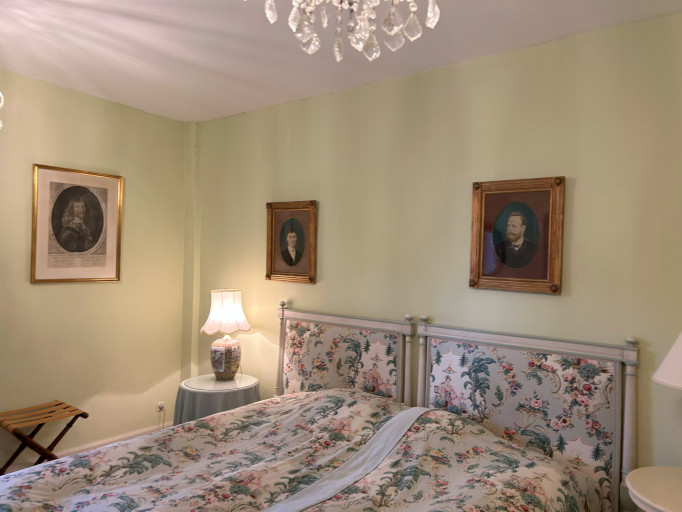
Our destination was medieval Broholm Castle, where guests can stay in one of the 19 rooms. Crossing the moat, how apropos it was for a fairytale ending to spend my last night in Funen in the same place Andersen was a frequent guest, finding inspiration for his 1837 novel, Only a Fiddler.
In a comfortable bed, I had no choice but to dream of the Little Mermaid, The Princess and the Pea, and the Snow Queen. But feeling happy and content as I did, I did not dream of The Ugly Duckling.
Author Bio:
Paul Ehrlich, a Highbrow Magazine contributor, writes about under-the-radar destinations, hot destinations, food, culture, and cruises for numerous publications. Returning to New York City after more than 25 years as a journalist and editor in Asia—he missed the good delis—the journey took him from Bhutan to Brazil, South Korea to South Africa.
For Highbrow Magazine
Photo Credits: Paul Ehrlich; Depositphotos.com