

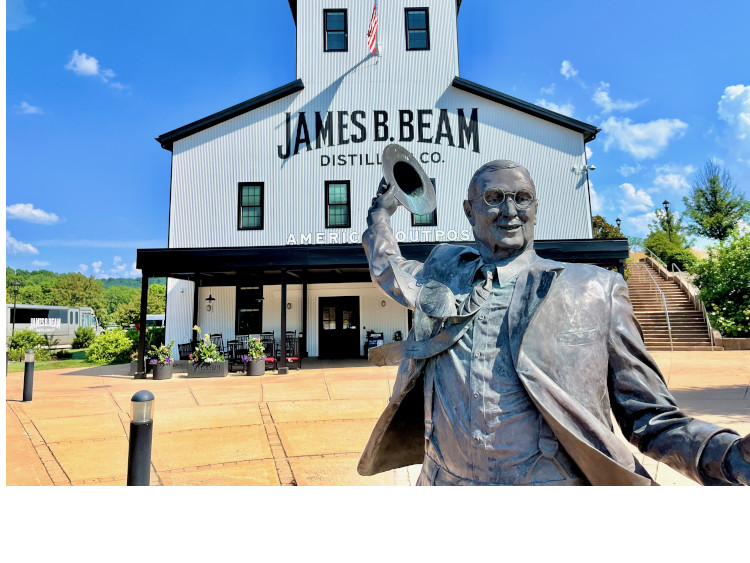
Highbrow Magazine contributing writer Mark Orwoll heads to the capital of bourbon. Read his article about Bardstown, Kentucky, and watch his video below.
Quick quiz: Where is this place?
Day-trippers leave the big city for the hilly green countryside to enjoy tasting sessions in rustic-chic sampling rooms, tapas at inventive restaurants, vintage tourist trains that serve drinks and dinner amid the pastoral panorama, and history that goes back more than 200 years.
Surprise: The tasting rooms don’t pour Chards or Cabs. The dinner tabs don’t require a home equity loan. And tour buses don’t jam the quaint lanes. At least, not yet. This isn’t Napa Valley, though that’s what it sounds like.
Welcome to Bardstown, Kentucky, population 13,567, the self-proclaimed Bourbon Capital of the World, where the Mayberry vibe of the turn-of-the-century downtown, the lowkey family atmosphere of the distilleries, and the omnipresence of fried chicken and grits on most menus may be facing an existential change.
My Old Kentucky Home
“The sun shines bright on the old Kentucky home…” Few songs capture the fiction of the antebellum South with more sentimentality. Songwriter Stephen Foster wrote that line in 1852 after visiting a plantation house called Federal Hill in the north-central part of the state. Today, the grounds of the courtly residence form My Old Kentucky Home State Park. Stephen Foster Avenue, the two-lane blacktop running past the manor, leads directly to Bardstown less than a mile away.
Walk for five minutes around the town’s historic center and you’ll think you’re Down South, even though Kentucky, once a slave state, sided with the Union in the Civil War. The tourist board lauds the town’s Dixie flair: “Where bourbon history meets Southern hospitality.” Southern Living magazine named it one of the best small towns in the South in 2023. And rest assured, there’s no dearth of y’alls in Bardstown.
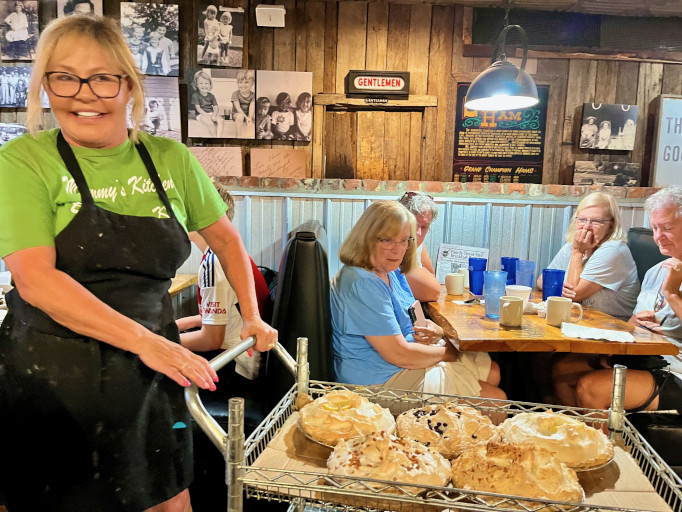
As if to confirm the town’s roots below the Mason-Dixon Line, Mammy’s Kitchen serves a killer Gravel Switch Fried Bologna and Cheese Omelet with grits, biscuits, and sausage gravy. Over at the Scout & Scholar, you’ll smell the fried chicken and Tater Tots from the street even before you enter.
The Historic District has some 200 buildings on the National Register of Historic Places (built mostly in the 1700s and 1800s) and was voted the Most Beautiful Small Town in America in a Rand McNally/USA Today competition in 2012.
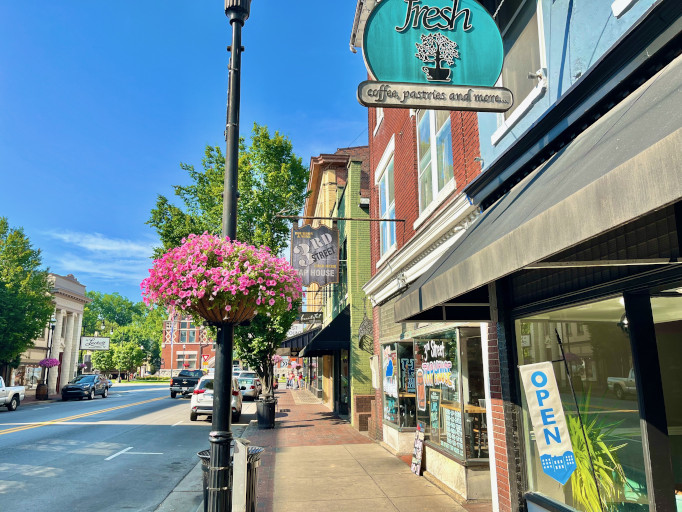
The sidewalk pace on North Third Street (inexplicably, the town’s main street) is, befittingly, slightly slower than nice ’n’ easy. Strangers will greet you; restaurant smells will entice you; and the aroma of Ol’ Bourbon Barrel tapers at the Making Good Scentz candles hop will make you float in the air like Pepe Le Pew mistakenly fixating on a pussycat. Pick up a Bardstown sweatshirt at the Lamplighter General Store or have a cocktail on Court Square at the 1779 Talbott Tavern, “home of the world’s oldest bourbon bar.” You can even take your Kentucky mule or mint julep in a go-cup to sip while ambling around the downtown streets.
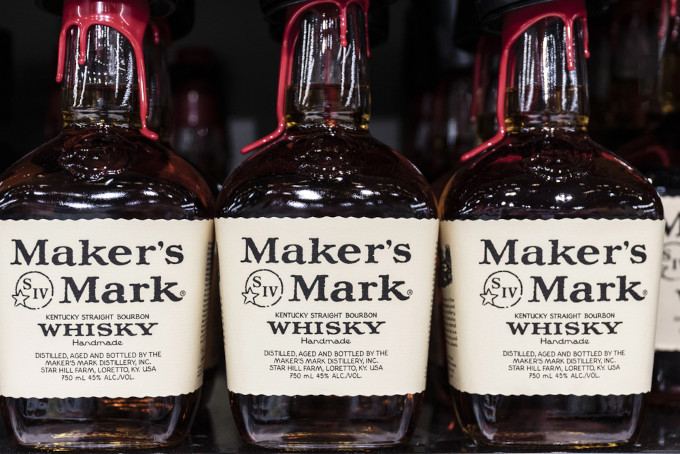
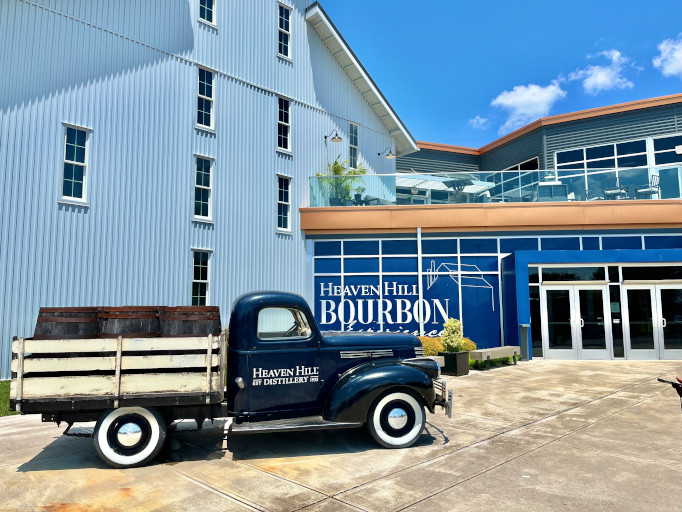
To gild the lily, the charming settlement is the centerpiece of the Bourbon Trail. Eleven major distilleries inhabit the greater Bardstown area, including such giants as Jim Beam, Maker’s Mark, and Heaven Hill, most of them open to the public for tours and tastings.
Historic sites, hip restaurants, and distillery tasting rooms, all surrounded by the undulating, emerald slopes of central Kentucky’s Bluegrass Region and just a short drive from Louisville—you don’t need to delve much deeper to figure out why the tourism count is rising each year. Or to see why that might eventually present a problem.
(Photo Credit: Depositphotos.com)
What Exactly Is Bourbon, Anyway?
As if they didn’t have more important concerns in the ‘60s (civil rights, Russian nukes, widespread poverty, and the mounting war in Vietnam), Congress on May 4, 1964, passed a resolution proclaiming bourbon to be “America’s Native Spirit.” But with such an accolade comes responsibilities.
If you want to make bourbon, you’re obliged to follow six rules enforced by the U.S. Alcohol and Tobacco Tax and Trade Bureau under the Federal Alcohol Administration Act of 1935. Bourbon is dead serious business here. Mess with these rules, bank on a heap of misery.
Chief among the regulations is the ingredients: Distillers generally use nothing more than corn, rye, wheat, malted barley, yeast, and water. By law, the mashbill (the grain mix) must contain at least 51 percent corn. The final mixture is the distiller’s choice. Most bourbons add rye but not wheat. “Wheated” bourbons, on the other hand, may contain some rye (thus, a four-grain bourbon) or, usually, none at all.
Bourbon must be aged in charred, new oak containers for a minimum of two years. The longer the aging, the smoother the result. Twelve-year-old bourbon? Say, “Aaahhh…”
Another rule: Bourbon can be made only in the USA. Otherwise, it can’t be called bourbon, much in the same way that sparkling wines made outside the French Champagne region can’t be called by that name. Spend enough time in Bardstown, though, and you’ll assume bourbon can be made in Ol’ Kentuck and nowhere else. Not so.
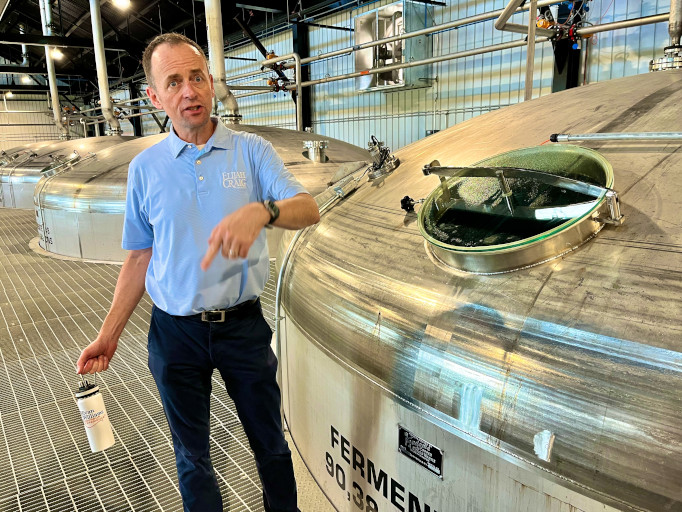
The grains are crushed, mixed with water in huge vats, and heated. Yeast is added after cooling to begin fermentation (the distilleries’ proprietary yeast strains are under lock and key, and often generations old), resulting in what is called a beer or a wash of 10-15 percent alcohol.
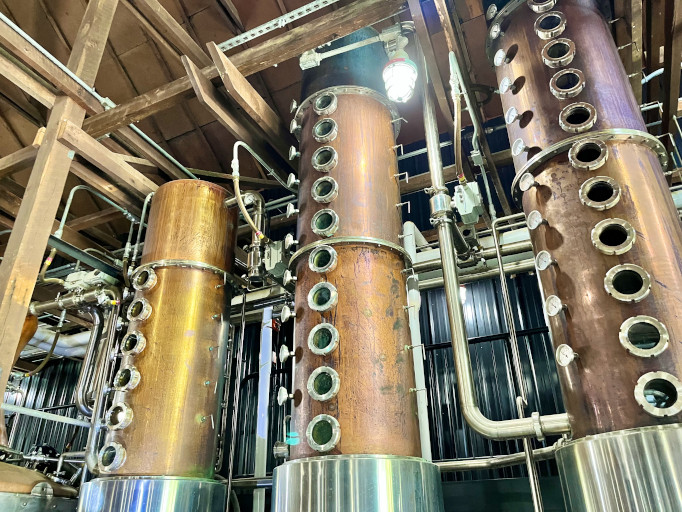
The wash goes into stills—there are column stills, pot stills, alembic stills, thumpers—where it’s heated enough to boil the alcohol but not the water. The alcohol vapor rises and runs through a coil where it drips out as pure grain alcohol at around 160 proof (80 percent alcohol). That’s white lightning, friend—corn liquor, mountain dew, hillbilly pop, just like the moonshiners illicitly cooked in the hills and hollers during Prohibition.
To mellow the taste, the liquor is aged in the mandatory charred white oak, which lends color to the liquid and brings in natural flavors like vanilla, caramel, spice, and smoke. Water is added after aging to achieve the desired alcohol level. But even after all that smoothing, you may still feel the notorious Kentucky Burn, a fiery sensation in the throat and chest. The best way to avoid the Kentucky Burn, according to several distillers, is to blow out before you swallow, which reduces the ethanol that causes the burn.
Doesn’t matter. You’ll still feel the burn.
Change Comes to Bardstown
Most of the Kentucky distilleries present a Methuselah-like appearance—and many of them were built some 90 years ago, after Prohibition was repealed. But not all of them.
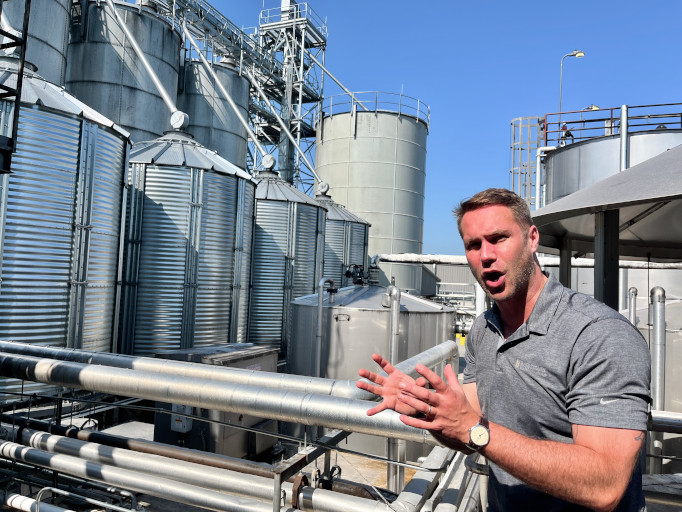
Take the Bardstown Bourbon Company, for instance, which launched in 2016 and is already the sixth-largest distillery in the United States. The interior of the new distillery is light, airy, post-industrial, with walls of windows overlooking vast fields of well-tended grass. The tone is assertively contemporary, upscale.
“This distillery is a modern take on bourbon,” said master blender Dan Callaway, an energetic, telegenic bourbon evangelist who has been with the company since the beginning. “We’re the most technically advanced distillery in the country. We’re pulling back the curtain on how we make bourbon. We show you exactly how it’s made. It’s all about transparency.”
Callaway says they like to experiment. “We’ve made bourbon out of popcorn,” he said. “We do all sorts of crazy things.” One of those crazy things includes using Indian whiskey. “We’re doing something special here,” Callaway continued. “We’re experimenting with ‘zebra’ barrels [made with alternating staves of cherry and oak] for our rye whiskeys.”
From the upper level of Bardstown Bourbon, one can almost see the facilities of Heaven Hill and Lux Row, two of the respected distilleries on the Bourbon Trail. “This is what Kentucky bourbon is all about,” said Callaway. “We’re surrounded by the best distilleries in the country, right here.”
In one of the distillery’s rickhouses, where the bourbons age in barrels for six, eight, 12 years or more, Callaway said, “What you smell is new American oak. That’s where bourbon gets its beautiful color. It’s an all-natural color. You can’t use caramel or any other coloring.”
The atmosphere in the rickhouse is medieval, with slivers of sunlight slipping through cracks in the cladding, a cathedralesque, echoing silence, and the haunting vision of thousands upon thousands of oak barrels stacked row upon row in the vast warehouse-like space. For some reason, visitors tend to whisper in the rickhouse. As if in awe. As if in church.
Currently, Bardstown Bourbon Company has more than half a million barrels of bourbon at various stages of aging.
Back in the distillery’s visitor center, bourbons dating from 1892 line the shelves of the Vintage Bourbon Library. Well-dressed 20-somethings sample bourbons at the bar off the lobby while others order meals from the restaurant (Kentucky poutine, country-ham carbonara, “boozy milkshakes”) or wait their turn for one of eight pre-booked distillery “experiences” (ranging from $24 to $95 per person).
You won’t be shocked to learn that the distillery bills itself as “the first Napa Valley-style destination on the Kentucky Bourbon Trail.”
A Dining (and Drinking) Renaissance on the Bourbon Trail
Napa Valley has attracted such stellar chef-restaurateurs as Charlie Palmer, Thomas Keller, Christopher Kostow, and other Michelin worthies, but because of arcane laws, Kentucky distilleries weren’t allowed to have restaurants until 2016. Since then, the Bourbon Trail has lured a crop of innovative young chefs, though admittedly not yet at the same award-heavy caliber as the Napa-Sonoma crowd.
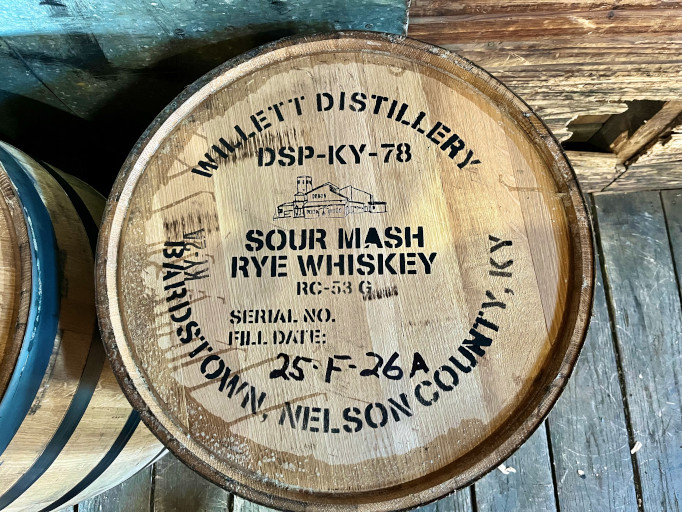
Nonetheless, lunch at the Bar at Willett (opened in 2019) at the Willett Distillery is memorable. Executive chef John Sleasman modestly proclaims that his menu is built on “artistry without pretension,” but his seasonal, small-plate dishes manage to surprise, delight, and (best of all) nourish his customers: Think honey-chili-tahini carrots to start, rock-shrimp and fava-bean cavatelli for a main course, and passion-fruit Basque cheesecake to finish. Perhaps order a three-shot flight of Willett Estate bourbons to keep things interesting.
The 200-year-old Jim Beam Distillery, formally known as the James B. Beam Distilling Co., is also branching out. Jim Beam is the best-selling bourbon on Earth. It has an extensive family, too—uncles, cousins, grandparents—spread through the Bluegrass region. Beams seem to be coming out of the woodwork all over Bardstown and environs. “The Beams are like the royal family of bourbon,” said Norma Smith, the “bourbon butler” at the recently opened Trail Hotel in Bardstown.
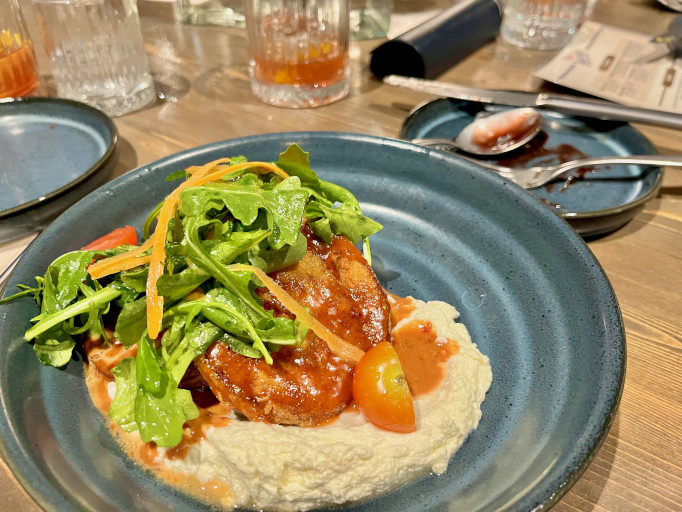
The Beams opened the barn-like Kitchen Table restaurant on their vast, picturesque campus in 2021. The menu says, in a nutshell, “We know what you like, but we’re prepared to delight you, too.” You may find venison poppers, smoked-pork empanadas, smothered fried catfish, and vanilla-apple pudding. Or maybe not. The menu shifts constantly.
Meantime, the crowd around the Kitchen Table’s bar is just short of raucous, happy to be there, and their spirit imbues the restaurant with a young and lively atmosphere.
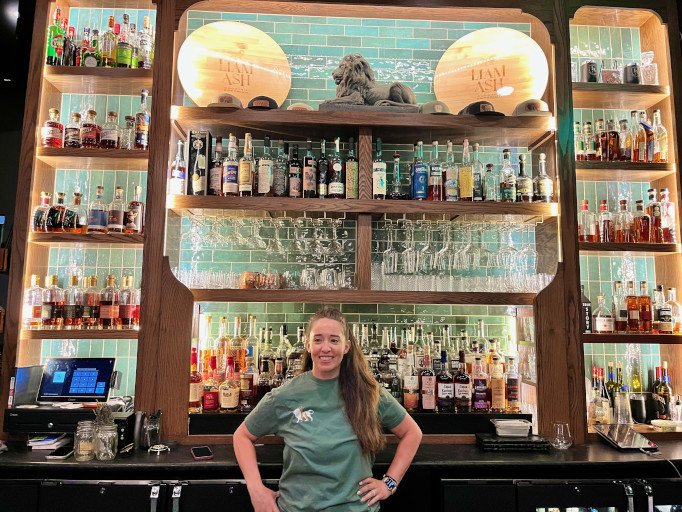
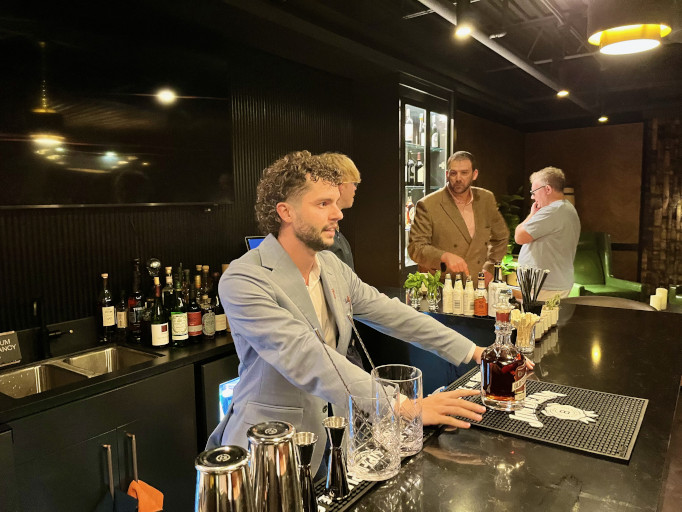
Back in Bardstown, Liam Ash, a sophisticated downtown cocktail bar, pours some of Kentucky’s finest bourbons for night owls. Whitney Rye runs bourbon-tasting programs at the Parlor Room. And the Bourbon Capital Alliance, a nonprofit dedicated to “building the comprehensive bourbon experience in and around Bardstown,” offers educational bourbon programs in the third-floor Brindiamo Penthouse of the historic Spalding Hall manor, just above the Oscar Getz Museum of Bourbon History.
Better grab ahold of something sturdy and take a gulp of air before you drown, because Bardstown is positively swimming in bourbon.
The Napa Effect
The numbers don’t lie. In 2022, visitors to the Kentucky Bourbon Trail totaled 2.1 million, a 38 percent increase over 2019. They set another record in 2024 with 2.7 million arrivals. That number keeps rising. Visitor spending in Bardstown and surrounding Nelson County increased by nearly 30 percent, to $91 million, from 2021 to 2024.
Why is this happening? The 2016 law that allowed onsite restaurants and gift-shop bottle sales certainly helped. Then a Kentucky law passed in 2022 allowed distilleries to operate off-premises (or “satellite”) tasting rooms and to sell bottles and offer complimentary samples at farmers markets and fairs. “This bill will continue to transform the Kentucky Bourbon Trail experience into a major tourism destination like Napa Valley and Sonoma in California,” Kentucky Distillers’ Association President Eric Gregory said at the time.
“We’re thrilled to hear people comparing Bardstown’s evolution to what’s happened in Napa,” said Hannah Medley, marketing director of Visit Bardstown. “Visit Bardstown sees this ‘Napa-fication’ as a badge of honor—it reflects years of collaboration between our distilleries, chefs, hoteliers, and small-business owners to raise the bar on quality and guest experience.”
Many of the distillers feel the same way.
“It’s been amazing to see hospitality take center stage on the Bourbon Trail,” said Dan Callaway of Bardstown Bourbon. “From distillery experiences, to restaurants and bars, to hotels, brands are increasing their awareness through world-class experiences for the consumer.”
To top it off, the Bourbon Capital Alliance has teamed with the Napa Valley Wine Academy for intensive spirits courses for anyone thinking of entering the industry.
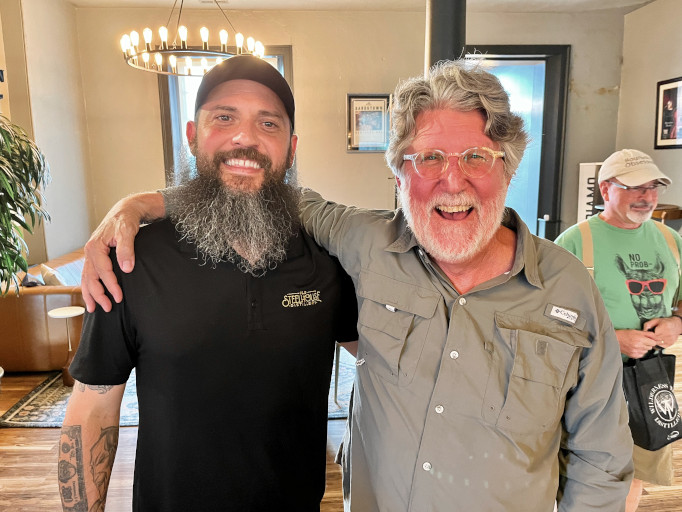
Becca Christensen, marketing director of Willett Distillery, acknowledges the benefits of the increased Napa-like popularity of the Bourbon Trail, but tries to keep it in perspective.
“It’s not bad,” she said, “and it helps people learn more about bourbon. But for us here, we focus first on the quality of the bourbon. Then the hospitality comes in. Even at that, we cap our tours at 20 people per tour and just five tours a day.”
Sam Lacy of the Bourbon Capital Alliance is in the thick of the issue: Napa-fication, good or bad?
“To me,” said Lacy, “when we talk about the Napa-fication of bourbon here in Kentucky, what we're referring to is a full embrace and elevation of the consumer experience. Bourbon tourism is relatively young and still evolving. It wasn’t even 10 years ago that laws were changed in Kentucky to allow distilleries to operate a restaurant and bar on site. It was just in 2022 that laws were changed to allow for barrel-aged and batched cocktails to be sold at distilleries. The Napa-fication of bourbon is continuing to build that premium visitor experience that bourbon consumers desire, much like Napa did before us.”
The Trail Hotel Is the Cherry on Top
An impediment to the growth of the Bourbon Trail’s tourism in Bardstown, until now, was the lack of a high-quality hotel. Bourbon fans would base themselves in Louisville, visit Bardstown and nearby distilleries for the day, then return to their hotel 40 miles away that same afternoon. That’s how the 95-room Trail Hotel (named for the Bourbon Trail) came to be in May 2025.
The hotel started life as a Holiday Inn in 1970. Back in the day, if you were looking for a place to put up the relatives, celebrate a 50th wedding anniversary, or host the annual Elks banquet, the Holiday Inn was high on your list. Because of its sleek modernist architecture and its significance to the Bardstown community, the hotel was added to the National Register of Historic Places in 2023.
But the place was tired-looking. The food was meh. The hotel’s momentum had stalled.
The Trail Hotel, on the other hand, portends to be a game-changer for Bardstown. After an 18-month top-to-bottom renovation, the “bourbon-centric” property has one of the largest hot tubs in the state of Kentucky, a Rejuvenation Room featuring cryotherapy and IV drips, a midcentury attitude just right for millennial travelers, a bourbon speakeasy entered through a secret panel, and an ambitious restaurant, Oak & Ember. Visitors no longer have to take a deep breath and shudder at booking a Holiday Inn or choosing from a variety of unknown guesthouses. Bardstown now has a sleek, even hip, full-service hotel.
Because the renovated hotel is so new, it’s too early to know how it might impact the number of visitors to the Bourbon Trail.
Thankfully, at the moment, the dust kicked up by the increased numbers of visitors is thin enough. You can still get a reservation at the Talbott Tavern, a room at the Trail Hotel, and a spot on the 2 o’clock Portfolio Tasting at Jim Beam. But next year? Who knows?
Suggestion: Make your travel plans early.
Author Bio:
Mark Orwoll, a Highbrow Magazine contributor, writes about travel, food, and drink for numerous outlets. He is the author of four books, the former International Editor of Travel + Leisure, and, unaccountably, a Kentucky Colonel. Ask him how that happened…
For Highbrow Magazine