


(Photo Credit: Depositphotos.com)
For both audiences and artists, one great song can change lives. Whether moving listeners or etching themselves into the fabric of pop culture, single songs have changed history.
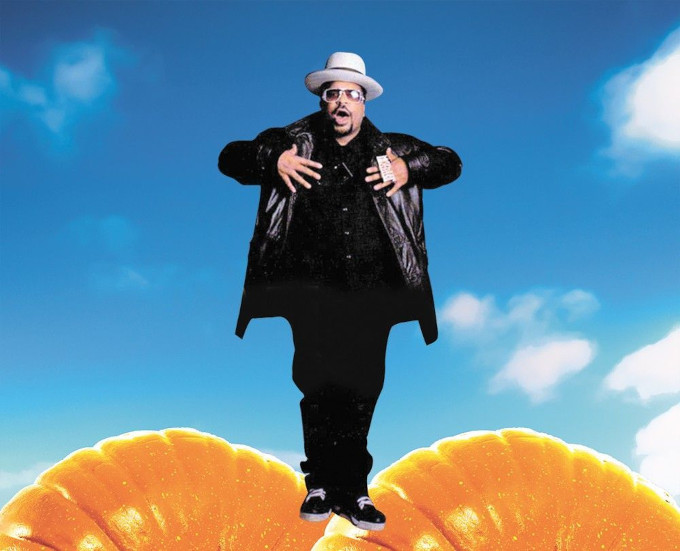
One-hit-wonders like a-ha’s Take On Me and Sir Mix Alot’s Baby Got Back are so ubiquitous the artists are recognizable despite few later accolades.
Success on such a scale seems like it would set someone for life. Though with how opaque music monetization is and the shifting ways we consume music, the truth behind that feeling is flimsy.
Prior to streaming, the greatest method of distributing music was record labels which held a huge influence in the industry, signing and developing artists over years.
Given how easy it has become to make music and how streaming royalties work, it's more logical to pick up an artist who already has a following rather than build a promising one.
The way streaming is monetized makes this even clearer. Spotify gives between .003 and .005 cents per stream. Meaning a million streams can bring in more than $3,000. That's a lot of money if you’re bringing in millions of streams a day, but substantially less if you’re bringing in a million a month. Depending on a record contract, those profits may need to be split between several parties.
This is why touring, merch, and licensing music out for movies, TV, film, videogames and advertisements are the most profitable revenue streams for artists.
There is something to be said for the benefits of diminishing the presence of record companies. Removing them from the creative process can make music more authentic and success more democratic.
Yet the most profitable revenue streams for artists aren’t necessarily tied to the music itself as to the fame and cultural cachet associated with it; thus, incredible popularity is a prerequisite to almost any financial success.

(Photo Credit: Depositphotos.com)
You can have thousands of listeners and even tour several countries and still not be raking in money. In an article for The Nation, independent artist Carsie Blanton discusses the difficulties of working as a musician.
In her article, Blanton says merchandise “makes a profit, eventually,” but is “...more like a revolving loan.” Blanton also highlights how expensive it is to be a musician.
When you consider the money that goes back into running a tour, buying merchandise and advertising, many of these revenue streams may not enable a smaller artist to break even.
It’s easy to argue that if an artist doesn’t have the listeners to “make it” as a working musician, perhaps they shouldn’t pursue it. Yet Carsie and musicians of her caliber make incredible music that deserves to be heard.

(Photo Credit: Depositphotos.com)
Even massive artists took years to get to where they are. Chappell Roan seems to have ascended to the top of the world overnight, yet her career was almost a decade in the making.
Not to mention how intensive the work to attain that kind of success is. One independent artist, Alexander Gumuchian, known by the stage name bbno$ has over 13 million listeners on Spotify and claimed in a billboard interview that he is now“...essentially rich forever.” To get there, he wrote two songs a day and released one a week while in college.
Streaming has slain the record label as gatekeeper, but brought out a worse one, the algorithm. If an audience is needed to make any money, the best way to build one is over social media.
This is where the low barrier to entry of music creation starts to cause problems. Anyone, anywhere being able to create and distribute music is a great thing for people who want to make art, but it leaves a big pool of competition for those trying to pursue the field for a living.
Spotify reports 60,000 uploads to the service a day, though in terms of tracks likely competing for user attention, 23,000 is more accurate. This is still a ton of content.
(Photo Credit: Depositphotos.com)
Then consider the other platforms for building an audience, Instagram, TikTok, Youtube, on which you are not only competing with music content but content of all forms.
This is all before the most spine-chilling thought, AI. The Velvet Sundown, a “band” which now has over 700,000 monthly listeners on Spotify appears to be completely AI-generated. This brings the “skill” barrier, and soul present in music down to zero.
It’s worth comparing this to the monthly listeners of the smaller artists you listen to. I was appalled to see that a sample of the rock artists I think are making interesting new rock music were well beneath these numbers.
(Photo Credit: Depositphotos.com)
All numbers are sourced from Spotify and rounded to nearest thousand as of writing:
- FIDLAR - 481,000 monthly listeners
- PUP - 399,000
- Dinosaur Pile-Up - 340,000
- Liily - 79,000
AI isn’t really a genie that can be put back in the bottle, and the question of accessible music creation tools could discourage some of these same smaller artists who are creating great work.
This proposes a difficult problem to solve. A starting point would be to place a greater monetary value on music. Apple Music gives artists .008 cents per stream, which nets more like 8 thousand dollars per million streams.
Apple Music, while the highest-paying of all the apps, only makes up about 30% of the market share. Spotify has 36% of the streaming market.

(Justin Higuchi, Wikipedia Commons)

Naturally, if you begin to pay artists, more companies may want to offset that cost by increasing subscription prices. It is noteworthy that Spotify premium accounts are actually more expensive than Apple Music accounts by a dollar. Though they presumably pay less to artists since they offer free accounts as a means of increasing their market share.
Perhaps artists should make even more than what Apple offers, but at least standardizing Apple’s rate across all streaming platforms would supplement growth for the smallest in an expensive and difficult industry.
Streaming has made music more accessible to audiences than ever with a $10 fee opening you up to near the entirety of humankind’s discography. It’s time we start paying for what a truly awe-inspiring feat that is.
Author Bio:
Garrett Hartman is a contributing writer at Highbrow Magazine.
For Highbrow Magazine