

(Photo Credit: Depositphotos.com)
There’s something queer about language.
Not just in the sense of being descriptive. In fact, the idea that language is supposed to simply describe, to point at something fixed and say “this is what that is” is too unsophisticated a notion. Language lends conviction, yes, but it also resists that kind of certainty. Sure, sometimes you do need a term for your platonic life partner who shares your dental insurance and knows which shirt you wore to your ex’s wedding, and for that the term “friend” may suffice for many. But language is meant to be an architecture. An entire structure designed to be bent, styled to be absurd with our intention of it. And with this architecture, queer folks throughout history haven’t just named things, we have built worlds out of syllables and subtext, of nicknames and inside jokes and beautiful, stubborn re-phrasings.
Because when the usual scripts don’t work, when “spouse” feels deficient and “friend” feels criminally inadequate, queer people invent words that feel more honest and more purposeful, softer and sharper. We bend grammar until it curls like a bicep. We make pronouns into spells and call each other names that are equal parts joke, prayer, and code.
That’s queer language. One you can’t find in Merriam-Webster but will recognize instantly if you’ve ever been the only queer person at your family reunion, or answered to “slut” with affection than your given name. It’s a language of words we use to talk about love and longing and kinship when the dictionary fails us and how, in doing so, we carve out a space to exist not just visibly, but vividly.
There’s a long and glittering history of queer people inventing ways to say what couldn’t safely be said. Before we had the Own Voices hashtag, before the headless Grindr torsos, before we could wear rainbow flag pins or put “they/them” in our bios, language had to duck and swerve. It had to hide in plain sight.
In 1950s Great Britain, gay men spoke in a dazzling pattern of campy, coded slang known as Polari, an argot cobbled together from Italian, Romani, Cockney rhyming slang, theater-speak, and just enough cheek to raise some eyebrows. You didn’t cruise, you vada’d the lallies; that is, you looked at the legs. You didn’t kiss, you might trolley your eek, meaning move your face in for some action. And if someone was fantabulosa, you knew you were in the presence of true fabulosity. To outsiders, it sounded like nonsense. To insiders, it was survival with a side of drama. Polari turned danger into theater and shame into wit, it was a secret handshake in full voice.
(Photo Credit: Depositphotos.com)
Polari was never just about evading detection. It was also about creating a world where queer people could recognize themselves. When society insisted your love was unspeakable, you gave it a name so delightfully flamboyant that it sang. It’s the same impulse that led to color-coded bandanas in back pockets, sly references to Judy Garland, and elaborate systems of euphemism that let you ask if someone was “family” without ever saying the word gay.
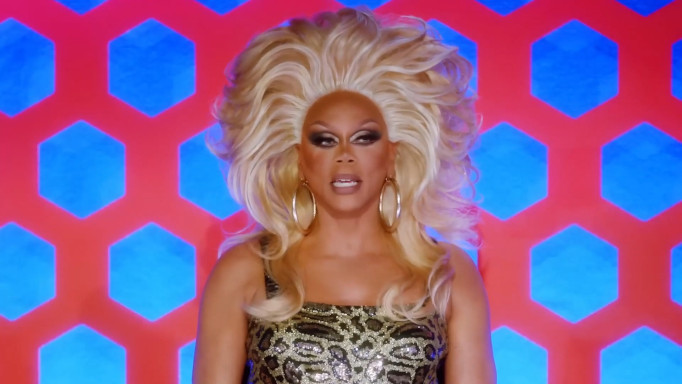
And the fingerprints of Polari are still all over the way we speak today, especially in queer pop culture. You can hear it in the campy, over-the-top exuberance of RuPaul’s Drag Race, which borrows directly from that same linguistic lineage. Catchphrases like “You better werk,” “Reading is fundamental,” and “Sashay away” might sound like modern internet-speak, but they carry echoes of Polari’s dramatic flair and theatrical code-switching. Even “drag” itself, as a term for dressing in gendered performance, could have murky ties to Polari and pre-Polari queer slang, thought to derive from the phrase “dressed resembling a girl” (which is likely just folk etymology, but it’s such a delicious notion to not mention).
What Polari and its counterparts show us is that queer language has always been more than slang. It’s a full-on technology of survival, a way to create kinship where the state refused, to name joys that society wouldn’t acknowledge, and to tell the truth without getting caught. Only in flamboyant, dramatic fashion. Hey, even when we didn’t have rights, at least we had style. And style, as it turns out, is its own syntax.
Queer people have always bent language to our will; not just the vocabulary, but the rhythm, the mood of it. Linguists have an actual term for this: lavender linguistics. It’s the study of how LGBTQ+ folks—sometimes unconsciously, often delightfully—use language differently, whether to signal identity, build intimacy, or just make things a little more bearable.
This linguistic structure isn’t just about saying “Yaaas queen” in a group chat (though, yes, that counts). It’s about how something is said: the pitch, the emphasis, the deliberate pause for drama, the uptalk that turns a statement into a challenge. It’s the drag queen reading a contestant to filth with a smile, or the gentle lilt that creeps into your voice when you’re around someone who gets you, really gets you. Linguistic studies have found patterns in everything from intonation to syntax. A queer cadence, if you will, one that shifts depending on who’s listening and whether it’s safe to be heard.
For instance, researchers have noted that some gay men (though, of course, not universally) are more likely to use rising pitch contours, breathier vocal quality, and elongated vowels. Like that drawn-out “heeeeeey” that means something very different than just “hey” at the Sunday gay brunch. There’s often more variation in pitch and expressive intonation; that’s the sing-songy phrasing or extra stress on adjectives you hear (“She was FAB-u-lous”) that helps encode tone, subtext, and shade without ever raising your voice. Syntax plays its part too, like the strategic use of hyper-correct grammar, archly placed intensifiers (“literally dead”), or even adopting so-called “women’s language” patterns like hedging and tag questions (“It was a serve, wasn’t it?”). It’s language as both theater and dagger, heightening expressiveness while flipping the social script.
Lesbian speech patterns, meanwhile, have often been characterized by what some linguists refer to as “anti-normative” features: lower pitch, flatter intonation, and reduced use of stereotypically feminine markers like vocal fry, uptalk, or exaggerated politeness. Some studies suggest that queer women may use language to subtly reject traditional gender performance, favoring directness over deference, assertiveness over accommodation. It’s their clipped delivery and a kind of linguistic refusal to soften sharp edges. But again, the point isn’t that there’s one “lesbian voice,” just that linguistic choices, like identity itself, are shaped by desire, community, and context.
Because really, none of these patterns are universal. That’s part of what lavender linguistics tries to explore, which is not a checklist of traits, but a set of tendencies that reflect the push and pull between how we want to be read and what the world expects of us. Language like this is both mask and mirror, and queer people—ever inventive, ever surviving—have become experts at adjusting the lighting.
So, “queer speech” isn’t one monolith. What lavender linguistics tries to understand is the sheer variety in queer expression, how some trans women might overarticulate to be read correctly, while some gay men lean into higher pitch and flamboyant stress as both signal and shield. It’s part performance and part code-switching. It’s the gay man who over-enunciates “perrrr-severance” for comedic effect. The lesbian who says “my wife” with enough weight to make the air around her shift. The drag performer who elongates a vowel until it becomes both applause and accusation (“gaaaaaaagged!”). And, importantly, it’s not just about being seen, but also about seeing each other.
Language, in queer hands, becomes a tuning fork. We listen for the hum in someone’s voice that tells us where we’re safe. That we’re not the only one who felt different in high school, who practiced coming out speeches in the mirror, who learned to make our voices just a little softer or louder or deeper depending on the scenario. These shifts aren’t mistakes or affectations, they’re fluent adaptations. They’re survival and self-expression. They’re what happens when language is not handed down but reassembled from scraps and made to shine.
While academic studies can try to pin it down, measure it, name it, and diagram it, the truth is, queer language refuses to sit still. It’s too slippery, too funny, too flirtatious to be boxed in. Which is, of course, the queerest thing about it. And when bending language isn’t enough, we break it open and start fresh.
Queer slang has always had one foot in defiance and the other in delight. It’s taxonomy, identity, humor, and sometimes shade, often all at once. There’s a whole ecosystem of queer terms that exist to explain things the dominant culture either refuses to see or insists on getting wrong. This is how we end up with words like twink, bear, pillow princess, power bottom, gold star lesbian, stone butch, and platinum gay (you can look all those up). Some of them are lovingly descriptive, others are gloriously unserious. But most sit at the intersection of naming and need, filling in the blanks left by a language not designed for us.
(Photo Credit: Depositphotos.com)
Some of these terms, of course, started as homophobic insults. Fag. Dyke. Sissy. Tranny. Words once lobbed like bricks now carried like brass knuckles, worn with pride, deployed with nuance, reclaimed with edge. Reclamation is a strange magic. It doesn’t erase harm, but it alchemizes it. It’s our attempt to name ourselves louder after they tried to name us out of existence. When a drag queen yells “Sissy that walk,” or a friend calls you “bitch” with more love than your parents ever managed, what’s happening isn’t just linguistic play, it’s cultural jujitsu. The thing meant to bruise is now a wink, a blessing, a battle cry.
Think of the homophobic slur “faggot.” The structure of it, the effort you have made for it because its form demands it. Having to engage your jaw muscles to bring your lower lips to the edge of your upper teeth for that fricative “fa”; then turning your breath to sludge to slide it to the back of your throat to shape it into the “ggo”; before hurling it like a barbed wire with your tongue slapping the back of your teeth with that final “got”. It’s a commitment to linguistic violence to harm and demean and otherize.
Until it isn’t. Until it’s reclaimed and its meaning reforged into kinship and brotherhood. Until its bleeding edges are smoothed out but without ever losing the cutting bitterness of its history. An insult repurposed until it purrs in our mouths. There’s something very courageous, very daring in this form of linguistic takeover.
Of course, reclamation isn’t always clean. Some people carry the sting of certain words more than others. Not every queer person wants to be called a “faggot twunk with a heart of gold.” And that’s valid, language carries history and not everyone wants to dance with theirs. The line between self-identification and slur, between play and pain, can be razor-thin and deeply personal. It changes depending on who’s saying it, how it’s said, and whether it’s coming from inside the house.
Thankfully, the lexicon of queerness isn’t just about identity or desire. It’s also about connection. That’s why so many of our words sound like inside jokes, because they are. Calling someone a baby gay, a disaster bisexual, or a friend of Dorothy is equal parts teasing and tenderness. It’s a way to say that you are one of us because you’re in on the bit. The best queer slang operates like a wink across a crowded room, or a meme that only makes sense if you’ve cried in the bathroom at Pride or used poppers to open your sinuses.
Even our pet names are a kind of linguistic rebellion. In straight culture, terms of endearment tend to hover around the cutesy and the culinary: dear, pumpkin, sweetie pie. Queer people have auntie, queen, daddy, futch, mother (but only if you’re serving), girl (regardless of gender), dykon, and bestie, often with ironic menace and genuine love in equal measure. We speak to each other like we’re in a deleted scene from Death Becomes Her. And yet it lands. It lands because queer language isn’t neutral, it’s camp, it’s choreography, and it’s care in the form of inside jokes.
Now, here’s the thing about inside jokes: Not all of them are ours to make.
(Photo Credit: Depositphotos.com)
So many of the words and phrases now considered staples of queer slang didn’t start there. They were born in Black communities, especially among Black queer and trans folks, whose linguistic brilliance has shaped not just queer culture, but the broader lexicon of pop culture itself. Shade, read, slay, serve, realness, yas, okurrr—these didn’t trickle down from a rainbow cloud of Trixie Mattel one-liners. They rose up from the ballroom floors of Harlem and the living rooms of trans girls who had to build their womanhood in a world that tried to deny them one.
Ballroom culture, immortalized in Paris Is Burning and echoed in Pose, was more than voguing and categories. It was a linguistic universe, a place where the spoken word was a weapon and a lifeline. To throw shade was to insult with elegance. To read was to see through someone and tell them about it, not in cruelty but in clarity. These weren’t just witty barbs, they were acts of self-definition and they came from people who were routinely denied the luxury of being seen at all.
What complicates things, what shouldcomplicate things, is how seamlessly these words were picked up by mainstream queer communities, and then by pop culture at large. Suddenly, sashay away is on Target tank tops. Slay is on suburban moms’ Instagram captions. And the Black queer voices that birthed this language are either erased or tokenized, expected to clap along while their vocabulary gets monetized into a drag brunch decor theme.
Certainly, language evolves. Slang spreads. This is what language does. But the line between cultural diffusion and cultural appropriation lives in the acknowledgment, or lack thereof, of where these words come from, and who still pays the price for using them. Because while a white gay man might be celebrated for calling someone “fierce” in a boardroom, a Black trans boy saying the same thing on the street is still policed, surveilled, dismissed, and worse.
This is not about linguistic gatekeeping, but about credit and context. It’s about knowing that when you say realness, you’re quoting a lineage of people who invented an entire performance category as a survival tactic. That reading someone comes from a tradition of verbal sparring rooted in both drag pageantry and Black oral culture. That queen doesn’t just mean fabulous, it means resilient.
To speak queerly, then, is to borrow. And borrowing, when done with reverence and responsibility, is part of what makes this language queer. But it has to come with memory, and it has to come with thanks. Because otherwise, all we’re doing is turning someone else’s lifeline into a punchline.
Then to an extent, borrowing only goes so far, especially when the source is a community that’s had to invent its own lexicon to survive.

(Photo Credit: Depositphotos.com)
This is something marginalized groups have always done. When dominant language excludes or flattens, new forms emerge. African-American Vernacular English isn’t just a dialect; it is also a refusal: a refusal to speak the way the world expected, a refusal to play by rules that were never made for you in the first place. Deaf communities, too, build entire linguistic worlds in American Sign Language and other sign languages, where gesture, facial expression, and rhythm become grammar, emotion, and culture. Immigrant communities blend languages into code-switching mosaics—Spanglish, Taglish, Arabizi—hybrids born not of confusion but creativity and need. These aren’t distortions of language, they’re proof that language is most alive when it’s resisting something.
Queer language follows in that tradition. It borrows, yes, and blends and bends. And eventually, it begins to build.
Because sometimes, no word exists for the ache that comes from being deadnamed by a parent and perfectly named by a stranger in a dive bar bathroom. No word for the kind of love that doesn’t fit the default settings. So, we make one. When the language we’re handed doesn’t fit, we tailor our own. It’s how we patch the holes left by institutions that never imagined us, and how we name feelings the world pretends don’t exist.
Sometimes that language is extravagant, dramatic, campy, or defiant. Other times it’s achingly tender. Think of what it means to say chosen family, how quietly radical that phrase is. It’s not just a workaround for unsupportive bloodlines, it’s a whole redefinition of kinship. One where loyalty and understanding matters more than legality, and intimacy is allowed to bloom outside of romantic or nuclear containers. That’s what queer language does best: it frees love from its narrow packaging.
And yes, sometimes the words are ridiculous. They’re meant to be, because there’s freedom in absurdity. It’s why a friend can text “Hey slut” and it feels like a hug. Why your group chat refers to your situationship as “your little Victorian demon twink of a boyfriend” and somehow that’s very accurate. Humor becomes its own vocabulary of care, a way to see each other, to recognize the burden we carry, and to laugh about it before it crushes us. Queer language is so good at this, at holding both the silliness and the sorrow, the bite and the balm.
There’s also longing baked into so many of our invented words. Longing for recognition, for a life where our relationships don’t need explanation. A word like baby gay isn’t just a cute label, it’s a welcome mat. A term like gender euphoria gives language to a kind of joy the world often refuses to even believe in. Our lexicon is a descriptor of our queerness but it also affirms it, it insists on its existence.
So, when someone asks why we “talk like that,” why we have so many made-up words, the answer is simple. It’s because the real world hasn’t made room for all the ways we love, have sex, mourn, and find each other. So, we make room in our language instead.

(Photo Credit: Depositphotos.com)
Every slang term, pet name, misused adjective, and melodramatic catchphrase is part of a living, shifting archive that contains our joy, our grief, our pettiness, our brilliance. Our language is how we talk and how we gravitate towards one another. How we trace kinship across dance floors and DMs, how we collapse categories the world insisted were permanent, how we name what doesn’t yet have a name.
It’s easy to dismiss queer language as frivolous because it can be unserious, memeified, or too online. But there is nothing frivolous about building meaning out of what the world left blank. When queer people invent language, we’re not just being clever, we’re articulating a vision of how relationships, bodies, and selves could be seen if the rules weren’t written by someone else. Ours is a subculture that speaks back; but more than that, it speaks us into existence. Because when you have to fight to be recognized, every word becomes a kind of magic.
So, if it all sounds a little made up… well, it is. That’s the point.
Sometimes longing doesn’t sound like sorrow. Sometimes it sounds like inside jokes and borrowed vowels, like made-up grammar and pet names that mean everything and one thing at the same time. Sometimes it sounds like chosen family. Sometimes it sounds like a language no one else would understand unless they already belong. Sometimes it sounds weird – queer, so to speak.
Author Bio:
Angelo Franco-DeWitt is the chief features writer at Highbrow Magazine.
For Highbrow Magazine