

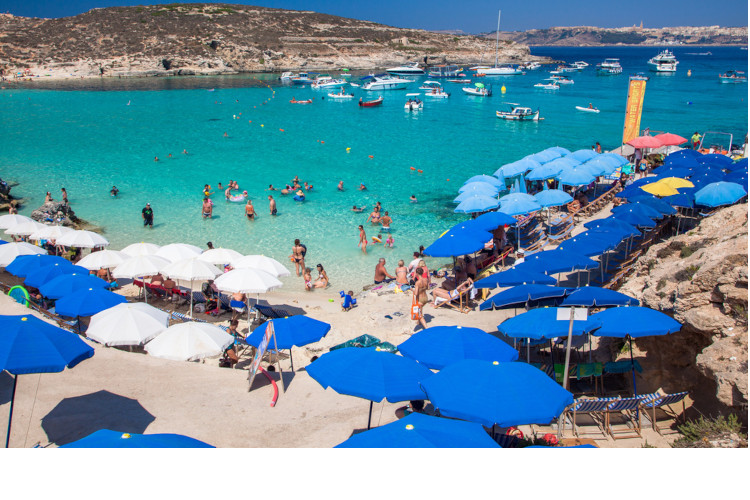
(Photo Credit: Depositphotos.com)
Malta caught me off guard. I came, of course, expecting tales of the Knights of Malta (or Knights of St. John, as they’re officially known)—stone fortresses and crusader lore—and the soft lapping of Mediterranean waves against golden shores. But I wasn’t prepared for everything else.
On this sun-soaked archipelago just south of Sicily, Neolithic temples rise from honey-hued limestone, whispering of matriarchal rule. Centuries-old churches brim with art and treasures. Quiet vineyards unfurl beneath wide, open skies. Add to that just-caught seafood served beside glimmering, boat-filled bays, fairy-tale villages that served as backdrops for the Game of Thrones, and a generosity of spirit that radiates from the Maltese themselves. And then there’s Valletta—an exquisite baroque capital, one of the world’s smallest, filled with baroque treasures.
It sounds like a travel cliché, I know—but this is the Malta I found. Too good to be true, yet entirely real.

The Knights of Malta founded Valletta in 1566 as a fortified city after the Great Siege, envisioning it as a stronghold of defense and a beacon of art, architecture, and faith. Probably their greatest achievement was the magnificent St. John’s Co-Cathedral, adorned with lavish treasures and artistic gifts from across the great nations of Europe. Be sure to pay the extra 5 euros to visit the belfry and clocktower.
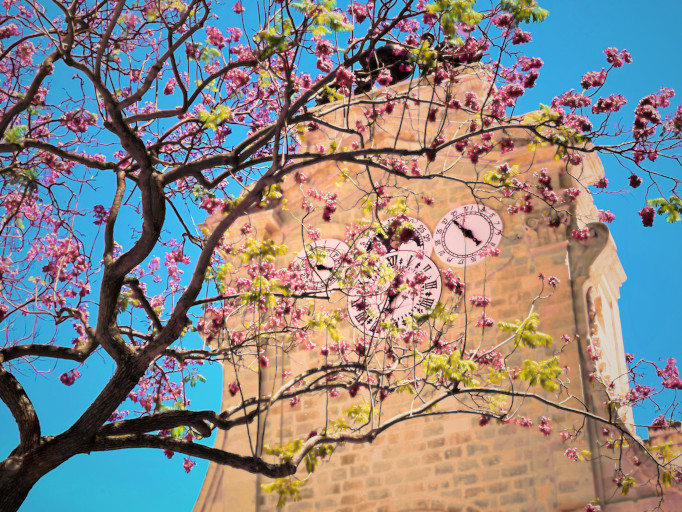
Spring-blooming jacaranda blossoms frame the clock tower of the Grandmaster’s Palace in Valletta—once the seat of the Knights of Malta and today the seat of the Office of the President of Malta. From here, the Knights’ grandmasters ruled the island and defended it against Ottoman invasion, leaving behind a legacy of baroque architecture and fortifications that still define the city today. Among the state rooms, pages’ room, and the ambassadors’ room, you’ll also see the throne room.
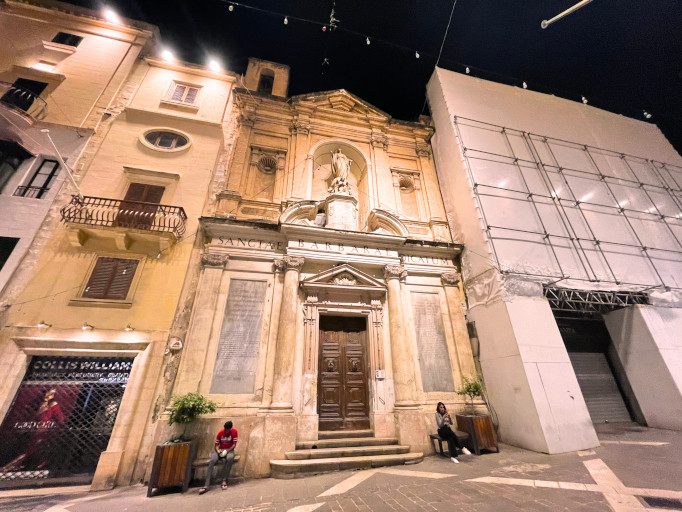
Tucked between shops and apartments along Valletta’s Republic Street, the baroque façade of Church of St. Barbara stands quietly illuminated at night—a reminder of the city’s layered history and enduring faith. St. Barbara is my patron saint, and it’s here I learned she’s also the patron saint of artillerymen, military engineers, miners, and those who work with explosives. I guess that makes sense for the historic fortified capital, but I’m not sure how much that speaks to me …
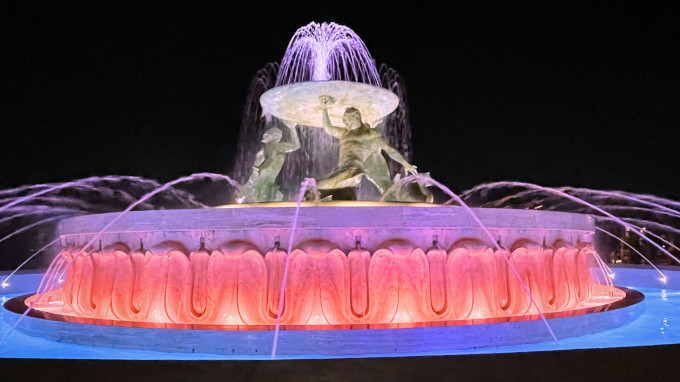
Valletta’s Tritons’ Fountain stands just outside the city gates—its three bronze sea gods forever straining upward, holding aloft a basin of cascading water. As the light changes throughout the day and evening, the fountain’s mood shifts, glimmering, brooding, or glowing with sunset gold.
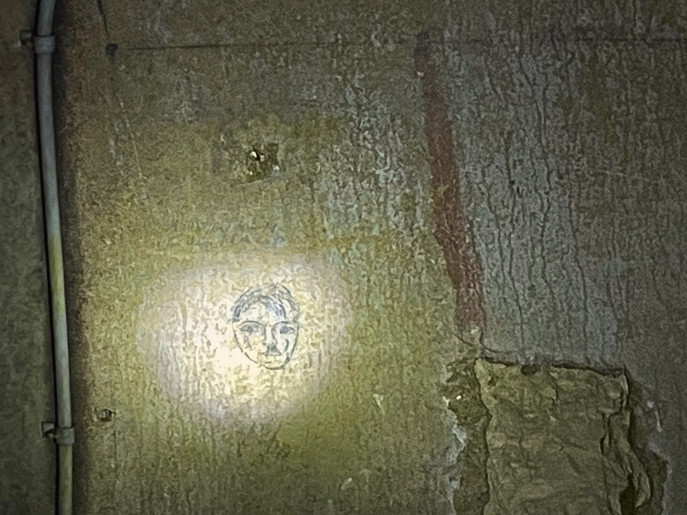
Lit by a flashlight beam, this faded pencil sketch of Hitler still lingers on a shelter wall inside Underground Valletta—drawn by a Maltese civilian during World War II as a form of dark humor or defiance against the enemy whose bombs rained down above.
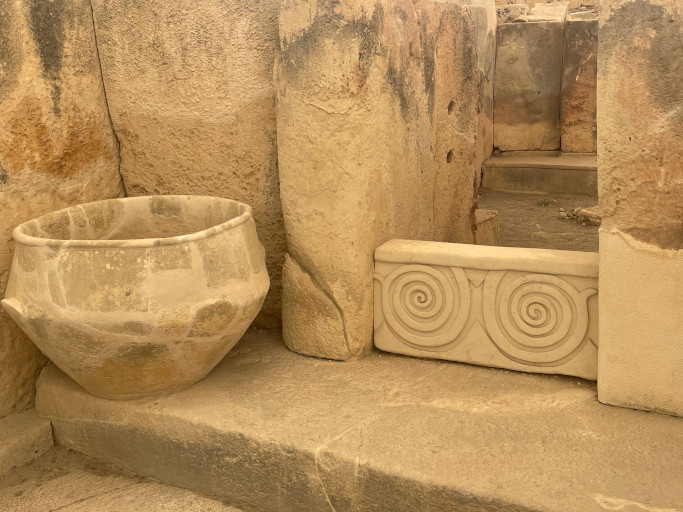
At the Ħal Tarxien Prehistoric Complex in southeastern Malta, spiral carvings, “Mother Goddess” figurines, and animal reliefs reveal a 5,000-year-old Neolithic culture rooted in goddess worship, nature-based rituals, and whispers of matriarchal rule. The site’s four interconnected temples still draw modern visitors—especially women—who come seeking a connection to its ancient, enduring feminine spirit.
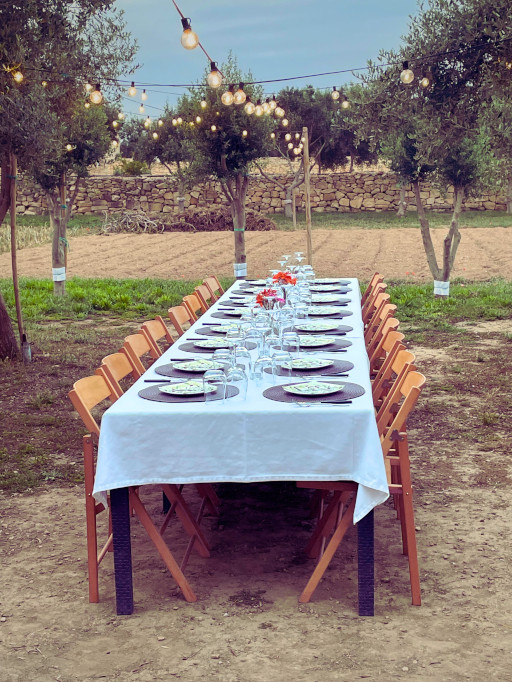
Beneath strings of lights and surrounded by olive trees, this long table set for dinner at Ta’Xmun Olive Grove captures Malta’s deep-rooted connection to olive oil—a tradition dating back to Phoenician times when olive cultivation expanded on the islands. Today, small producers continue to harvest and press olives much as their ancestors did, turning Malta’s stony soil and Mediterranean sun into golden oil that flavors everything from simple breads to elaborate farm-to-table feasts like this one, served right in the grove where the olives grow. After olive oil tasting, we enjoyed a traditional—and protein-rich—meal of lamb shanks, pork belly, and rabbit.
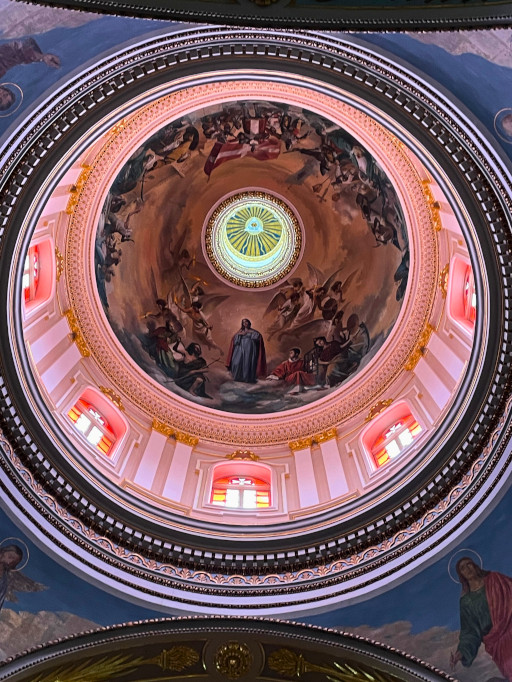
The richly painted dome of the St. Lawrence Collegiate Church in Birgu (Vittoriosa), once the conventual church for the Knights of Malta, features dramatic scenes of the Sacred Mary, St. Lawrence, and the triumphant Victory of the Great Siege of Malta. Bombed during a German air raid in 1941, the original dome and sacristy were lost. Though the dome was rebuilt in 1954, its stunning frescoes—now rich in color, detail, and spiritual grandeur—were only recently completed.
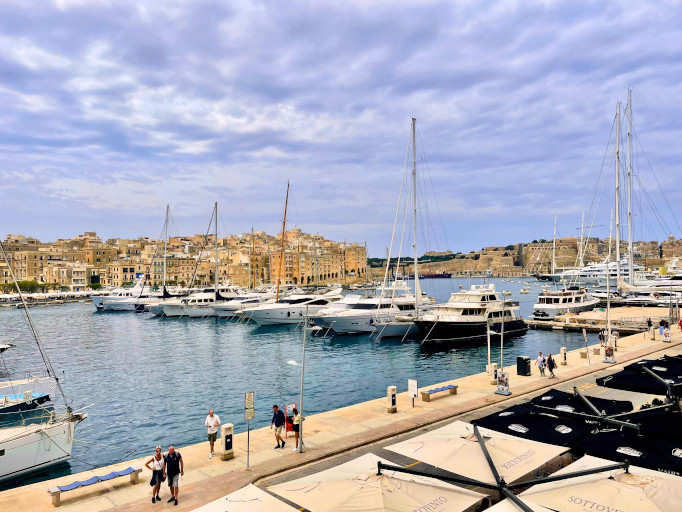
Lined with sleek yachts and lively waterfront cafés, the Birgu (Vittoriosa) Waterfront, sitting on the southern side of the Grand Harbour, blends modern leisure with centuries of maritime history. These same waters were once patrolled by the Knights of Malta and later served as a strategic naval hub during World War II. We stopped for lunch at Don Berto, where panoramic harbor views paired perfectly with my salmon bowl—sticky rice topped with exceptionally fresh salmon, wakame, edamame, mango, and crunchy cashews.
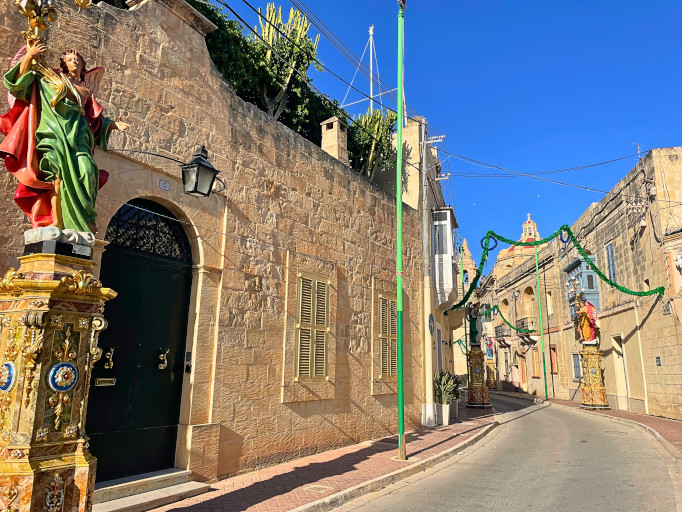
In the village of Għaxaq, the annual festa transforms the streets into a riot of color, sound, and spirited rivalry, as neighborhoods honor their patron saints with towering statues, streamers, and thunderous fireworks—each display more extravagant than the last. I was there in the days leading up to the Saint Joseph festa, when I stumbled upon these statues during an afternoon run and, later, watched the sky erupt in fireworks.

The island of Gozo is a 30-minute ferry ride from the main island—topped by the Cittadella in Victoria (also known as Rabat). From here, sweeping views stretch across the island’s patchwork of stone houses and fields—a vantage point that for centuries served as both refuge and lookout against pirates and invading fleets.
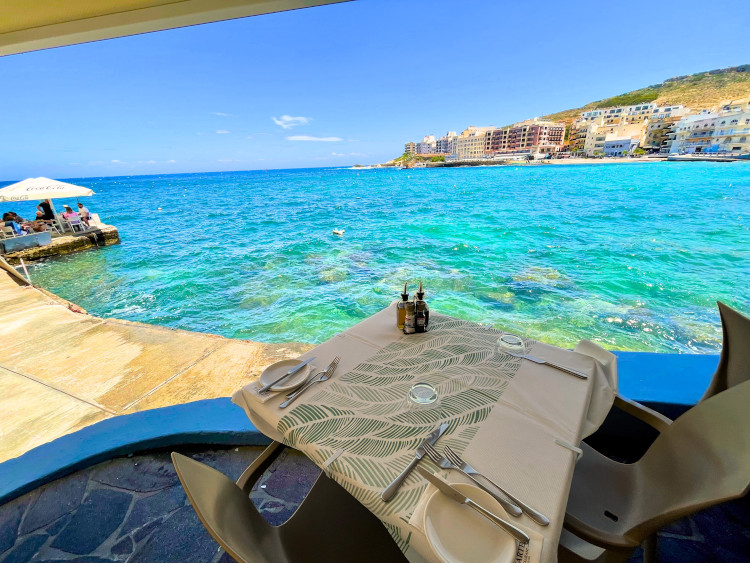
Since the early 1970s, the seaside restaurant Il-Kartell in Marsalforn, Gozo, has served just-caught seafood, fresh salads, and pasta favorites (spaghetti rabbit, anyone?) with the turquoise Mediterranean just steps away. I ordered the swordfish steak, pan-seared with fresh herbs, capers, olives, cherry tomatoes, and a splash of white wine—so fresh it likely arrived with the morning’s catch. Our waitress mentioned her brother is one of the fishermen at this family-run restaurant, which explains a lot about its freshness and goodness.
Travelwise
Find more information at Heritage Malta and Visit Malta.
Author Bio:
Highbrow Magazine Contributing Writer Barbara Noe Kennedy is an award-winning writer and editor, who specializes in travel writing. She worked for more than 20 years for the National Geographic Book Division, and she has also written for the Washington Post, National Geographic Traveler, the Los Angeles Times, and Fodor's -- in addition to penning a few books -- including 25 Joys of Paris, which was published recently. She is also a Lowell Thomas travel journalism award winner. Barbara has traveled extensively around the world and, along with her husband, is actively involved in helping Zambian students achieve their education and career goals. She writes travel articles for Highbrow Magazine.
For Highbrow Magazine
Photo Credits: Barbara Noe Kennedy