


(Photo Credit: Depositphotos.com)
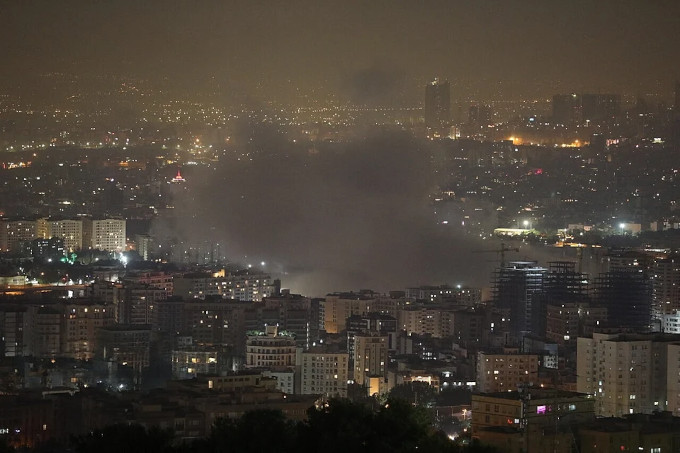
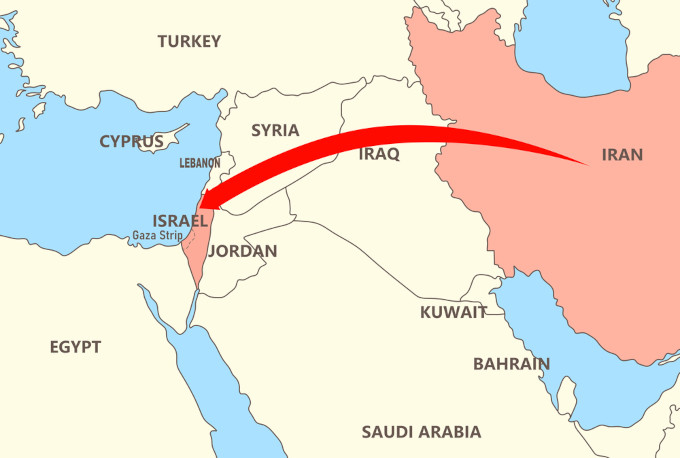
President Trump's recent Iran warmaking—undertaken without Congressional approval—represents no change in long-standing US foreign policy, other than a willingness to bomb Iran directly rather than rely on traditional covert warmongering though military funding of Israel and Western economic sanctions.
Trump bombed Iran to distract Americans from his unpopular war against immigrants and workers at home, while seeking to demonstrate overwhelming American power abroad to bring the Middle Eastern states, Europe, Russia and China—as well as other future targets such as Greenland, Panama and Canada—into compliance with American dominance under the contradictory banner of peace and America First. This is a classic authoritarian approach to war, melding the war against the enemy at home with war against the enemy abroad; its main aim is concentrating and legitimating the unchecked power of Trump himself, aligned with the interests of his corporate and military oligarchy.
(Photo Credit: Depositphotos.com)
The US has always been expansionist and militarist, creating a national security state that traditionally has created sociopathic relations towards other nations in the spirit of gaining geopolitical power and raising profits, while also mobilizing a population divided by class and racial caste to come together to destroy the enemy. This dynamic, associated with long-standing imperial war policies in the US, are particularly strong in authoritarian states, as memorably described by George Orwell in his classic dystopian novel, 1984. Big Brother unifies the country under his control by invoking the “three- minute hate,” where the whole public stops what it is doing during the day and comes together to watch the “telescreens,” where they scream a collective rage, revenge and violence against the enemy.
(Photo Credit: Depositphotos.com)
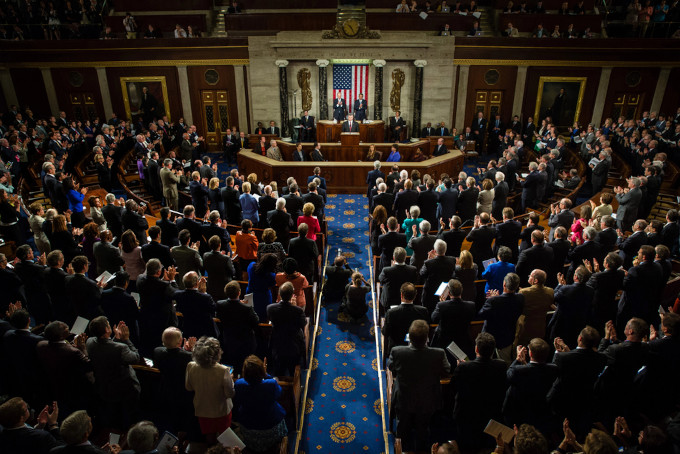
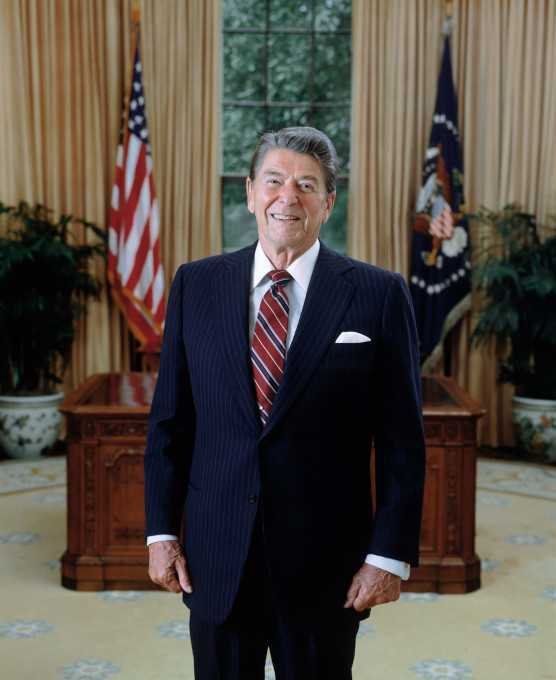
US militarism has long been a major bipartisan force to unite a fractured, atomized population around defeating the enemy. In 1980, President Reagan amped up this agenda by intensifying the Cold War and vowing to destroy and eliminate the Soviet “Evil Empire.” His militaristic agenda was fueled further by George W. Bush after 9/11, as he waged a new age of “war against terror” in the Middle East, notably in Iraq, after initially invading Afghanistan. Terrorism provided a global war against relatively faceless enemies that could never be decisively defeated, a kind of war designed partly to unify an increasingly polarized and atomized nation. In the 2020s, such “unifying” war got turned partially inward against domestic enemies and “terrorists,” including against largely peaceful students protesting against war on their campuses, while also directed outward against foreign enemies such as Hamas and Iran, now highlighted in the evolving war against terrorism, as well as against Russia and China in two new Cold Wars.
(Photo Credit: Depositphotos.com)
Extreme militarism has been both a response to and cause of the 21st century transition from sociopathic to sociocidal society. A sociocidal society is one in which human connection has been largely severed and individuals are only concerned for themselves. Breakdown of trust and social relations in multiple spheres helped give rise to the militarization of rage and fear in Trump’s first term, as he repeatedly denounced Iran and China as enemies, along with the immigrant and racial enemies at home. At the same time, Biden embraced the historic Democratic Party’s bipartisan support of US militarism, supporting the war on terrorism and the Israeli war in Gaza, even as famine and evidence of war crimes by the far- right Israeli Netanyahu government were collected by the State Department, leading some diplomats to resign in protest. Many international leaders at the UN and in regional conferences and international courts, called the Gaza war an unfolding “genocide,” with Samantha Power, President Biden’s head of the US Agency for International Development and a US documenter of the Rwanda genocide, warning of the spread of famine already killing thousands of Palestinian children.
The Democrats were entirely complicit in this military spiral, not only in what the international community was describing as a humanitarian catastrophe in Gaza, but in their call for NATO expansion and full-scale military support for Ukraine, as well as the new Cold War with Russia and with China. While united by bipartisan militarism, the US polarized between the Trumpist authoritarian GOP and the Democrats trying to hold on to their weak democracy. Social divisions became so intense that fear of a second civil war mounted, and what is called the “Military Spiral” became a key national political instrument for binding the country together.

While Trump’s isolationist and anti-NATO rhetoric seem to make him less complicit in the Military Spiral, the reality is somewhat different. It is true that Trump’s admiration of Putin’s “strongman” rule makes him appear less of a Cold Warrior against Russia than the Reagan or Bush GOP Establishment. And far-right Republicans, such as the 1930s and 1940s America Firsters, have historically used isolationist policies to oppose unpopular Democratic war policies. Though events in recent weeks suggest otherwise, with Trump and NATO sidling closer to each other and the EU militarizing at an alarming rate, Trump may bring a more rapid end to the war in Ukraine and curb expansion of NATO beyond defense of Europe. But the notion of Trump as a peace candidate or president is misguided.
In Trump’s first term, he pulled out of the nuclear agreement with Iran while dramatically building the US nuclear arsenal, and laying the ground for a greater Middle Eastern war pitting the US and Israel against Iran and its proxies. Meanwhile, Trump also stoked extremely aggressive economic and military policies against China, funding US military build-up in the Pacific Theatre and boasting of readiness to fight to protect Taiwan. While Trump signaled a clear desire to imitate and ally with Putin, who was becoming the idolized authoritarian of the US far right, even much of Trump’s MAGA party would end up supporting the huge US military aid to Ukraine in 2024, as the US built up its military presence in the Middle East and on the Russian border from Ukraine to the Baltics, Poland and Finland. Two days after his re-election, Trump and his then major ally, Elon Musk, spoke with Volodymyr Zelensky, the president of Ukraine on the phone, with Musk promising to offer Zelenskyy satellite services and other aid that would support Ukraine’s defense.
(White House Photo: Flickr, Creative Commons)
The contemporary form of the sociocidal Military Spiral arises when greater social division leads both the GOP and Democrats to unify the country with sociocidal wars against more frightening “enemies.” Militarist propaganda about enemies abroad and actual wars on terrorists redirect public anxiety and rage at the enemy abroad. This in turn spirals up efforts by political parties to gain support and public unity through more dangerous and endless wars.
Trump’s act of aggression in Iran is a dangerous step closer to a wider Middle East war, but his militarism isn’t new. It is the latest effort in a cynical and bipartisan strategy with devastating consequences at home and abroad. Trump’s melding of his war on Iran with his autocratic war against domestic enemies will intensify both wars. Trump’s Iran gambit, and his “America First” foreign policy, will enrich and empower both the military-industrial complex and the broader ruling American oligarchy at the expense of ordinary Americans and people around the world.
Adapted with permission from Bonfire: American Sociocide, Broken Relationships, and the Quest for Democracy by Charles Derber (Routledge, June 2025)
Author Bio:
Charles Derber is a professor of sociology at Boston College and has written 29 books. His latest is Bonfire: American Sociocide, Broken Relationships, and the Quest for Democracy.
Highbrow Magazine