


(Neelix, Wikipedia Commons)

You’re fired.”
Those two words launched a thousand hours of entertainment—and one presidency. When Donald Trump struck gold on reality television with The Apprentice, he didn’t just revitalize his brand; he became a staple of American pop culture. Hollywood embraced him, NBC cashed in, and for a brief moment, Trump was the undisputed king of reality TV. However, the industry that made him famous would later recoil at the idea of him as a political leader. And that rejection is a wound from which he has never healed.
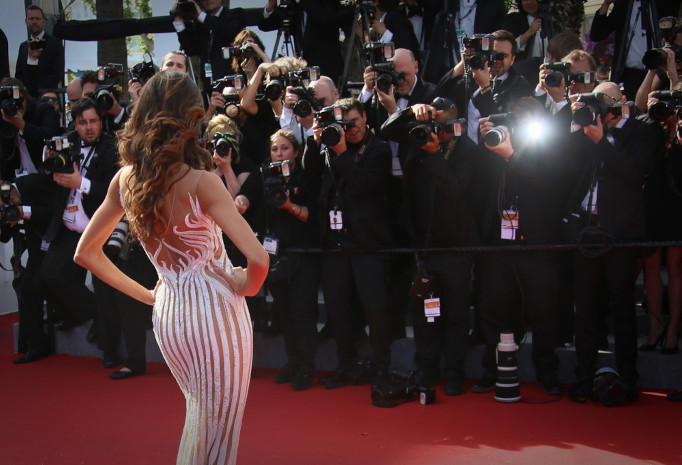
Trump’s war with Hollywood is perhaps his most personal. To him, Tinseltown is not just another institution to bully into submission—it’s home. A city that loved him, that made him rich, that gave him a star on the Walk of Fame.
(Photo Credit: Depositphotos.com)
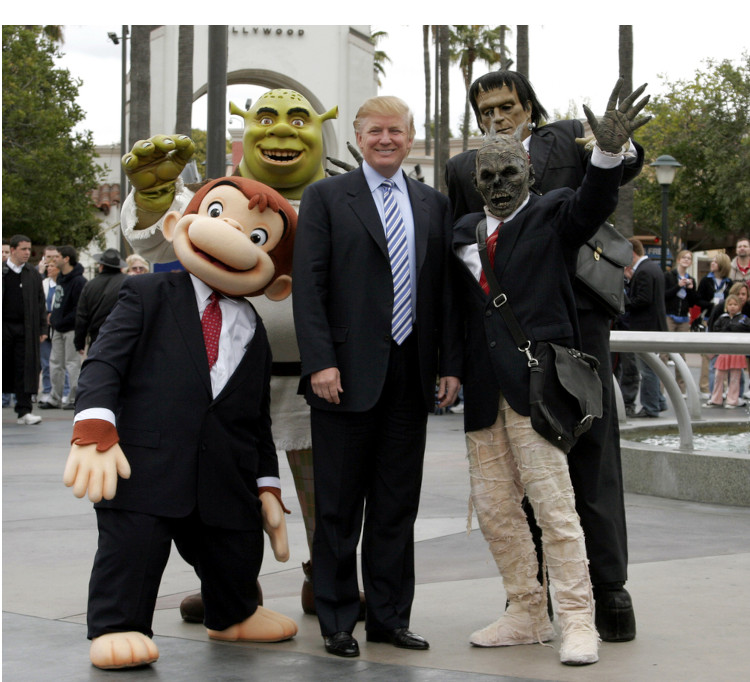
Maybe it should have been obvious that in a moment of political defeat and embarrassment, Trump retreated to his safe space, Hollywood. After January 6, President Trump sat down with Variety journalist Ramin Setoodeh, who would later go on to publish The Apprentice in Wonderland: How Donald Trump and Mark Burnett Took America Through the Looking Glass. Typically hostile towards the mainstream liberal adjacent media, Trump agreed to partake in this interview at his low point, because the writer wanted to chronicle Trump’s time not in the White House, but as the host of The Apprentice, which Trump refers to as, the thing for which he’ll be best remembered.
(Photo Credit: Depositphotos.com)
In Trump’s eyes, he is Hollywood royalty first and foremost. The Apprentice represents the height of his preferred popularity, a wealthy showman selling the idea of the Trump lifestyle. So how could the very industry that helped create the Trump mythos turn its back on him just as he became the most powerful man in the world?
That tension has defined much of Trump’s political career. In 2016, the town didn’t take his candidacy seriously. Hollywood, which profited immensely from Trump’s television persona, wanted nothing to do with the real version once he entered politics. He was NBC’s new problem child—a character come to life, echoing the caricature of himself he had so masterfully crafted for the American viewing audience. In mocking him, they willingly platformed him. When he won, the industry was shocked -- realizing they had now pissed off the most powerful man in the world.
But 2024 brought a different calculus.

(Photo Credit: Depositphotos.com)
This time, studios knew what was coming. The protests, the polarization, the Twitter/X chaos. They had seen this show before and knew sequels are always that of diminishing returns. Instead of waging wars, studios bent the knee. Within days of Trump’s 2024 reelection, corporations like Disney began echoing conservative talking points, swiftly walking back years of DEI initiatives. A month after his reelection, Disney gave $15 million to Donald Trump’s presidential library to settle a defamation lawsuit between the 47th President and ABC News. For Paramount Global, feuding with Trump could lead to the collapse of the studio’s planned merger with Skydance, due to Trump’s CBS lawsuit over a 60 Minutes segment. Disney had no interest in going to war with the White House.
In 2020, as the CEO of Disney, Bob Iger had no problem capitalizing on the motto “Diversity is our strength.” While promoting his memoir, he “vowed” to the New York Times that he would diversify Disney’s leadership. But four years later, that commitment has quietly eroded, with Iger telling CNBC, “Infusing messaging is not what we’re up to. We need to be entertaining."
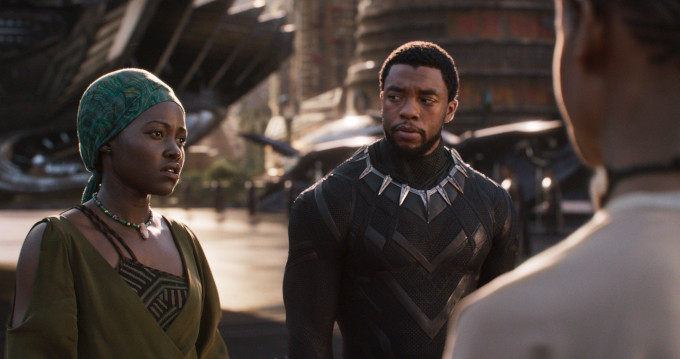
That quote came in the wake of mounting pressure from Disney activist shareholder Nelson Peltz — the 81-year-old billionaire backed by none other than Elon Musk. Peltz has taken repeated aim at what he describes as Marvel’s “woke” agenda, at one point asking: Why does Black Panther need an all-Black cast? A question so dumb — not only because it misses the point entirely of the series, but because neither of the Black Panther films features an all-Black cast to begin with. Yet, one year later, that question signifies Disney’s newfound direction in the wake of the 2024 election.
(Photo Credit: Depositphotos.com)
In 2025, under Iger’s leadership, Disney announced rollbacks on their DEI programs. The same studio head that capitalized on utilizing hot topic buzzwords like “diversity” in Trump’s first term now turned on a dime, trading ideology for the hope of being left alone, but as Americans have learned, once you give into one of the president’s demands, he does not relinquish.
But Trump’s ambitions go far beyond being accepted again. He doesn’t just want to be loved—he wants to be the Messiah of Hollywood and mold the town in his image. Despite his fury, he knows the world of entertainment very well. He understands its power, its influence, and the debt he owes it. It’s why he can’t leave Hollywood alone.
That desire has led to one of his more bizarre policy proposals: a 100% tariff on all foreign movies and TV shows entering the United States. The reasoning remains unclear, although if I had to speculate, it is because of the growing popularity of international productions finding audiences in America. Shows like South Korea’s Squid Games, or Britain’s Adolescence are the biggest streaming shows. Movies like Brazil’s I’m Still Here, and France’s Emilia Perez proved big winners at the Academy Awards. The nationalism message Make America Great Again quickly falls apart when American audiences willingly look elsewhere for their entertainment. He, like a certain generation of Hollywood leading men, is threatened by their ever-growing displacement, requiring Trump to prophetize the reemergence of Hollywood.
(Photo Credit: Depositphotos.com)
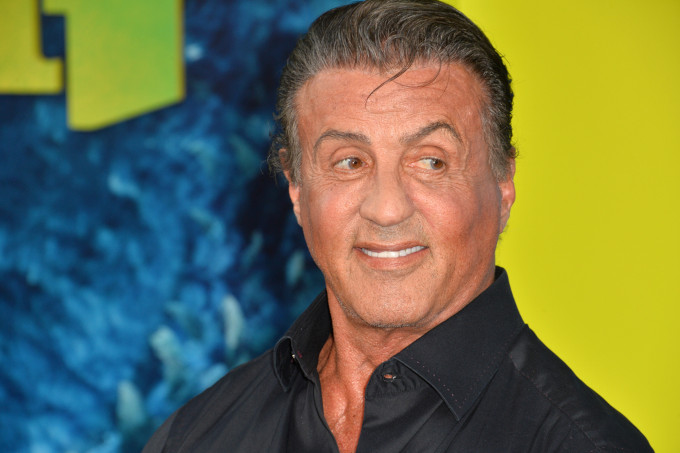
Still, every messiah needs their three wise men. Who better to lead the revival than the holy trinity of 1980s machismo? Forget Tom Cruise – Trump has Sylvester Stallone. Move over Ryan Reynolds, Mel Gibson is back in action. Hollywood, keep your Chrises, Trump’s got Jon Voight on speed dial. To save Hollywood, Trump recruited the three biggest stars of yesteryear (if that year in question was 1996) to serve as his special ambassadors, and bring back lost business to Hollywood. Because nothing screams fresh and revitalization like leather faces, grizzled growls, and old-man muscles.
Yet, what these men offer Trump isn’t box-office clout—it’s nostalgia. They remind him of a world where fame was a currency and television ruled the culture. As the former host of the most successful reality competition show of the 21st century, Trump understands that power comes from visibility. His entire empire—business, media, politics—has always been about visibility. Fame is his superpower, and in Hollywood’s betrayal, he sees not just a personal slight, but a rejection of everything he’s built. Controlling Hollywood would mean he would get to be the true king of entertainment -- which makes his tariff plan to save Hollywood all the more baffling.
In an interview with Variety, Voight said Hollywood is dying due to films being shot overseas, and that we can’t let what happened to Detroit happen to the film industry. In his interview, Voight refused to give details, but said there was indeed a plan in place.
Would this punish filmmakers who shoot abroad? Would it disincentivize international content on global streaming platforms? Would it even be enforceable? And did anyone from the actual business side of Hollywood have input, or was this the brainchild of a has-been 86-year-old actor hellbent on believing his own relevancy within an industry?
(Black Panther)
The details of the policy don’t really matter. The likelihood of them ever coming into effect is minimal. His plans for tariffs are not about economics or saving Hollywood -- rather, they are about reminding everyone that he is the boss, and they better pay tribute to him. Tariffs both for films and everyday commerce are not a solution. It’s a flex – a reminder of his power and everyone must take it seriously.
As studio heads like Bob Iger attempt to reassure anxious investors, he and so many others in the industry are confronting the true cost of appeasing Trump: You give him an inch, and he’ll take a mile. Hollywood executives thought they could profit by settling with the president, but appeasement never brings peace, but instead feeds egos.
The town that created the persona of Trump is now left to grapple with the consequences of their creation. In trying to outmaneuver Trump, they welcomed him back in, and he has no plans of giving up the spotlight.
Author Bio:
Ben Friedman is a contributing writer and film critic at Highbrow Magazine.
For Highbrow Magazine