

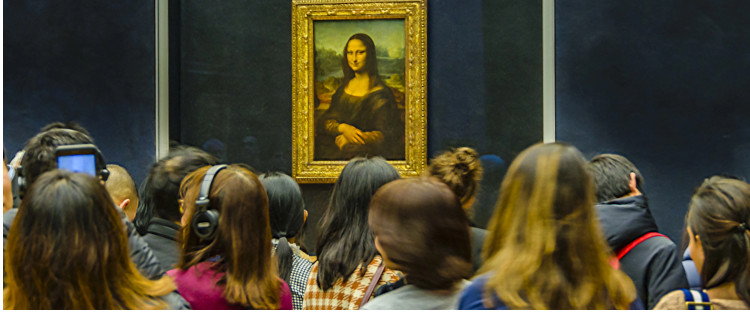
(Photo Credit: Depositphotos.com)
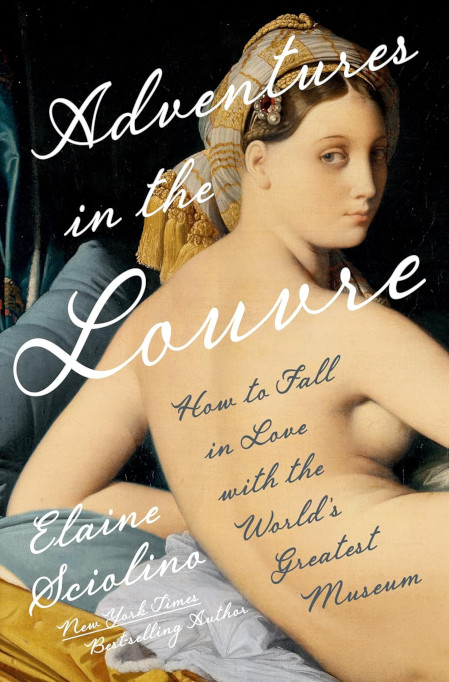
Adventures in the Louvre: How to Fall in Love With the World’s Greatest Museum
By Elaine Sciolino
W.W. Norton
370 pages
The first point Elaine Sciolino wants to make in her new book, Adventures in the Louvre, is that the iconic institution isn’t particularly user-friendly:
“There is almost no way to avoid getting lost once you’re inside. The official maps hardly convey the flow and complexity of getting from one place to another. Signage is sparse, uneven, and confusing; you can go into room after room before you find a guard to guide you.”
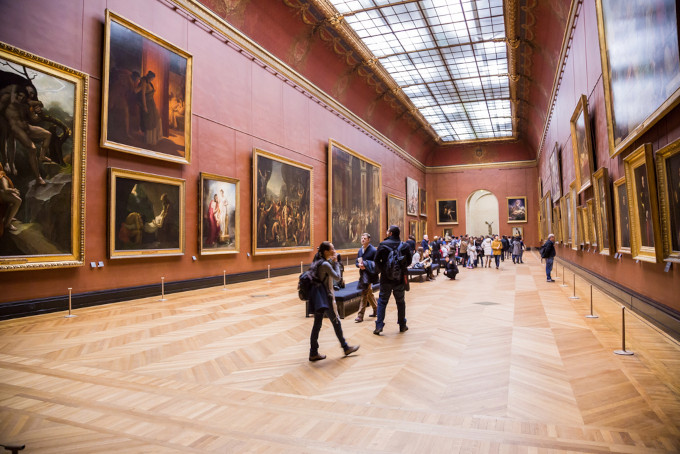
It’s hard getting your head around the size and scope of the Louvre. The museum employs more than 2,000 staff members, has 70 elevators and 25 different levels, nearly 1,000 security cameras, and “more than 4,000 keys for locks that may or may not still be in use.”

(Photo Credit: Depositphotos.com)
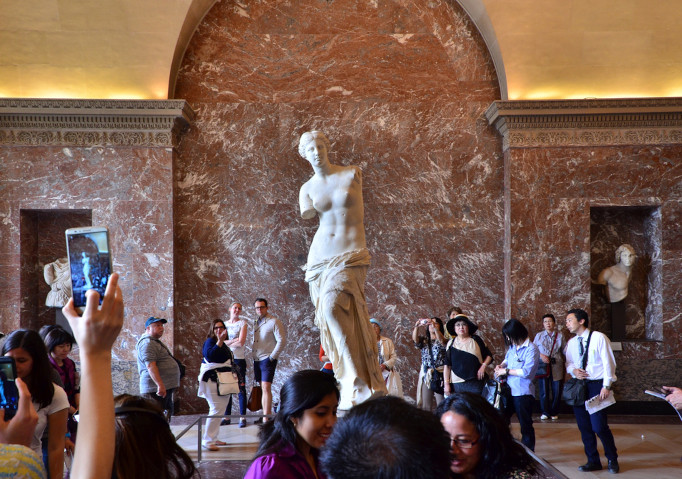
These are just a few of the facts thrillingly recounted in Adventures in the Louvre. Sciolino’s mission, she says, is to explain the museum’s origins and the secrets behind its enduring allure. With what emerges as genuine curiosity and fervor, she describes the museum’s “trio of superstars”—the Mona Lisa, the marble statue of Nike (known formally as the Winged Victory of Samothrace), and, of course, Venus de Milo—timeless works of art that draw many thousands of tourists to Paris every year.
Sciolino interviews numerous staff members, all of whom appear delighted to be part of what’s happening behind the scenes at “the world’s greatest museum.” Their enthusiasm is infectious, and the author seems equally happy to be there with them.
Early on, she describes the museum’s internationally renowned centerpiece, and its unique place within the Louvre:
(Photo Credit: Depositphotos.com)
“Encased in elaborate armor, the Mona Lisa is probably the most protected painting in the world. She is sealed into a custom-made climate control system; an identical backup system will kick in if it fails. The reverse side of the slightly convex, thin-grained plank of poplar on which she is painted is studded with sensors to detect even the tiniest change in the wood’s shape … She hangs alone, lonely perhaps, on a freestanding partition of midnight blue in the center of the most animated gallery in the Louvre: the Salle des États.”
Although it’s not on exhibit, a treasure trove of Mona Lisa-related kitsch and memorabilia is kept behind closed doors. One day, Sciolino is granted access to this bountiful collection:
(Photo Credit: Depositphotos.com)
“Mona Lisa umbrellas! Rows and rows of matches! Commemorative coins! A Mona Lisa suitcase! Dolls, ashtrays, pillows, tapestries, advertising posters, labels for bonbons and cheeses, socks, aprons, ties, and statues. A yellow bathtub toy duck with a Mona Lisa head … plates, coasters, wine bottles, playing cards, Rubik Cubes, board games, cookie tins …”
You get the idea.
Adventures in the Louvre covers a wide array of related topics. There are chapters on artworks centered around food and animals, the relative scarcity of art by women, and contributions of queer art and Islamic art.
It also examines “the orphans of World War II”—a bevy of artworks lost during the global conflict, many of which eventually found their way back to the museum. Some of these purloined or expropriated paintings and sculptures have never been reclaimed but instead, “still exist in an awkward limbo.” The Louvre maintains this unseen collection in the hopes that, one day, the rightful owners will be located and notified of their missing treasure.
Sciolino also explores the Tuileries Garden, a large public garden situated between the Louvre and the Place de la Concorde in the city’s first arrondisement. More than 14 million tourists and locals view the garden every year. Visitors to the Tuileries must be on the lookout for low-level criminal behavior:
“Visitors often must sidestep small bands of female pickpockets with the quickest fingers who tend to congregate around the plaza in front of the Carrousel arch … They carry clipboards with phony petitions showing writing scribbled in pencil. ‘Excuse me, do you speak English?’ one asks, and if you stop to say yes, she thrusts the clipboard in front of you while her partner slips a hand into your pocket or purse to nick your phone or wallet. If you shout ‘No! No!’ they usually reply with vacant looks and move to their next target.”
If you’ve never visited the Louvre, or haven’t been there in a while, Sciolino offers this advice: “A trip to the Louvre is the museum version of a blood sport. You need to be ready for the fight.” In more prosaic terms, her recommendation is simple: “Never go to the Louvre on an empty stomach and with a full bladder.”
Author Bio:
Lee Polevoi is Highbrow Magazine’s chief book critic and author of The Confessions of Gabriel Ash,a novel.
For Highbrow Magazine